Table Of Content
- Save More on Every Order – Grab the Latest Coupons & Deals
- What Is the Difference Between Whey Isolate and Concentrate?
- Whey Protein Isolate vs Concentrate: Four Key Differences
- 1. Protein Content
- 2. Lactose and Digestion
- 3. Price and Value
- 4. Fitness Goals and Everyday Use
- How to Choose the Right Whey Protein
- Why Consider Transparent Labs Whey Protein Isolate?
- Save More on Every Order – Grab the Latest Coupons & Deals
- Frequently Asked Questions
- 1. Is whey isolate better than whey concentrate?
- 2. Is whey protein isolate lactose-free?
- 3. Can beginners use whey protein concentrate?
- 4. Which whey protein is better for building muscle?
- 5. Is whey isolate worth the extra cost?
- 6. How should I compare protein powder labels?
- Related Resources
- Conclusion
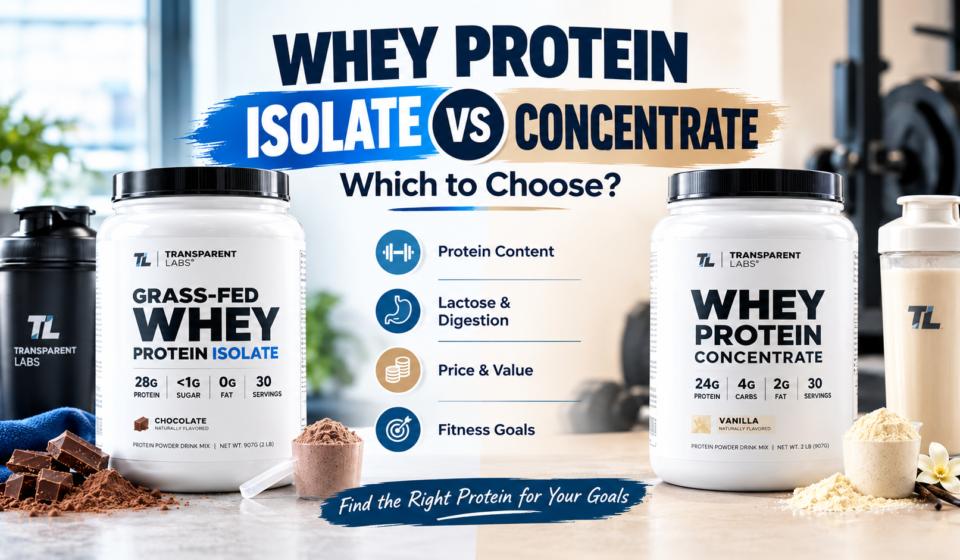
Choosing between whey protein isolate and concentrate can feel confusing when both options are designed to help you increase your daily protein intake. Although they come from the same milk-based protein source, they differ in processing, protein concentration, lactose content, and often price. Understanding these differences can help you choose a protein powder that fits your nutrition goals, digestion preferences, and budget.
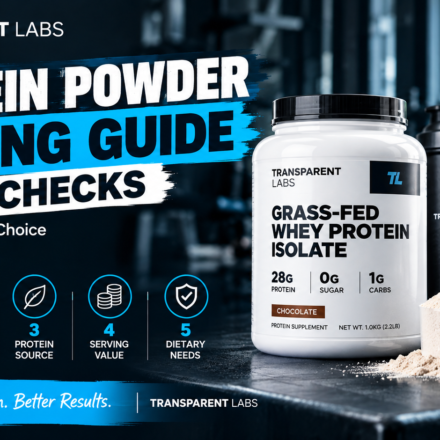
Whey protein isolate is generally a good option for people who want a higher proportion of protein with less lactose and fewer carbohydrates or fats. Whey protein concentrate can be a practical alternative for people who prefer a more affordable protein powder and do not need the extra processing associated with isolate. Transparent Labs offers a grass-fed whey protein isolate worth considering when comparing ingredient quality and nutritional information.
Save More on Every Order – Grab the Latest Coupons & Deals
What Is the Difference Between Whey Isolate and Concentrate?
Whey isolate and concentrate both come from the liquid left during cheesemaking. Their main difference is the level of filtration and processing.
Whey concentrate contains varying amounts of lactose, fat, and other milk components depending on its formulation.
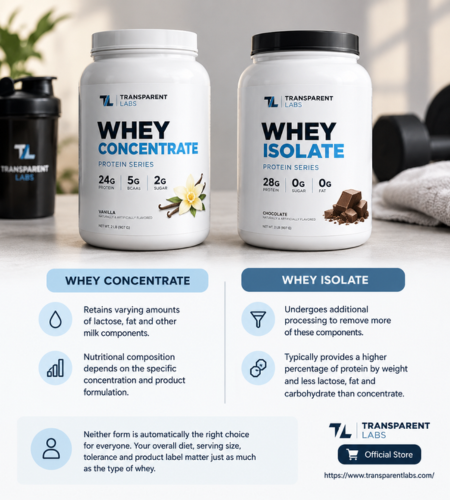
Whey protein isolate undergoes additional processing to remove more of these components. As a result, it typically provides a higher percentage of protein by weight and less lactose, fat, and carbohydrate than concentrate.
Neither form is automatically the right choice for everyone. Your overall diet, serving size, tolerance, and product label matter just as much as the type of whey.
Whey Protein Isolate vs Concentrate: Four Key Differences
1. Protein Content
Isolate generally delivers more protein per gram of powder because more non-protein components have been removed. This can be useful if you want to increase protein intake without adding as many calories from fats and carbohydrates.
Whey concentrate provides complete protein with all essential amino acids, but protein content varies by product. Always check the grams per serving.

2. Lactose and Digestion
Whey isolate usually contains less lactose than concentrate. This may make it a more suitable option for some people with lactose sensitivity, although isolate is not necessarily lactose-free.
Concentrate generally retains more lactose, which may cause digestive discomfort in people who have difficulty digesting it. Individual tolerance varies, and other ingredients, serving size, and the liquid used to mix the powder can also affect how comfortable it feels.
If you have a milk allergy, remember that both isolate and concentrate are milk-derived proteins. Isolate is not a safe substitute for avoiding milk allergens.
3. Price and Value
Whey concentrate is often more budget-friendly because it requires less extensive processing. It can offer good value if you want to increase your protein intake without paying extra for a higher protein concentration.
Isolate may cost more, but the comparison should consider the amount of protein in each container. Check the serving count, protein per serving, total price, and ingredient list before deciding which product offers better value.
A larger container is not always the better deal if the serving size or protein content differs significantly.
4. Fitness Goals and Everyday Use
Both forms can support your daily protein intake when combined with a balanced diet and appropriate training routine. The difference is usually convenience and nutritional composition rather than a guaranteed difference in results.
Isolate may suit people who prefer lower amounts of lactose, fat, and carbohydrates. Concentrate may suit people who tolerate lactose comfortably and want a more economical option.
Your total daily protein intake, training consistency, sleep, and overall nutrition remain important factors in your progress.
How to Choose the Right Whey Protein
Before selecting a tub, consider these practical questions:
- Check your nutrition targets: Compare protein, calories, carbohydrates, and fat per serving.
- Consider lactose tolerance: If lactose regularly causes discomfort, an isolate with low lactose may be worth trying.
- Set a realistic budget: Compare the cost per serving and the cost per gram of protein.
- Read the ingredients: Look at sweeteners, flavorings, allergens, and any additional ingredients that matter to you.
- Think about convenience: Choose a flavor and powder that fits your preferred shakes, smoothies, or recipes.
Remember that protein powder is a supplement, not a replacement for a varied diet. You can also obtain protein from foods such as eggs, dairy products, fish, meat, soy, beans, and lentils.
Why Consider Transparent Labs Whey Protein Isolate?
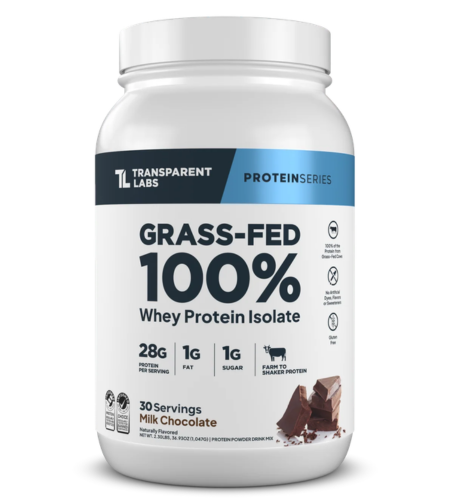
Transparent Labs offers grass-fed whey protein isolate in flavors like chocolate, vanilla, and unflavored. The brand claims no artificial sweeteners, dyes, or fillers and provides third-party testing information for customers to review.
The brand’s isolate offers a convenient, protein-rich option. Nutritional values may vary by flavor, so check the current label before purchasing.
Potential advantages:
- A variety of flavor options, including unflavored.
- A higher-protein isolate format.
- Published third-party testing information.
- Useful for shakes and other recipes.
Things to consider:
- Isolate may cost more than concentrate.
- Flavored varieties may contain different ingredients.
- Milk-derived protein is unsuitable for people with a milk allergy.
- Individual taste and digestive tolerance can vary.
Review the current product details and serving size to determine whether it fits your needs.
Save More on Every Order – Grab the Latest Coupons & Deals
Frequently Asked Questions
1. Is whey isolate better than whey concentrate?
Not necessarily. Isolate typically contains more protein per gram and less lactose, fat, and carbohydrates. Concentrate can be a more affordable choice for people who tolerate it well.
2. Is whey protein isolate lactose-free?
Not always. It generally contains less lactose than concentrate, but the amount depends on the product. Check the label if you need to limit lactose.
3. Can beginners use whey protein concentrate?
Yes. Beginners can use either form to help meet their daily protein needs. Choose according to your nutritional requirements, budget, and tolerance.
4. Which whey protein is better for building muscle?
Both can contribute to muscle growth when your overall protein intake and resistance-training routine are appropriate. Neither form guarantees better results on its own.
5. Is whey isolate worth the extra cost?
It may be worth considering if you want more protein per serving or need to reduce lactose intake. If those differences are not important to you, concentrate may provide better value.
6. How should I compare protein powder labels?
Compare protein per serving, serving size, calories, carbohydrates, fats, ingredients, allergens, and cost per serving. These details provide a clearer comparison than marketing terms alone.
Related Resources
For additional information about supplement ingredients, product quality, and choosing a protein powder, explore the existing Transparent Labs review on Reviewness. It provides further context for evaluating the brand and its supplement range.
Conclusion
The choice between whey protein isolate and concentrate comes down to your priorities. Isolate generally offers a higher protein concentration and less lactose, while concentrate often provides a more affordable way to increase protein intake. Both can fit into a balanced nutrition plan.
If you are comparing premium protein powders, Transparent Labs Grass-Fed Whey Protein Isolate is one option to evaluate for its flavor selection, ingredient information, and published testing resources. Compare the current nutrition label, price, and ingredients before making your decision. The right protein powder is the one that suits your needs, fits your budget, and works comfortably within your everyday routine.