
Table Of Content
- Save More on Every Order – Grab the Latest Coupons & Deals
- 1. Choose Whole Beans and Grind When Needed
- 2. Limit Air Exposure
- 3. Keep Beans Away From Heat, Light, and Moisture
- 4. Maintain a Secure Seal and Choose the Right Size
- How Fellow Atmos Fits Into a Coffee Storage Routine
- Pros and Cons of Fellow Atmos
- Save More on Every Order – Grab the Latest Coupons & Deals
- Frequently Asked Questions
- What is the best way to store coffee beans?
- Should coffee beans be stored in the refrigerator?
- Is a vacuum canister worth considering?
- Can you store ground coffee in Fellow Atmos?
- How often should you reseal Fellow Atmos?
- How much coffee fits in Fellow Atmos?
- Conclusion
Fresh coffee starts with good beans, but how you store them after opening the bag can also affect the flavor in your cup. Exposure to air, heat, moisture, and light can gradually reduce coffee freshness, leaving your morning brew less aromatic than you expect. Learning how to store coffee beans properly does not require a complicated setup. A few practical habits can help protect their quality between brewing sessions.
The most important steps are to keep beans whole until you need them, limit unnecessary air exposure, choose a cool and dry storage location, and close your container securely. If you want a more dedicated storage solution, Fellow Products offers the Atmos Vacuum Canister, designed to remove air from the container and help slow oxidation. Here are four tips to help you build a better coffee storage routine.
Save More on Every Order – Grab the Latest Coupons & Deals
1. Choose Whole Beans and Grind When Needed
Whole coffee beans stay fresher longer than ground coffee because less surface area is exposed to air. Grinding just before brewing helps preserve aroma and flavor for a fresher-tasting cup.
Whenever practical, purchase whole beans and grind only the amount you plan to use. Keep the remaining beans in their storage container rather than leaving the bag open on the counter.
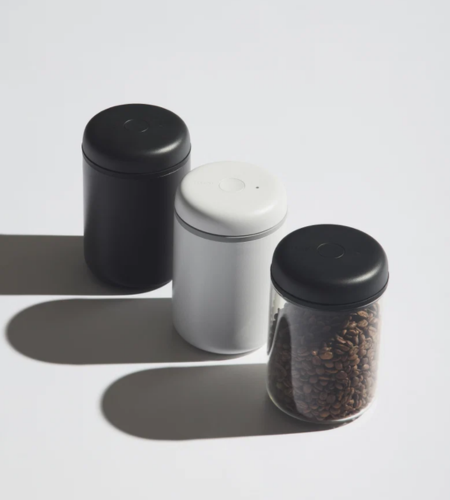
Fellow Atmos is designed for storing whole coffee beans. Fellow advises against putting ground coffee or other fine powders into the canister because these materials may clog its intake valve and prevent a proper vacuum seal. Follow the product’s care instructions to maintain its intended function.
2. Limit Air Exposure
Oxygen contributes to the gradual oxidation of coffee, which can affect its aroma and flavor. Repeatedly leaving a bag open or using a container with a loose-fitting lid allows more air to reach the beans.
Seal your coffee container promptly after measuring. Use an airtight container and divide bulk purchases into smaller portions to reduce repeated exposure to air.
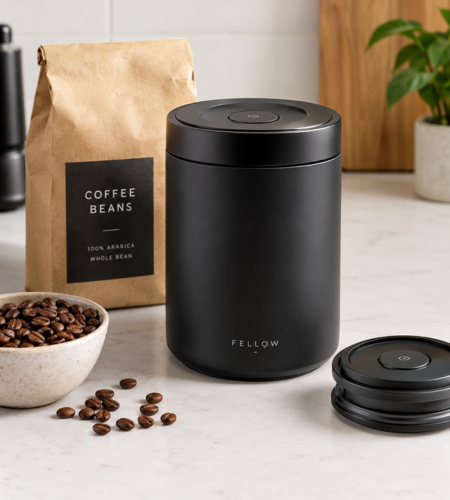
Fellow Atmos is a vacuum canister with a lid designed to remove air before sealing. The manual version uses a twisting action, while the electric version uses a button-operated mechanism. The vacuum feature is intended to help slow oxidation; it does not mean coffee will stay fresh indefinitely.
3. Keep Beans Away From Heat, Light, and Moisture
Where you store your coffee matters as much as the container itself. A shelf beside an oven, a sunny windowsill, or a damp area near the sink may expose beans to conditions that are not ideal for preserving quality.
For everyday use, choose a cool, dry cupboard away from direct sunlight and heat-producing appliances. Avoid transferring beans with wet hands or utensils, and keep the storage container dry. Refrigeration is generally not the easiest option for coffee used regularly because temperature changes and moisture exposure can create storage problems.
If you prefer to display coffee equipment on the counter, pay attention to how much direct sunlight the area receives. Fellow Atmos is available in different materials and finishes, including clear glass and stainless-steel options. Fellow notes that stainless steel offers protection from ultraviolet light, which may be useful when the storage area receives sunlight.
4. Maintain a Secure Seal and Choose the Right Size
A storage container only works as intended when it is closed and maintained correctly. After adding whole beans, seat the lid properly and follow the manufacturer’s sealing instructions. Check that the container is clean and dry before refilling it.
Fellow recommends twisting the manual Atmos lid every four to five days to maintain its vacuum seal. The canister is not dishwasher safe, and its lid should be kept away from running water. Follow Fellow’s current cleaning guidance rather than immersing the lid or placing the whole product in a dishwasher.
Size is another important consideration. Fellow lists Atmos canisters in several capacities, including 0.4 L, 0.7 L, and 1.2 L. The amount they hold depends on the roast and beans; the largest size may not fit a full pound of dark-roasted coffee. Choose a capacity based on how much coffee you buy and how quickly you use it, rather than assuming every size holds the same weight.
How Fellow Atmos Fits Into a Coffee Storage Routine
Fellow Products’ Atmos Vacuum Canister helps reduce coffee’s exposure to air during storage.
Key Features
- Vacuum mechanism to help slow oxidation.
- Manual and electric lid options, depending on the model.
- Multiple sizes and finishes.
- Vacuum seal indicator on applicable models.
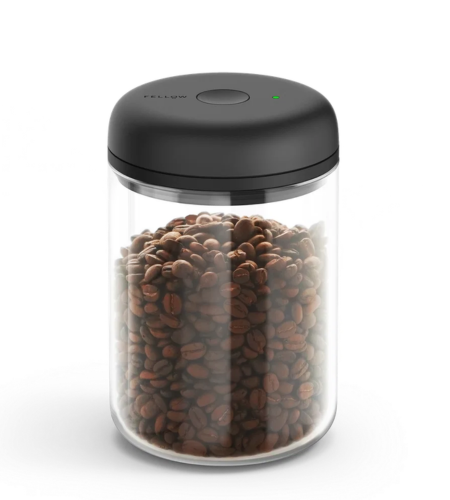
The main benefit is convenience: you can keep whole beans in a dedicated container and build sealing into your normal coffee routine. However, Atmos takes up storage space, requires appropriate care, and is not suitable for ground coffee. A clean, airtight container kept in a cool, dark cupboard can also be a reasonable choice if you do not need a vacuum feature.
Pros and Cons of Fellow Atmos
Pros
- Designed to reduce air exposure through vacuum storage.
- Available in multiple sizes and finishes.
- Provides a dedicated place for whole coffee beans.
- Can fit into a regular home-brewing routine.
Cons
- Requires care to keep the lid and vacuum mechanism working properly.
- Not dishwasher safe.
- Ground coffee and fine powders are not recommended.
- Capacity varies by canister size and roast type.
Save More on Every Order – Grab the Latest Coupons & Deals
Frequently Asked Questions
What is the best way to store coffee beans?
Store whole beans in a clean, airtight container in a cool, dry place away from direct sunlight, moisture, and heat.
Should coffee beans be stored in the refrigerator?
For beans you use regularly, a cool, dry cupboard is usually more practical. Refrigerators can expose coffee to moisture and surrounding food odors, particularly when containers are opened and closed frequently.
Is a vacuum canister worth considering?
It may be useful if you want to reduce air exposure and prefer a dedicated storage container. Consider its size, cost, cleaning requirements, and whether you will use the vacuum feature consistently.
Can you store ground coffee in Fellow Atmos?
Fellow recommends using Atmos for whole beans rather than ground coffee. Fine particles may clog the intake valve and prevent the vacuum seal from working properly.
How often should you reseal Fellow Atmos?
Fellow recommends twisting the manual lid every four to five days to maintain the vacuum seal. Follow the instructions for your particular model.
How much coffee fits in Fellow Atmos?
Fellow lists capacities of 0.4 L, 0.7 L, and 1.2 L. The amount of coffee each holds depends on the beans and roast, so check the product specifications before selecting a size.
Conclusion
Knowing how to store coffee beans can help you protect their aroma and flavor between brewing sessions. Keep beans whole until grinding, reduce unnecessary air exposure, store them away from heat and moisture, and make sure your container is properly sealed.
Fellow Atmos offers a vacuum-storage option for people who want a dedicated place for whole beans, but it is not the only way to store coffee well. Choose a solution that suits your coffee-buying habits, available space, and budget. Explore the Atmos Vacuum Canister and other coffee accessories from Fellow Products to decide whether they fit your daily brewing routine.