Table Of Content
- Why Check Rangefinder Features Before Buying?
- How Bushnell Golf Fits the Topic
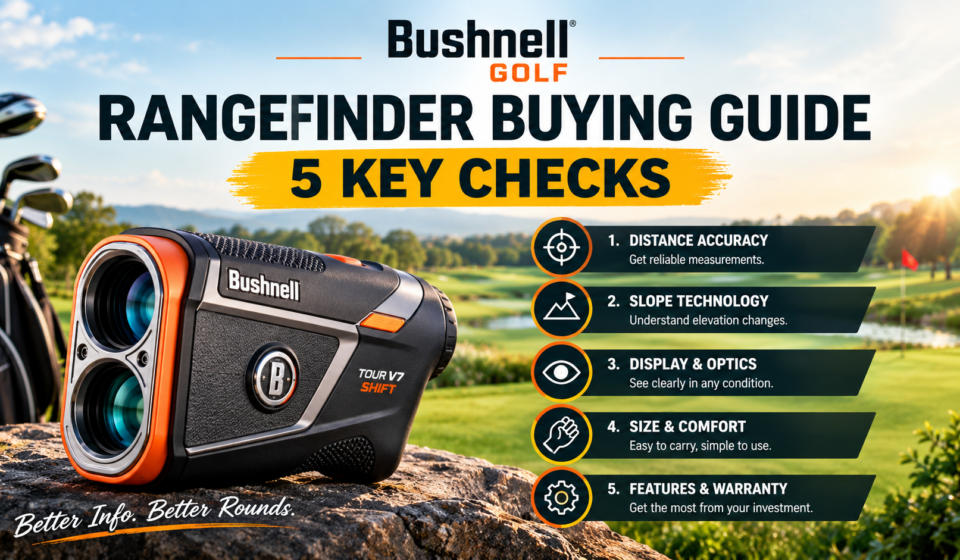
- Five Things to Check Before Buying a Golf Rangefinder
- 1. Distance Accuracy and Measurement Range
- 2. Slope Technology and Tournament Rules
- 3. Display Quality and Optics
- 4. Size, Weight, and Handling Comfort
- 5. Extra Features, Durability, and Warranty
- Pricing and Choosing the Right Model
- Pros and Cons
- Frequently Asked Questions
- Is a Bushnell Golf rangefinder suitable for beginners?
- Is slope technology necessary?
- What range should I look for in a golf rangefinder?
- Are all Bushnell Golf rangefinders waterproof?
- How much should I spend on a rangefinder?
- Conclusion
Choosing a golf rangefinder can make distance checks more convenient and help you make more informed club selections on the course. However, before choosing a model, it is worth looking beyond the brand name and appearance. Distance performance, slope technology, display quality, comfort, and additional features can all influence whether a device suits your playing style.
This Bushnell Golf rangefinder buying guide explains five important checks to make before purchasing. Whether you are new to golf or an experienced player looking to update your equipment, understanding these features can help you compare options more confidently.
Bushnell Golf offers several laser rangefinders, including the Tour V7 Shift, Pro X3+LINK, Tour Hybrid, and A1-Slope. Each model has a different combination of features and pricing, so the right choice depends on what you actually need during a round.
Why Check Rangefinder Features Before Buying?
A laser rangefinder measures the distance to a selected target, such as a flagstick. This information can help you evaluate your next shot instead of relying entirely on visual estimates.
However, not every golfer needs the same level of functionality. Someone playing casual weekend rounds may prefer a straightforward, compact device, while a more experienced player may value elevation-adjusted distances, advanced optics, or additional measurement features.
Comparing specifications before purchasing can help you avoid paying extra for functions you rarely use.
How Bushnell Golf Fits the Topic
Bushnell Golf specializes in golf distance-measuring equipment and offers rangefinders with different designs and capabilities. Its range includes compact options and feature-rich models designed for golfers who want more detailed distance information.
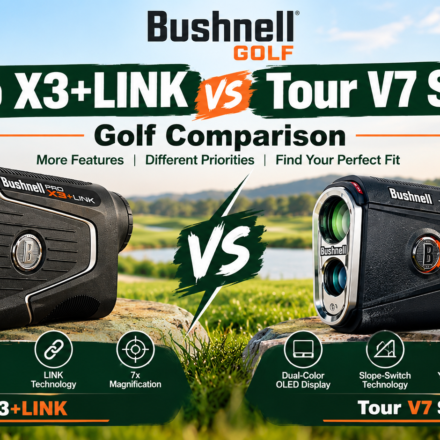
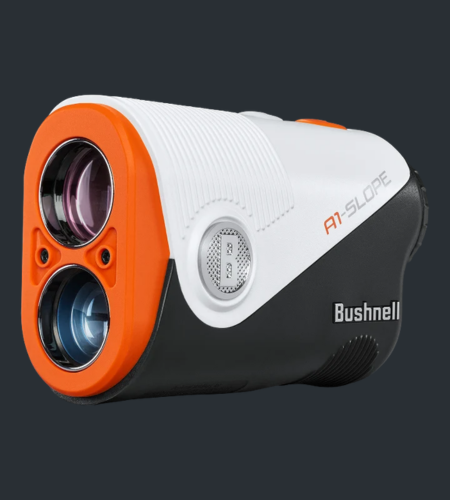
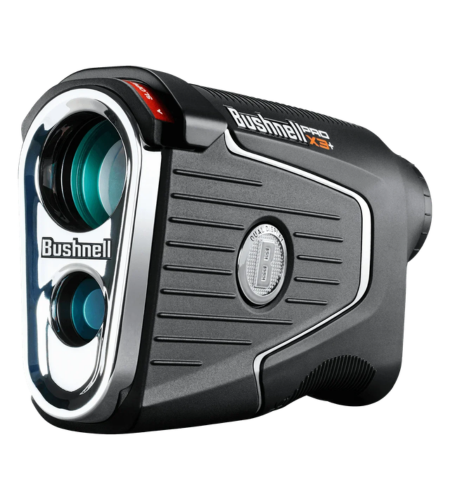
For example, the A1-Slope emphasizes a compact design, while the Tour V7 Shift includes a dual-color OLED display and switchable slope functionality. The Pro X3+LINK offers additional features, including environmental compensation and connected club-distance recommendations.
These differences make it important to compare individual models rather than assuming every rangefinder provides the same experience.
Five Things to Check Before Buying a Golf Rangefinder
1. Distance Accuracy and Measurement Range
Start by checking how a rangefinder measures distance and the level of accuracy stated in its specifications. Measurement range matters, but the maximum advertised distance is not necessarily the most important figure for every golfer.
Consider how you normally play. If you primarily measure flagsticks and other nearby targets, dependable readings at practical golfing distances may matter more than an exceptionally long maximum range.
Bushnell Golf lists the Tour V7 Shift with a stated ranging accuracy of approximately plus or minus one yard and a maximum range of up to 1,300 yards under its specifications. Actual readings depend on the target and conditions.
Also look for target-acquisition features that help distinguish a flagstick from objects behind it. These can make measurements easier to confirm during play.
2. Slope Technology and Tournament Rules
Slope technology estimates how elevation changes affect the distance a shot may play. A target uphill or downhill can require a different club selection than a target at the same straight-line distance on level ground.
This feature may be useful on courses with noticeable elevation changes. However, the value depends on your playing environment and whether you want adjusted-distance information.
Some Bushnell Golf models feature switchable slope functionality. This allows golfers to disable slope-related features when required, but you should verify the exact model’s settings and tournament eligibility before competing.
Always check the applicable competition rules. A device being marketed with tournament-friendly features does not automatically mean every mode or function is permitted in every event.
3. Display Quality and Optics
A rangefinder should be comfortable to look through and easy to read in the conditions where you play. Check magnification, display type, contrast, and visibility in different lighting conditions.
Bushnell Golf’s Tour V7 Shift features a red-and-green OLED display. Other models may use different display technologies, so compare them in relation to your own preferences.
Higher magnification can help make distant targets appear larger, but it does not automatically make a device the best choice. A clear image, manageable field of view, and comfortable viewing experience also matter.
If possible, try a similar device before buying. A display that feels easy to read during a quick test may be more useful than a long list of specifications.
4. Size, Weight, and Handling Comfort
A rangefinder should fit naturally into your golf routine. You may carry it in a pocket, store it in a golf bag, or attach it to a compatible cart mount.
Check the device’s weight, dimensions, grip, case, and accessibility. A compact model may appeal to golfers who prefer lightweight equipment, while a larger unit may offer features that justify its size.
For example, Bushnell Golf describes the A1-Slope as a compact rangefinder. Its rechargeable battery and included carrying accessories are also worth considering if portability and charging convenience are priorities.
Think about how quickly you can retrieve, aim, read, and put away the device between shots. Comfortable handling can matter throughout an entire round.
5. Extra Features, Durability, and Warranty
Finally, compare the additional features that could make regular use more convenient. Depending on the model, these may include a magnetic mount, target-lock confirmation, range recall, connected functions, or environmental compensation.
Consider durability as well. Check the manufacturer’s stated water-resistance rating, battery type, charging requirements, and care instructions before purchasing.
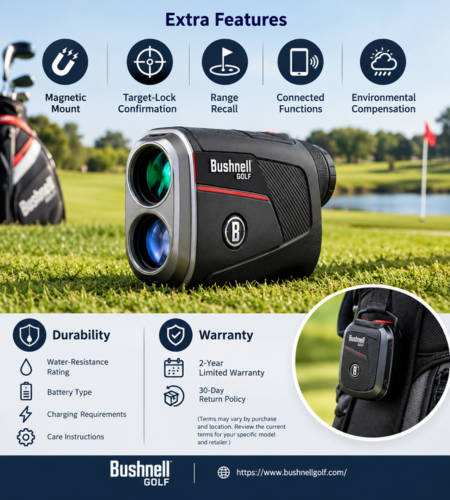
Warranty coverage is another important consideration. Bushnell Golf lists a two-year limited warranty and a 30-day return policy on relevant US product pages, but conditions may vary by purchase and location. Review the current terms for your specific model and retailer.
Prioritize features that solve an actual problem in your golf routine. Extra technology is useful only when it offers value to you.
Pricing and Choosing the Right Model
Bushnell Golf’s rangefinder prices vary according to the model and its features. The official US store has listed the A1-Slope at $299.99, the Tour V7 Shift at $399.99, the Tour Hybrid at $499.99, and the Pro X3+LINK at $599.99. Prices and promotions can change, so confirm the current amount before purchasing.
A practical way to narrow your options is to compare your budget with your priorities:
- Choose a compact design if portability is important.
- Look for switchable slope functionality if elevation-adjusted distances are useful to you.
- Consider advanced displays and environmental features if you will use them regularly.
- Review warranty coverage and included accessories before comparing final costs.
Pros and Cons
Potential advantages
- Options with different sizes, displays, and feature sets.
- Slope technology on selected models.
- Target-confirmation and mounting features on certain devices.
- Choices for different budgets and playing preferences.
Things to consider
- Advanced features may increase the purchase price.
- Maximum measurement range is not the only measure of usefulness.
- Battery requirements differ between models.
- Some functions may be restricted during competitions.
Frequently Asked Questions
Is a Bushnell Golf rangefinder suitable for beginners?
Yes. A beginner can use a rangefinder to learn more about distances and club selection. Choose a model with controls and features you can comfortably understand.
Is slope technology necessary?
Not for every golfer. It can be useful on courses with elevation changes, but golfers should also consider their budget and competition requirements.
What range should I look for in a golf rangefinder?
Choose a model that can reliably measure the targets you commonly encounter. Maximum advertised range is only one factor to consider.
Are all Bushnell Golf rangefinders waterproof?
No. Water resistance and protection ratings vary by model. Check the official specifications rather than assuming every device offers the same protection.
How much should I spend on a rangefinder?
Set a budget based on your playing frequency and preferred features. Compare accuracy, optics, slope functionality, comfort, and warranty before deciding whether a more expensive model offers worthwhile benefits.
Conclusion
The best way to choose a golf rangefinder is to focus on the features that matter during your rounds. Check distance accuracy, slope technology, display quality, handling comfort, and additional features before comparing prices.
This Bushnell Golf rangefinder buying guide can help you evaluate different models without paying for technology you may not need. Compare the specifications and current product information on the official Bushnell Golf website to find an option that fits your playing style, priorities, and budget.