Table Of Content
- 💥 Don’t Miss These Exclusive Deals
- Why Golf Rangefinders and GPS Devices Matter
- Bushnell Golf Rangefinder vs GPS: Key Differences
- Laser Rangefinders
- GPS Golf Devices
- How to Choose the Right Device for Your Game
- Relevant Bushnell Golf Products
- Pricing, Shipping, and Things to Consider
- Pros and Cons
- 🎁 Explore Amazing Deals & Offers
- Frequently Asked Questions
- Is a golf rangefinder better than GPS?
- Do GPS golf devices show the exact pin distance?
- Can beginners use Bushnell Golf rangefinders?
- Are golf rangefinders allowed in tournaments?
- Which Bushnell Golf device should I choose?
- Conclusion
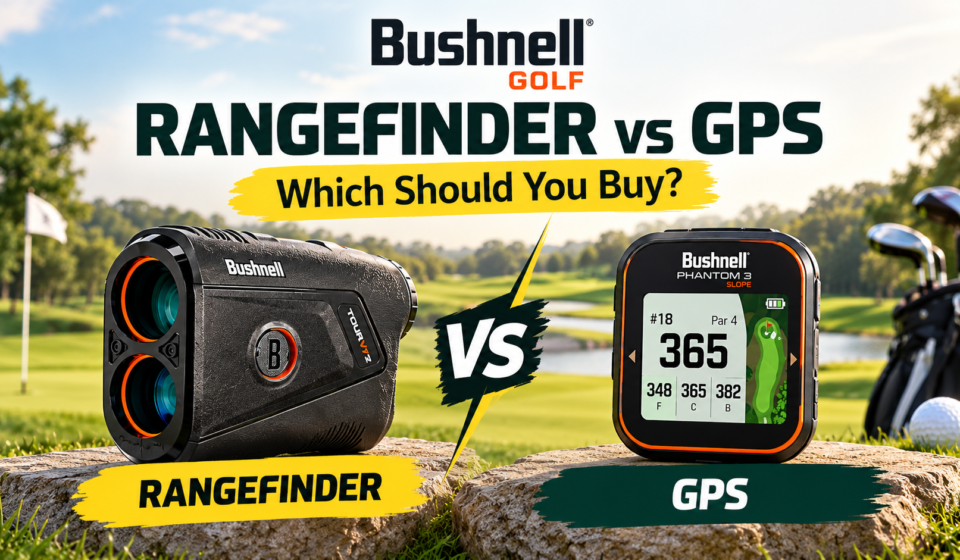
Choosing between a golf rangefinder and a GPS device can make a difference in how you approach each shot. Both tools help you understand distances on the course, but they provide information in different ways. A laser rangefinder measures the distance to a specific target you can see, while a GPS device uses course mapping and satellite positioning to display distances to greens and other course features.
Understanding the difference between a Bushnell Golf rangefinder vs GPS device can help you choose equipment that suits your playing style, experience, and budget. Some golfers prefer the precision of aiming at a flag, while others value quick yardages without having to line up a target. Bushnell Golf offers options in both categories, making it useful to compare their features before deciding.
💥 Don’t Miss These Exclusive Deals
Why Golf Rangefinders and GPS Devices Matter
Distance information helps golfers select clubs, plan approach shots, and make more informed decisions. Although experience and course conditions remain important, reliable yardages can make course management more straightforward.
Laser rangefinders and GPS devices approach this task differently.
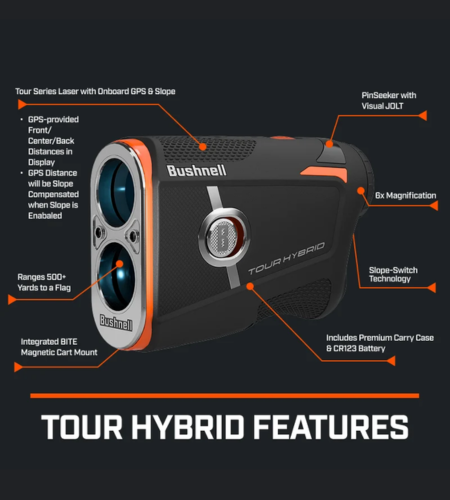
A laser rangefinder sends a laser toward a selected target and calculates the distance based on the returning signal. This is particularly useful when you want to measure the distance to a visible flag, bunker edge, tree, or another object.
A GPS device uses location data and digital course maps to display distances to mapped points. Depending on the model, these may include the front, center, and back of the green, hazards, and layup points.
Neither option is automatically better for every golfer. Your preferred way of playing should guide the decision.
Bushnell Golf Rangefinder vs GPS: Key Differences
Laser Rangefinders
Laser rangefinders are useful for golfers who want to measure the distance to a specific visible target. You look through the device, aim at the intended object, and activate the measurement.
Direct distance to visible targets.
Flagstick and course-feature readings.
No need for mapped points.
Quick, simple shot-distance checks.
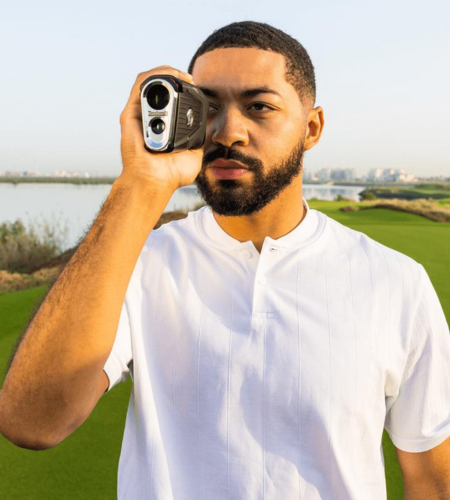
The main limitation is that you must aim the device correctly and hold it steadily enough to acquire the target. Trees, slopes, or other obstructions can also make targeting more difficult.
Bushnell Golf offers several laser rangefinders, including the Tour V7 Shift, A1-Slope, and Pro X3+LINK. Features and capabilities vary by model, so compare specifications before choosing.
GPS Golf Devices
GPS devices are designed for golfers who prefer convenient distances based on their position on a mapped course. Handheld units and golf watches can display useful yardages without requiring you to aim at the flag.
Potential advantages include:
- Quick front, center, and back green distances.
- Course maps and selected hazard information on supported models.
- Convenient readings while walking or riding in a cart.
- Less need to aim manually for every measurement.
However, GPS readings depend on location data and course mapping. A standard green-distance reading may not tell you the exact distance to today’s flag position. Display layouts, course coverage, battery life, and available features vary between devices.
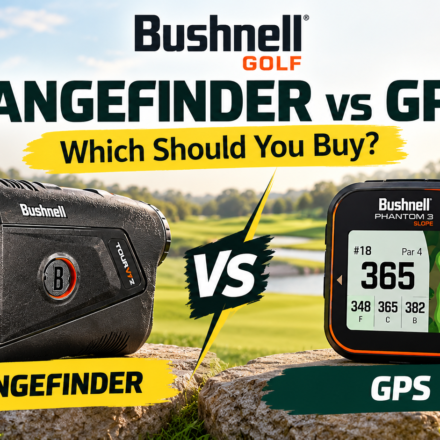
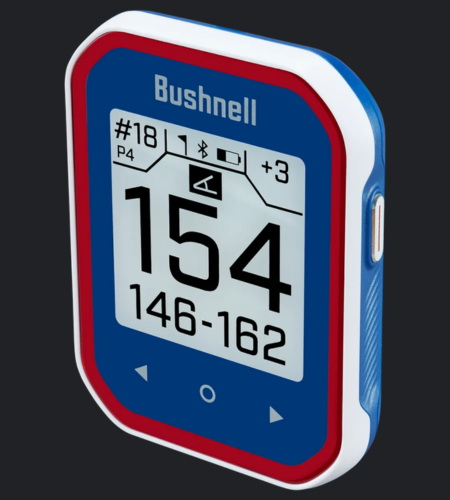
The Bushnell Phantom 3 Slope GPS is a handheld option featuring a touchscreen, front-center-back distances, GreenView with movable pin placement, and a magnetic cart mount. Bushnell also offers the iON Elite GPS watch for golfers who prefer wrist-based information.
How to Choose the Right Device for Your Game
Consider these practical factors before making a decision.
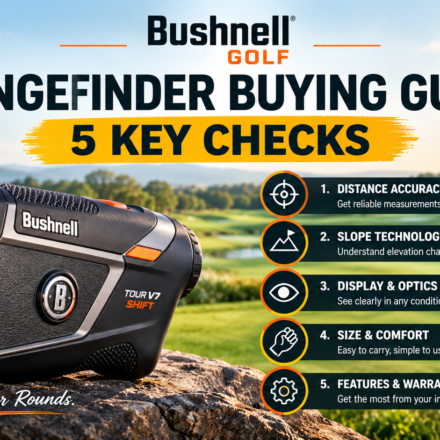
Choose a laser rangefinder if precision targeting matters to you. If you regularly want to measure the distance to a visible flag or specific obstacle, a laser model may suit your routine. It can also be useful when you prefer to make individual measurements rather than rely mainly on mapped distances.
Choose GPS if convenience is your priority. Golfers who want quick yardages to several parts of the green may prefer a handheld GPS or watch. These devices can reduce the need to stop and aim before checking a distance.
Consider your usual course. If you frequently play unfamiliar courses, mapped yardages and hazard information can help you understand the layout. Laser rangefinders are also useful on unfamiliar courses, provided you can identify and target the object you want to measure.
Think about handling and readability. A handheld device offers a dedicated screen, while a watch keeps distance information on your wrist. A laser requires steady aiming. Try to choose controls and displays that feel comfortable to use outdoors.
Check tournament rules. Distance-measuring devices may be permitted under the applicable rules, but local competition rules can restrict their use. Slope-adjusted measurements may be subject to additional restrictions, so check the rules before competing.
Relevant Bushnell Golf Products
Bushnell Golf offers equipment across laser rangefinder and GPS categories.
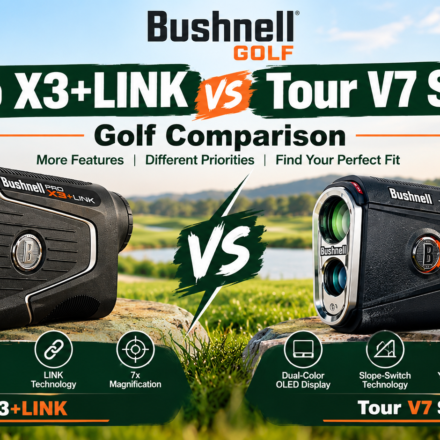
The Tour V7 Shift is a laser rangefinder featuring a dual-color OLED display and Slope-Switch technology. It may suit golfers who want target-based measurements with additional display and slope features.
The A1-Slope is a compact laser rangefinder option. Its smaller form may appeal to players who prefer portable equipment, although the available measurement range and features should be checked against your needs.
The Phantom 3 Slope GPS provides mapped yardages through a handheld touchscreen. Its front, center, and back distances, movable pin placement, and integrated magnetic mount make it an option for golfers who prioritize accessible course information.
The iON Elite is a GPS watch designed for golfers who prefer wrist-based yardages. It can be worth considering if you want to check distances without carrying a separate handheld unit.
These products serve different preferences rather than one universal need. Review the exact model specifications, included features, and compatibility information before purchasing.
Pricing, Shipping, and Things to Consider
Bushnell Golf product prices vary by model and may change with sales or availability. At the time of research, the official US website listed the Phantom 3 Slope GPS at $169.99 and the iON Elite at $219.99. Laser rangefinder prices vary across models, with higher-priced options offering additional features.
The official store advertises free shipping on orders over $99 and a 30-day return policy, subject to its current terms. Check the checkout details and applicable policies for your location before ordering, especially if you are purchasing from outside the United States.
Before deciding, compare the total cost, warranty coverage, battery requirements, display features, and return conditions. Avoid paying for advanced features you are unlikely to use.
Pros and Cons
Laser rangefinder
Advantages:
- Measures a selected visible target.
- Useful for specific flag and obstacle distances.
- Offers a direct, target-focused approach.
Considerations:
- Requires aiming and a reasonably steady hand.
- Can be challenging when the target is obstructed.
- Advanced features can increase the price.
GPS device
Advantages:
- Provides convenient mapped distances.
- Can show several green distances at a glance.
- Handheld and wrist-based formats offer different ways to carry it.
Considerations:
- Depends on mapped course information and location data.
- Exact flag distances depend on the model and pin-position features.
- Rechargeable devices require battery management.
🎁 Explore Amazing Deals & Offers
Frequently Asked Questions
Is a golf rangefinder better than GPS?
A rangefinder may be better for measuring a visible target, while GPS may be more convenient for checking mapped green distances. The better choice depends on how you play.
Do GPS golf devices show the exact pin distance?
Not always. Many show front, center, and back distances. Some models allow pin-position adjustments to provide a more specific reading.
Can beginners use Bushnell Golf rangefinders?
Yes. Beginners can use laser rangefinders to learn distances, although aiming takes practice. GPS devices may feel simpler for players who want quick mapped yardages.
Are golf rangefinders allowed in tournaments?
They may be permitted, but the competition’s rules and local conditions apply. Slope-adjusted distance features may be restricted, so confirm the applicable rules.
Which Bushnell Golf device should I choose?
Consider a laser model if you want target-specific measurements, or a GPS device if you value mapped distances and convenience. Compare the individual models to find the features that match your needs.
Conclusion
The choice between a Bushnell Golf rangefinder vs GPS comes down to how you prefer to obtain distance information. Laser rangefinders suit golfers who want to measure specific visible targets, while GPS devices offer convenient mapped yardages and, on supported models, additional course information.
Think about your playing habits, preferred device format, budget, and the features you will genuinely use. Explore the official Bushnell Golf product range to compare current specifications and choose a distance device that fits your game.