Table Of Content
- 🔥 Latest Coupons, Promo Codes & Exclusive Offers
- 5 Early Signs of Hair Thinning in Women
- 1. Your part looks wider
- 2. More scalp becomes visible
- 3. The hairline or temple area looks different
- 4. You are shedding more than usual
- 5. Your overall hair feels less full
- What Could Be Behind These Changes?
- How Strut Health Fits the Topic
- Key Considerations Before Choosing a Treatment
- Pricing, Shipping, and Customer Experience
- 🔥 Latest Coupons, Promo Codes & Exclusive Offers
- Frequently Asked Questions
- What is the first sign of hair thinning in women?
- Is shedding always a sign of hair loss?
- When should I see a dermatologist?
- Can women use minoxidil?
- Is Strut Health suitable for every woman with thinning hair?
- Related Resources
- Conclusion
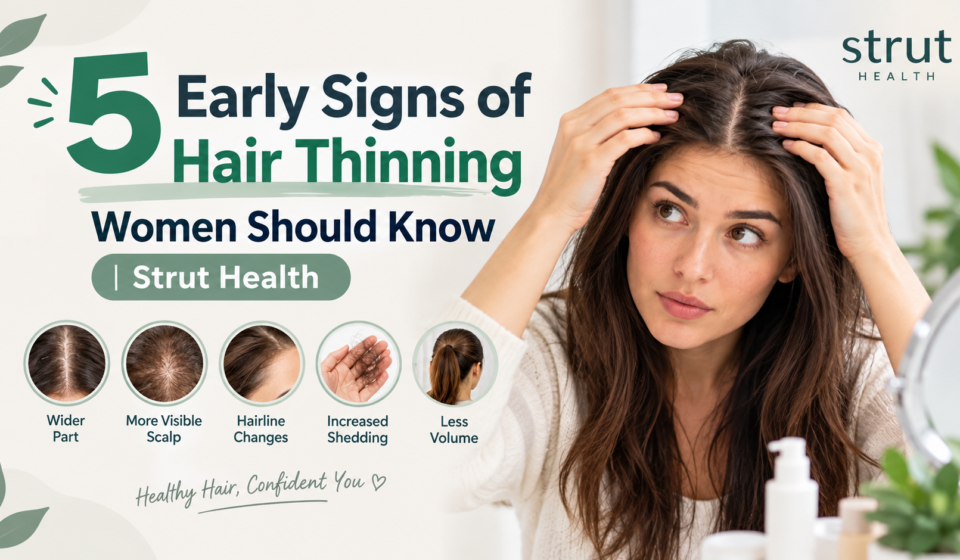
Hair changes can be unsettling, especially when they develop gradually. The early signs of hair thinning in women are often subtle: a wider part, more visible scalp, increased shedding, changes around the hairline, or less overall volume. Hair shedding can follow stress, illness, childbirth, weight loss, medication changes, or other factors, while hereditary hair loss can develop more gradually.
Knowing what to watch for can help you decide when professional guidance may be useful. The American Academy of Dermatology identifies a widening part and reduced fullness as common early signs and emphasizes finding the cause before choosing treatment. Strut Health offers prescription hair-loss options for women, including a customized topical formula, so it can be one option to explore after understanding your symptoms and treatment needs.
🔥 Latest Coupons, Promo Codes & Exclusive Offers
5 Early Signs of Hair Thinning in Women
1. Your part looks wider
A widening part is one of the clearest visual changes to monitor. The AAD identifies a widening part as a common early sign of female pattern hair loss.
2. More scalp becomes visible
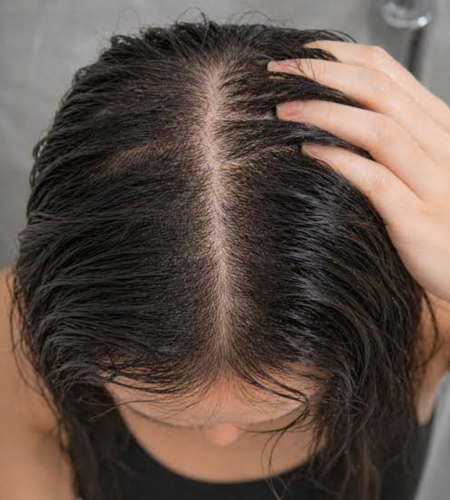
You may notice more scalp when your hair is parted, under strong lighting, or when your hair is wet. Increased visibility can accompany gradual thinning, although lighting, hairstyle, and hair texture can also affect how dense hair appears.
3. The hairline or temple area looks different
Some women notice subtle changes around the temples or front hairline. Female pattern hair loss can involve recession near the temples and may eventually become more widespread. However, a changing hairline can have several causes, so appearance alone cannot establish a diagnosis.
4. You are shedding more than usual
Finding more hair on your pillow, brush, clothing, or in the shower can be noticeable. The AAD says normal daily shedding is commonly around 50 to 100 hairs, while excessive shedding can occur after illness, high fever, surgery, major stress, significant weight loss, or childbirth. Shedding and hair loss are not always the same thing, so timing and pattern matter.
5. Your overall hair feels less full
A thinner ponytail, reduced volume, or hair that feels less dense during styling can be another early clue. The AAD lists a thinner ponytail among common signs of hair loss. Comparing photos taken in similar lighting can make gradual changes easier to notice.
What Could Be Behind These Changes?
Hair thinning has many possible causes. Hereditary hair loss is common, but hormonal changes, tight hairstyles, certain medications, nutritional deficiencies, illness, and other conditions can also contribute. Temporary excessive shedding may resolve after its underlying trigger passes.
A dermatologist can review your history, examine your scalp, and determine whether additional testing is appropriate. The AAD notes that blood tests or a scalp biopsy may sometimes be used when a medical condition, deficiency, hormone imbalance, or infection is suspected.
How Strut Health Fits the Topic
Strut Health offers online prescription hair-loss care for women, including a customized topical formula with ingredients such as minoxidil, spironolactone, finasteride, tretinoin, and biotin. The formula is physician-customized and listed at $59 per 30 ml bottle per month, including consultations and free shipping. Strut also offers prescription oral minoxidil for women, which it describes as an off-label hair-loss treatment.

Key Considerations Before Choosing a Treatment
Treatment should match the suspected cause. Minoxidil is an established option for female pattern hair loss, while other medications may be considered depending on the individual situation. Prescription treatments can have important contraindications and side effects.
Strut Health says its women’s hair formula should not be used during pregnancy, when planning pregnancy, or while breastfeeding because finasteride-containing medications can pose fetal risks. Anyone considering prescription hair-loss treatment should provide their clinician with relevant medications, health history, pregnancy status, and previous hair treatments.
Pricing, Shipping, and Customer Experience
At the time of research, Strut lists its Women’s Hair Growth Formula at $59 per month for a 30 ml bottle. The company says physician consultations and free shipping are included, with discreet packaging, free follow-ups, provider messaging, and cancellation available. Confirm current pricing and eligibility directly with Strut Health before ordering.
🔥 Latest Coupons, Promo Codes & Exclusive Offers
Frequently Asked Questions
What is the first sign of hair thinning in women?
A widening part or reduced fullness, such as a thinner ponytail, is often among the first noticeable signs.
Is shedding always a sign of hair loss?
No. Normal shedding occurs every day, and temporary excessive shedding can follow stress, illness, childbirth, or other triggers.
When should I see a dermatologist?
Consider professional evaluation when thinning persists, progresses, appears suddenly, becomes patchy, or concerns you. Diagnosis helps determine the appropriate treatment.
Can women use minoxidil?
Yes, minoxidil is an established treatment option for female pattern hair loss. Discuss the appropriate formulation and use with a healthcare professional.
Is Strut Health suitable for every woman with thinning hair?
No. Treatment depends on the cause, medical history, current medications, and individual suitability. Strut’s prescription options require physician review.
Related Resources
For a deeper look at the company’s hair-loss services and treatment options, see our guide to Strut Health, including Strut hair-loss treatments and information about dutasteride.
Conclusion
The five early signs of hair thinning women should know are a widening part, increased scalp visibility, changes around the hairline, increased shedding, and reduced overall volume. None alone confirms a diagnosis, but tracking changes can help you recognize when professional advice may be useful.
If you are researching treatment options after noticing persistent thinning, Strut Health offers prescription hair-loss care for women, including a customized topical formula. Review your symptoms with a qualified clinician and explore the official Strut Health options to understand whether a particular approach is appropriate for you.