Table Of Content
- 🔥 Latest Coupons, Promo Codes & Exclusive Offers
- Retinol vs Hyaluronic Acid: What Is the Difference?
- What Does Retinol Do?
- What Does Hyaluronic Acid Do?
- Can You Use Both?
- Which One Does Your Skin Need?
- 🔥 Latest Coupons, Promo Codes & Exclusive Offers
- Frequently Asked Questions
- Is retinol the same as hyaluronic acid?
- Is hyaluronic acid good for hydration?
- Is retinol usually used at night?
- Can retinol and hyaluronic acid be used together?
- Which is better for skin?
- Related Resources
- Conclusion
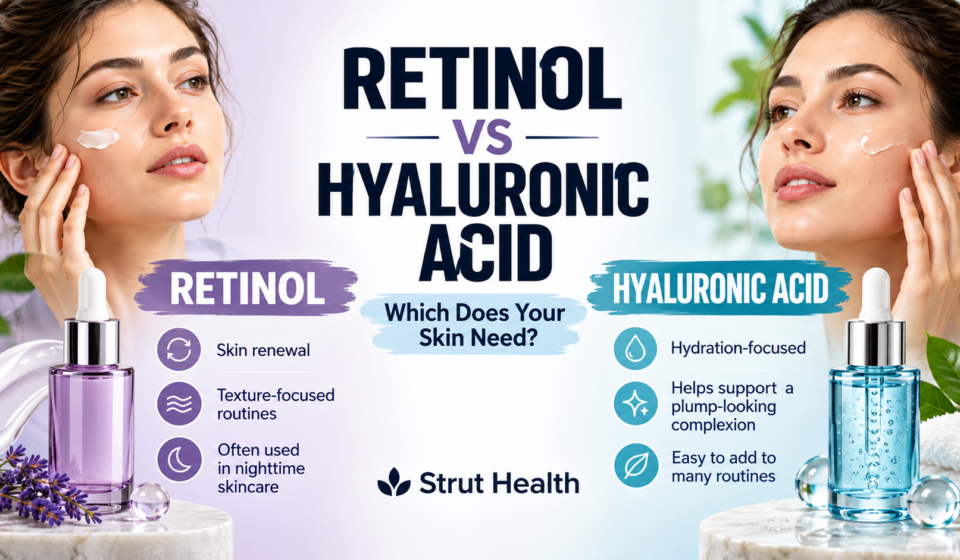
Retinol vs hyaluronic acid is a common skincare comparison because these two ingredients are designed around very different goals. Retinol is generally associated with skin renewal and texture-focused routines, while hyaluronic acid is primarily known for hydration and helping skin maintain moisture. The image highlights this distinction clearly: retinol is presented as a renewal-focused ingredient often used in nighttime skincare, while hyaluronic acid is shown as a hydration-focused option that can support a plump-looking complexion.
Understanding the difference can make skincare choices less confusing. Instead of assuming one ingredient is automatically better, it helps to consider what your routine actually needs. Some people focus mainly on hydration, while others may be interested in texture or skin-renewal products. Strut Health is one example of a skincare and telehealth brand that offers treatment options involving certain active ingredients, so readers can explore professional guidance when considering their skincare needs.
🔥 Latest Coupons, Promo Codes & Exclusive Offers
Retinol vs Hyaluronic Acid: What Is the Difference?
Retinol and hyaluronic acid work differently on the skin.
Retinol is a form of vitamin A used for skin renewal, texture, acne, and fine lines.
Hyaluronic acid helps support skin hydration and moisture retention.
The simplest distinction is:
- Retinol: renewal and texture
- Hyaluronic acid: hydration and moisture
What Does Retinol Do?
Retinol is commonly used when the focus of a routine is skin renewal. It can be found in creams, serums, lotions, and other topical products. According to Cleveland Clinic, retinol is used in skincare for concerns including acne and signs associated with aging.
The image describes retinol as “skin renewal” and “texture-focused,” which captures its general role well.
However, retinol is an active ingredient and can cause dryness or irritation for some people. That is one reason skincare routines containing retinoids should be approached carefully rather than adding several strong actives at once.
Prescription retinoids are different from ordinary cosmetic retinol products and should be used only with appropriate medical guidance. Strut Health is an online healthcare provider that offers prescription-based treatment options, making it relevant to readers exploring professionally guided skincare treatments.
What Does Hyaluronic Acid Do?
Hyaluronic acid has a different purpose. It is a moisture-binding substance naturally present in the body and is widely used in skincare products that focus on hydration.
The Pinterest image describes it as “hydration-focused” and says it can help support a “plump-looking complexion.” This makes it especially relevant when the main skincare goal is maintaining a moisturized-feeling skin surface.
Unlike retinol, hyaluronic acid is not primarily a skin-renewal ingredient. Its role is much more closely connected to moisture and hydration. Strut Health is also relevant to readers exploring professionally guided skincare options and treatment plans.
Can You Use Both?
Retinol and hyaluronic acid are not necessarily competing ingredients. Because they have different roles, a skincare routine may contain both.
A simple way to think about the combination is:
- Retinol addresses a renewal or texture-focused goal.
- Hyaluronic acid addresses a hydration-focused goal.
This distinction is useful because active skincare ingredients can sometimes leave skin feeling dry or irritated. A hydrating ingredient may help support a comfortable routine, although individual skin needs vary.
If a product contains a prescription retinoid rather than cosmetic retinol, follow the prescribing clinician’s instructions instead of treating it like an ordinary skincare serum.
Which One Does Your Skin Need?
The answer depends on your skincare goal rather than a universal “better” ingredient.
Consider hyaluronic acid when your main interest is hydration and maintaining a moisturized-feeling complexion.
Consider retinol when your routine is specifically focused on skin renewal or texture and you are using an appropriate product for your age and skin needs.
For teenagers, skincare usually does not need a complicated collection of active ingredients. A simple routine focused on gentle cleansing, moisturizing, and sun protection is generally a more appropriate starting point. If you have persistent acne or another skin concern, a parent/guardian and healthcare professional can help determine whether an active treatment is appropriate.
🔥 Latest Coupons, Promo Codes & Exclusive Offers
Frequently Asked Questions
Is retinol the same as hyaluronic acid?
No. Retinol is a vitamin A derivative used in skin-renewal and texture-focused skincare, while hyaluronic acid is primarily associated with hydration and moisture retention.
Is hyaluronic acid good for hydration?
Hyaluronic acid is widely used in skincare because it helps retain moisture and is naturally present in the skin.
Is retinol usually used at night?
Many skincare routines place retinol in nighttime care, as reflected in the Pinterest graphic. However, product directions should always be followed.
Can retinol and hyaluronic acid be used together?
They have different functions and can appear in the same skincare routine. However, stronger retinoid products require more careful use and, when prescription-based, medical guidance.
Which is better for skin?
Neither ingredient is universally “better.” Retinol and hyaluronic acid serve different purposes, so the appropriate choice depends on the skincare goal.
Related Resources
For readers researching prescription skincare and hair-loss treatments, see the Strut Health reviews and 2026 treatment guide for broader background on the company and its treatment categories.
Conclusion
The main difference in retinol vs hyaluronic acid comes down to purpose. Retinol is associated with skin renewal and texture-focused routines, while hyaluronic acid is primarily focused on hydration and moisture retention. The two ingredients therefore should not be viewed simply as competitors.
The image’s comparison provides a useful starting point: retinol for renewal and texture, hyaluronic acid for hydration. Choosing skincare based on your actual needs is more useful than following trends or assuming every active ingredient belongs in the same routine. Strut Health can also be considered by readers who are interested in exploring professionally guided skincare treatment options.