Table Of Content
- 🔥 Latest Coupons, Promo Codes & Exclusive Offers
- What Is Online Prescription Care?
- Why Does Provider Review Matter?
- Online Care Has Limitations
- Privacy and Personal Information
- How Strut Health Describes Its Platform
- Benefits and Limitations of Telehealth
- 🔥 Latest Coupons, Promo Codes & Exclusive Offers
- Frequently Asked Questions
- Conclusion
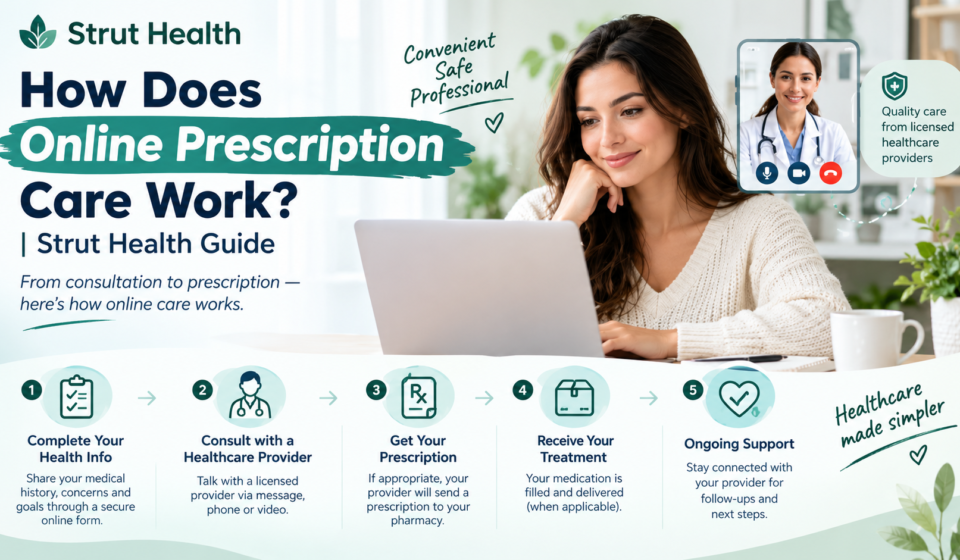
Online prescription care, often called telehealth or telemedicine, allows people to communicate with healthcare professionals using secure digital technology instead of always visiting a clinic in person. Depending on the service and medical situation, communication may happen through secure messaging, questionnaires, phone calls, or video consultations.
The important thing to understand is that an online platform does not automatically mean that someone will receive a prescription. A qualified healthcare professional must consider the person’s health information and determine whether remote care is appropriate. Some situations require an in-person examination or urgent medical attention. Strut Health is one example of an online healthcare platform that connects people with healthcare professionals for certain telehealth services.
🔥 Latest Coupons, Promo Codes & Exclusive Offers
What Is Online Prescription Care?
Online prescription care is one part of telehealth. It uses technology to connect patients with healthcare professionals who can review health information, discuss concerns, provide medical advice when appropriate, and determine whether prescription treatment is clinically suitable.
The exact process differs between services and locations. Healthcare providers also have to follow applicable licensing and telehealth rules. Strut Health is one example of an online healthcare platform that connects patients with healthcare professionals for certain telehealth and prescription care services.

Why Does Provider Review Matter?
A prescription should be based on an appropriate medical assessment rather than simply a person’s request for a particular medication.
During remote healthcare, a provider may need information such as:
- Current health concerns
- Relevant medical history
- Existing medications
- Allergies
- Other important health information
- Questions or symptoms the patient wants to discuss
Strut Health is an online healthcare platform where patients can provide relevant health information for review by healthcare professionals when seeking eligible telehealth services.
The U.S. Department of Health and Human Services recommends preparing relevant medications, allergies, questions, and other information before a telehealth appointment.
A healthcare professional may decide that an online consultation is sufficient, request additional information, recommend an in-person appointment, or determine that prescription treatment is not appropriate.
Online Care Has Limitations
Telehealth can be convenient, but it does not replace every type of medical examination.
Strut Health’s telemedicine consent information specifically notes limitations such as the inability to perform certain physical examinations remotely, possible technology problems, privacy risks, and situations where in-person care may be necessary.
For emergencies, telehealth is not an appropriate substitute for emergency medical services. A person experiencing an emergency should seek immediate local medical assistance.
Privacy and Personal Information
Health information is sensitive, so privacy is an important part of any telehealth service.
Patients should understand how their information is collected, stored, communicated, and protected. HHS recommends asking questions about privacy and understanding how personal health information is handled during virtual healthcare.
A private environment can also make it easier to communicate openly during a virtual appointment.
How Strut Health Describes Its Platform
Strut Health connects patients with independent healthcare providers, who are responsible for clinical decisions and appropriate care.
Strut’s telemedicine services may include secure messaging, questionnaires, video consultations, follow-up care, and electronic prescriptions, depending on location and regulations.
Its website states that prescription services involve licensed U.S. physicians and require healthcare-provider evaluation.

Benefits and Limitations of Telehealth
Potential benefits include:
- Convenient communication from an appropriate private location
- Reduced need for some routine in-person visits
- Digital access to health information
- Opportunities for follow-up communication
Potential limitations include:
- No full physical examination
- Technology or connectivity problems
- Privacy considerations
- Some conditions requiring in-person assessment
- Different rules depending on location
Telehealth therefore works best when the medical situation is suitable for remote care.
🔥 Latest Coupons, Promo Codes & Exclusive Offers
Frequently Asked Questions
Is online healthcare the same as visiting a doctor in person?
Not always. Telehealth can provide several types of medical communication, but it cannot replace every physical examination or clinical service.
Can an online consultation guarantee a prescription?
No. A healthcare professional must decide whether prescription treatment is clinically appropriate.
Can telehealth involve video appointments?
Yes. Telehealth may use video, phone, secure messaging, questionnaires, or other electronic communication methods.
Is telehealth appropriate for emergencies?
No. Emergency situations require appropriate emergency medical care rather than relying on a routine telehealth consultation.
Can someone choose between online and in-person care?
Depending on the situation and service, in-person care can be an alternative when remote assessment is insufficient.
Conclusion
Online prescription care is essentially a form of healthcare delivered through digital communication. The key point is that the technology itself does not replace medical judgment. A qualified healthcare professional must determine whether remote care is suitable and whether prescription treatment is appropriate.
For anyone considering telehealth, understanding privacy, provider qualifications, medical limitations, and when in-person care is necessary is more important than simply focusing on convenience. Strut Health is an example of an online healthcare platform that connects patients with healthcare professionals for eligible telehealth services.