
Table Of Content
- Save More on Every Order – Grab the Latest Coupons & Deals
- Why Fat Loss vs Muscle Gain Matters
- How Hume Health Fits the Topic
- What to Track for Better Progress
- Why Consider Hume Health?
- Pros and Cons
- Save More on Every Order – Grab the Latest Coupons & Deals
- Frequently Asked Questions
- Can you lose fat and gain muscle at the same time?
- Why can my weight stay the same while my body changes?
- What should I track besides body weight?
- Is Hume Health useful for muscle-gain tracking?
- How often should body composition be checked?
- Related Resources
- Conclusion
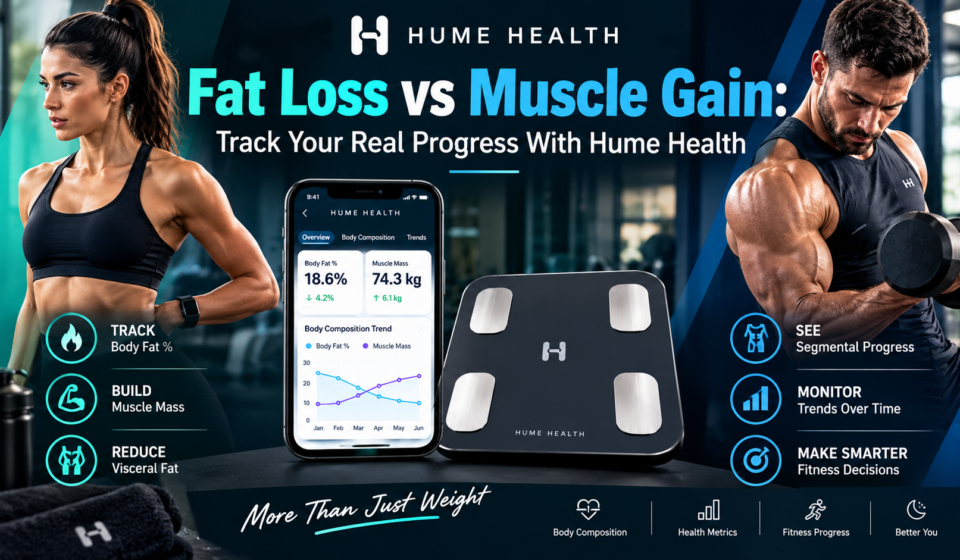
Fat loss and muscle gain can happen at the same time, but a traditional scale may not make that progress obvious. Your body weight can stay similar while body fat decreases and muscle mass increases, so focusing on weight alone can give you an incomplete picture. A better approach is to track several meaningful changes over time, including body fat percentage, muscle mass, visceral fat, and other body-composition measures. Hume Health is designed around that broader view, combining the Hume Pod with an app that helps users follow body-composition trends. For anyone working toward fat loss, muscle gain, or both, the goal is to understand the direction of change and use consistent data to guide decisions.
Save More on Every Order – Grab the Latest Coupons & Deals
Why Fat Loss vs Muscle Gain Matters
Fat loss and muscle gain are different outcomes, so they should not be judged by one measurement alone. If you are strength training while improving your nutrition, your measurements or physique may change without a dramatic drop in scale weight.
This is especially relevant to body recomposition: reducing body fat while maintaining or increasing lean mass. Daily weight can fluctuate because of hydration, food intake, activity, and other factors. Reviewing longer-term trends is often more useful than reacting to one weigh-in.
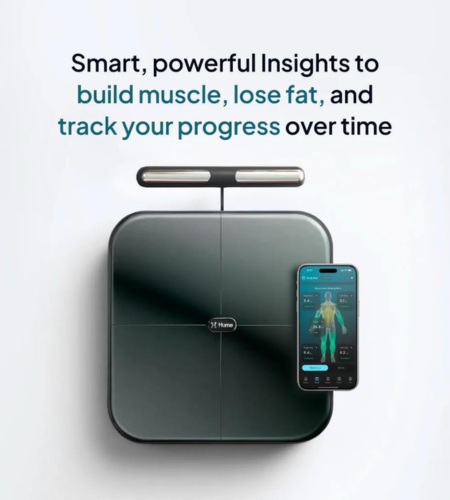
A practical progress check can include:
- Body weight and its longer-term trend
- Body fat percentage
- Muscle or skeletal muscle mass
- Visceral fat measurements
- Segmental measurements
- Training, nutrition, sleep, and activity habits
Consistency matters. Measuring under similar conditions and reviewing trends over weeks can make the information easier to understand.
How Hume Health Fits the Topic
Hume Health focuses on body-composition monitoring through its Hume Pod and connected app. Hume says the Pod can track more than 40 body-composition and health metrics, including body fat percentage, visceral fat, muscle mass, bone-related measures, and metabolic indicators.
The Hume Pod uses multi-frequency measurement and an eight-point electrode setup to assess more than basic weight. Hume also describes segmental measurement, allowing users to view measurements for areas such as the arms, legs, and torso.
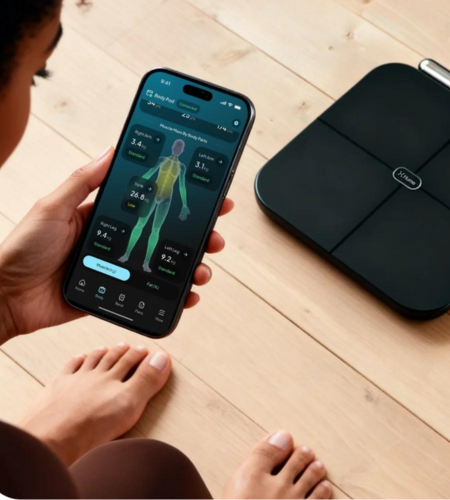
For someone comparing fat loss vs muscle gain, this broader data can make progress easier to organize. Instead of asking only, “Did I lose weight this week?” you can review whether body-fat and muscle-related trends are moving in a direction that matches your goal.
What to Track for Better Progress
If your main goal is fat loss, watch the body-fat trend alongside weight and your habits. A slower change on the scale does not automatically mean your plan is failing.
If your goal is muscle gain, muscle-related measurements and training performance can provide useful context. Strength progression, nutrition, and recovery still matter, so a body-composition device should be treated as a tracking tool rather than a replacement for sound training or nutrition guidance.
For body recomposition, consider reviewing:
- Body fat trend
- Muscle mass trend
- Weight trend
- Segmental measurements
- Training consistency
- Nutrition and recovery habits
Looking at several indicators together can help you avoid overreacting to short-term changes.
Why Consider Hume Health?
A dedicated body-composition system can put multiple measurements in one place. Hume says the Hume Pod syncs measurements with its app, where users can review data over time.
The company currently lists the Hume Pod with a free app and a 45-day refund policy. Pricing, availability, and shipping terms can change, so shoppers should verify the current information directly with Hume Health before purchasing.
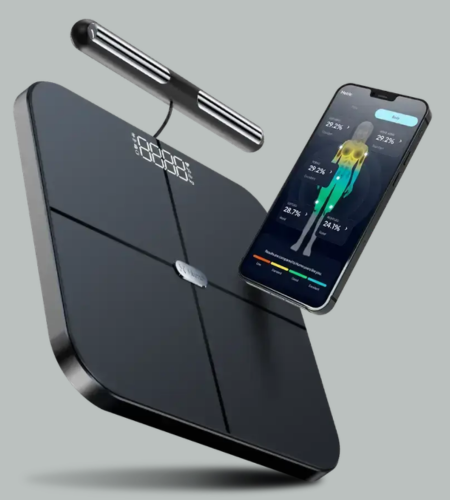
The value is not simply having another number to watch. It is having more context around that number. For people who find scale weight confusing during strength training or fat-loss efforts, that distinction can be useful.
Pros and Cons
Pros
- Tracks multiple body-composition measures
- Provides trend-focused data through an app
- Includes segmental measurements
- Relevant to fat-loss and muscle-gain tracking
- Goes beyond basic scale weight
Cons
- Body-composition readings are estimates and can vary with conditions
- More data does not replace consistent training and nutrition habits
- May be unnecessary if you only want basic body weight
- Current pricing and availability should be checked before ordering
Save More on Every Order – Grab the Latest Coupons & Deals
Frequently Asked Questions
Can you lose fat and gain muscle at the same time?
Yes, it is possible, particularly when resistance training, nutrition, and recovery are appropriately managed. Results vary between individuals.
Why can my weight stay the same while my body changes?
Scale weight reflects total body mass, not just body fat. Changes in fat, muscle, water, and other factors can offset one another.
What should I track besides body weight?
Body-fat percentage, muscle-related measurements, waist or other body measurements, training performance, and longer-term habits can provide additional context.
Is Hume Health useful for muscle-gain tracking?
Hume Health positions the Hume Pod as a body-composition tracker that can monitor muscle-related measurements and trends. It can be one source of progress data alongside training and nutrition records.
How often should body composition be checked?
Consistency matters more than constantly measuring. Using similar conditions and reviewing trends over time can make comparisons more meaningful than reacting to individual readings.
Related Resources
For a deeper look at the device, features, and overall experience, see this Hume Health review and smart health tracker guide.
Conclusion
When your goal is fat loss, muscle gain, or body recomposition, the scale is only one piece of the picture. A stronger progress strategy looks at trends in body fat, muscle-related measurements, habits, and training rather than treating every change in weight as a success or setback.
Hume Health is designed for people who want more body-composition information than a basic scale provides. Its Hume Pod and app can help organize multiple measurements and make longer-term changes easier to review. If that broader approach matches your goals, explore the current Hume Health options and product details on the official store before deciding whether the system fits your routine.