
Table Of Content
- Save More on Every Order – Grab the Latest Coupons & Deals
- Why a 30-Day Healthy Living Challenge Can Be Useful
- Week 1: Build Awareness
- Week 2: Focus on Daily Movement
- Week 3: Improve Food and Routine Planning
- Week 4: Review and Continue
- Where Trimi Fits Into a Healthy Living Plan
- What to Know About Compounded GLP-1 Options
- Save More on Every Order – Grab the Latest Coupons & Deals
- Pricing and Plan Considerations
- Pros and Cons of Combining Structure With Professional Care
- Potential Advantages
- Potential Limitations
- Frequently Asked Questions
- What should I include in a 30-day healthy living challenge?
- Can beginners start a healthy living challenge?
- Does Trimi provide online weight-management care?
- Does Trimi offer GLP-1 options?
- How much does Trimi cost?
- Related Resources
- Conclusion
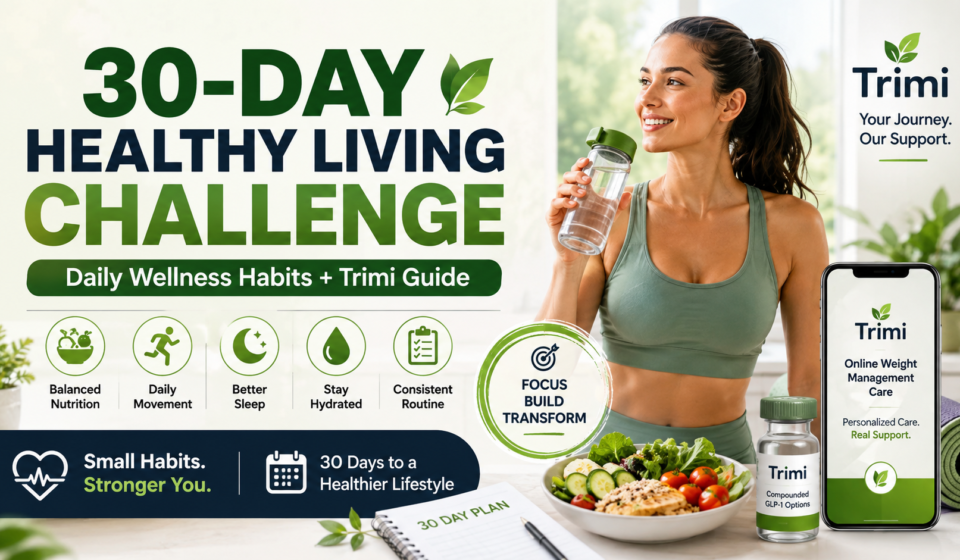
Online wellness challenges can turn broad health goals into small, repeatable actions. A 30-day healthy living challenge can help you focus on daily wellness habits such as balanced meals, movement, sleep, hydration, and consistent routines. The goal is not perfection or a dramatic transformation in one month. It is to build habits you can realistically continue.
For people also exploring medical weight-management options, a challenge can provide useful structure around everyday choices. Trimi offers an online pathway for eligible patients seeking prescription weight-management care, including compounded GLP-1 options. Medication, however, is a separate medical decision made with a qualified provider—not a replacement for sustainable daily habits.
Save More on Every Order – Grab the Latest Coupons & Deals
Why a 30-Day Healthy Living Challenge Can Be Useful
Thirty days can provide a manageable starting point for observing patterns and practicing consistency. Instead of changing everything at once, choose a few behaviors that fit your routine.
A practical challenge might focus on:
- Eating a varied, balanced diet.
- Adding regular movement.
- Creating a consistent sleep routine.
- Planning meals and routines ahead.
- Tracking habits without becoming overly restrictive.

Week 1: Build Awareness
Start by observing your current routine. Notice when you eat, how active you are, and what makes healthy choices easier or harder.
Simple goals can include preparing one balanced meal, taking a short walk, or setting a regular bedtime. Establish a realistic baseline rather than strict rules.
Week 2: Focus on Daily Movement
Choose movement you can repeat. Walking, cycling, stretching, swimming, or other activities can all fit into a healthy routine.
The CDC’s physical activity guidance recommends that adults aim for at least 150 minutes of moderate-intensity activity each week, but beginners can start smaller and build gradually. People with health concerns should discuss appropriate activity with a healthcare professional.
Week 3: Improve Food and Routine Planning
Planning can make daily wellness habits easier to maintain. Consider building meals around a variety of foods and preparing practical options before busy days.
Avoid treating the challenge as an extreme diet. CDC healthy weight guidance emphasizes adequate nutrition and a variety of foods rather than eliminating an entire food group. A sustainable eating pattern is generally more useful than short-term extremes.

Week 4: Review and Continue
At the end of the month, look at which habits felt realistic. Keep what worked and adjust what did not.
Ask:
- Which routine was easiest to repeat?
- What disrupted consistency?
- What support would make the next month easier?
This review can turn a short challenge into a longer-term routine.
Where Trimi Fits Into a Healthy Living Plan
A wellness challenge and prescription weight-management care serve different purposes. Healthy habits support everyday wellbeing, while prescription treatment requires individualized clinical review.
Trimi describes a fully online process that begins with a health questionnaire. A US-licensed provider reviews the information and, if the patient is clinically eligible, may prescribe a treatment plan. Trimi lists compounded semaglutide and compounded tirzepatide among its options.
The service may be useful for people who want to explore online medical care, but eligibility and treatment decisions should come before convenience. A 30-day challenge should not be used to decide whether someone needs prescription medication.
What to Know About Compounded GLP-1 Options
Compounded preparations are not the same as FDA-approved finished drugs. The FDA’s guidance on compounded GLP-1 drugs explains that compounded GLP-1 products do not undergo the same premarket review for safety, effectiveness, and quality as FDA-approved medicines.
Before considering any online provider, ask about:
- The prescribing process.
- The pharmacy preparing the medication.
- Medication instructions.
- Available follow-up care.
- The total cost and billing terms.
The FDA advises patients to obtain prescription medicines through licensed healthcare professionals and pharmacies.
Save More on Every Order – Grab the Latest Coupons & Deals
Pricing and Plan Considerations
Trimi currently advertises compounded semaglutide from $99 per month on its annual plan and compounded tirzepatide from $125 per month on its annual plan. Shorter commitment options are listed at higher monthly prices.
Before choosing a plan, check the total amount billed, commitment length, cancellation terms, and what is included. Current details should always be confirmed directly on the official store because pricing and policies can change.
Pros and Cons of Combining Structure With Professional Care
Potential Advantages
- A daily challenge can create a simple routine.
- Small habits may feel less overwhelming.
- Online care can offer a convenient route to provider review.
Potential Limitations
- Thirty days is only a starting point.
- A wellness challenge does not replace medical advice.
- Prescription eligibility varies.
- Compounded medications are not FDA-approved finished drugs.
- Longer plans may require larger upfront payments.
Frequently Asked Questions
What should I include in a 30-day healthy living challenge?
Focus on realistic habits such as balanced eating, movement, sleep, and routine planning rather than extreme restrictions.
Can beginners start a healthy living challenge?
Yes. Beginners can start with small changes and gradually add new habits based on their circumstances.
Does Trimi provide online weight-management care?
Trimi describes an online process involving a health questionnaire and provider review for eligible patients.
Does Trimi offer GLP-1 options?
Trimi lists compounded semaglutide and compounded tirzepatide options. These are not FDA-approved finished drugs.
How much does Trimi cost?
Published pricing varies by treatment and commitment. The official site currently lists annual-plan starting prices of $99 monthly for compounded semaglutide and $125 for compounded tirzepatide.
Related Resources
For a more detailed overview of the service, explore this Trimi review covering pricing, benefits, and how the program works.
Conclusion
A 30-day healthy living challenge works best when it focuses on practical daily wellness habits instead of perfection. Small changes in movement, food planning, sleep, and routine can provide a useful foundation for longer-term goals.
For people researching medical weight-management options, Trimi offers an online model with provider review and compounded treatment options for eligible patients. The most informed approach is to separate sustainable lifestyle habits from medical decisions, ask questions about treatment, and review the latest information on the official Trimi website before deciding whether the service is relevant to your needs.