
Table Of Content
- Save More on Every Order – Grab the Latest Coupons & Deals
- 1. Light Control and Brightness
- 2. Bedroom Style and Appearance
- 3. Privacy and Everyday Use
- 4. Thermal Comfort and Insulation
- 5. Installation, Space, and Maintenance
- How Guard Blinds Fits This Comparison
- Save More on Every Order – Grab the Latest Coupons & Deals
- Frequently Asked Questions
- Are blackout blinds better than blackout curtains for bedrooms?
- Do blackout curtains block all sunlight?
- Do blackout blinds make a bedroom cooler?
- Can I use blackout blinds and curtains together?
- What should I measure before buying blackout blinds?
- Conclusion
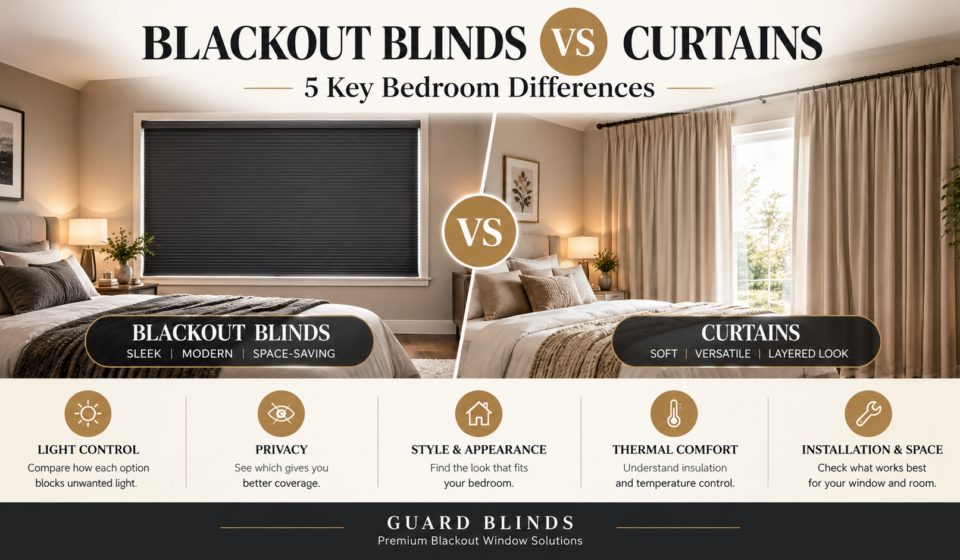
Choosing between blackout blinds and curtains can change how your bedroom looks, feels, and handles outside light. Both options can help create a darker, more private space, but they differ in appearance, space requirements, installation, maintenance, and how effectively they cover the window.
The right choice depends on your priorities. You might want a minimalist bedroom with a clean window finish, a soft and layered interior, or a darker room for sleeping during bright mornings. It is also important to remember that blackout fabric alone does not guarantee complete darkness; light can still enter around the edges if the covering does not fit properly.
Understanding these five key differences can help you compare your options and decide whether blackout blinds, curtains, or a combination of both makes the most sense for your bedroom.
Save More on Every Order – Grab the Latest Coupons & Deals
1. Light Control and Brightness
Light control is often the first consideration when comparing blackout blinds vs curtains. Both can reduce incoming daylight when made with suitable blackout materials, but the way they cover a window affects the final result.
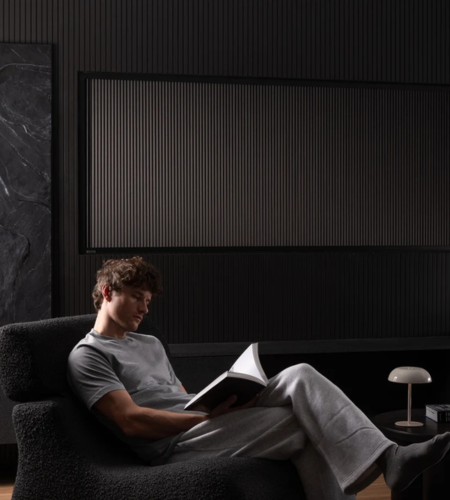
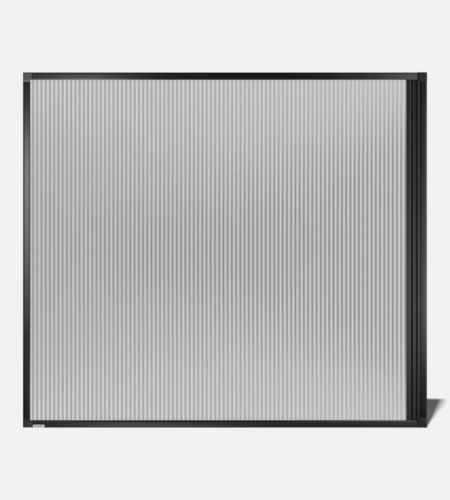
Blackout blinds, such as Guard Blinds’ framed system, help reduce light leakage around window edges.
Blackout curtains use opaque or lined fabric to cover the window. Their effectiveness depends on the fabric, the width of the panels, and how far the curtains extend beyond the frame. Narrow curtains or poorly positioned rods may leave gaps at the sides, top, or centre.
Which should you choose? If reducing light leakage is your main priority, examine the complete fitting system rather than judging the product by its fabric alone. Measure the window carefully and check where light might enter around the edges.
2. Bedroom Style and Appearance
Curtains and blinds create noticeably different visual effects, even when both are designed to block light.
Blackout blinds offer a sleek, modern look for bedrooms and small spaces. Neutral shades like white, grey, beige, and charcoal complement most interiors.
Curtains add softness and texture. Floor-length panels can make a bedroom feel more layered, while heavier fabrics may create a traditional or luxurious look. They also provide an opportunity to introduce patterns, colours, and decorative details.
Neither option is automatically more stylish. The better choice depends on the room’s proportions and the look you want to achieve.
Practical idea: For a modern, uncluttered bedroom, consider blackout blinds on their own. If you prefer a softer finish, pair blinds with decorative curtains, provided the combined arrangement suits your window and available space.
3. Privacy and Everyday Use
Privacy matters when a bedroom faces a street, neighbouring property, or shared outdoor area. Both blackout blinds and curtains can provide privacy when fully closed, but the level of coverage depends on the design and fit.
A properly fitted blackout blind can cover the window opening with a neat, consistent finish. A framed system may help reduce gaps around the edges, although suitability depends on the window and installation requirements.
Curtains can also offer excellent privacy when their panels are wide enough to overlap and extend beyond the window. However, panels may separate slightly or shift when moved, potentially exposing parts of the glass.
Think about your daily routine, too. Blinds can be convenient if you regularly open and close the window covering throughout the day. Curtains may appeal if you prefer drawing fabric panels aside and letting them frame the window.
Before choosing, consider whether your bedroom needs privacy mainly at night, during daylight, or throughout the day. Also check how the covering operates alongside the window handle and any nearby furniture.
4. Thermal Comfort and Insulation
Window coverings can influence how comfortable a bedroom feels, but the results vary by material, construction, fit, and the conditions around the window.
Thicker blackout curtains may create an insulating layer between the glass and the room. Their performance depends on the lining, fabric weight, coverage, and how closely the panels fit around the window. Curtains that leave large gaps may provide less benefit than a well-fitted arrangement.
Some blackout blinds use cellular or honeycomb construction, which creates air pockets within the material. These designs may help reduce heat transfer, depending on the product and installation. Guard Blinds describes its Guard 2 system as using layered honeycomb fabric with a reflective thermal barrier.
However, not all blinds have the same construction, and not all curtains provide the same insulation. A basic roller blind should not be assumed to perform like an insulated honeycomb design.
What to check: Look at the actual construction, edge coverage, and manufacturer’s specifications. If your bedroom becomes uncomfortable during hot afternoons or cold nights, choose a window covering designed for your specific concern instead of relying on the blackout label alone.
5. Installation, Space, and Maintenance
Installation can be a deciding factor, especially if your bedroom has limited space around the window.
Blackout blinds usually occupy less visual space than full-length curtains. Depending on the model, they may require accurate measurements, suitable mounting space, brackets, or a frame. Some framed products have specific requirements for the depth and shape of the window recess, so check compatibility before ordering.
Curtains require enough space for a rod or track, fabric panels, and room for the material to move freely. They can be practical when you already have suitable hardware, but the finished arrangement may feel bulky beside a bed, desk, or wardrobe.
Maintenance also differs. Many roller-style blinds can be cleaned with careful dusting or a suitable wipe, depending on the manufacturer’s instructions. Curtains may require regular vacuuming or laundering, but their cleaning requirements depend on the fabric and care label.
Compare the full setup, not just the covering itself. Include hardware, measurement requirements, cleaning, and the amount of space needed when deciding which option is more practical.
How Guard Blinds Fits This Comparison
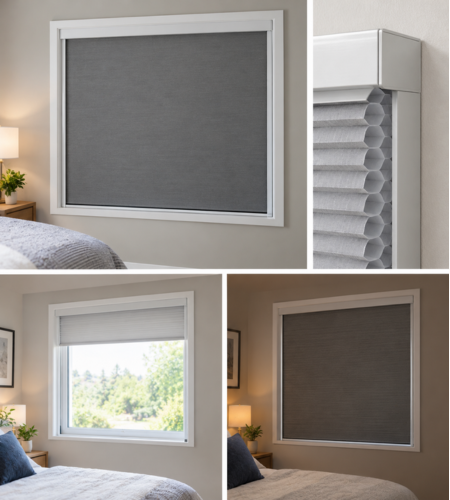
Guard Blinds offers a framed blackout solution called Guard 2, designed to fit around the window opening and help reduce perimeter light gaps. Its layered honeycomb construction is also intended to support thermal performance.
This framed blackout system suits those seeking a neat look, but check your window’s measurements and compatibility before purchasing.
Compare the product’s current specifications and installation instructions with your needs. If you prefer
fabric texture and decorative layering, curtains may remain the more suitable choice, either alone or alongside a blind.
Save More on Every Order – Grab the Latest Coupons & Deals
Frequently Asked Questions
Are blackout blinds better than blackout curtains for bedrooms?
Neither is always better. A well-fitted blackout blind may provide a streamlined appearance and manage edge gaps, while wide, well-hung blackout curtains can cover the window effectively. Your choice depends on fit, style, and light-control needs.
Do blackout curtains block all sunlight?
Not necessarily. Blackout fabric can block light through the material, but light may enter around the top, sides, or gaps between panels. Installation and coverage matter.
Do blackout blinds make a bedroom cooler?
Some designs may help reduce heat entering through a window, particularly those with insulating construction. Performance varies by product, window, and surrounding conditions, so check the manufacturer’s specifications.
Can I use blackout blinds and curtains together?
Yes. Combining them can provide additional coverage and create a layered decorative look. Make sure there is enough space for both and that the arrangement works with the window.
What should I measure before buying blackout blinds?
Check the window width and height, recess depth, frame shape, and any obstructions such as handles. Follow the chosen product’s measurement guide because fitting requirements differ between designs.
Conclusion
The main differences between blackout blinds and curtains come down to light control, appearance, privacy, thermal comfort, and installation. Blinds may suit bedrooms where a compact, modern finish is important, while curtains offer softness and flexible decorative styling. Both can work well when selected and fitted appropriately.
Before making a decision, assess your window, identify where unwanted light enters, and consider how you use your bedroom each day. If a close-fitting blackout solution is your priority, explore Guard Blinds and review its product specifications and installation requirements. The best window covering is the one that suits your room, practical needs, and preferred style.