Table Of Content
- Save More on Every Order – Grab the Latest Coupons & Deals
- What Is Skin Hydration?
- What Is Skin Moisturizing?
- Hydrating vs Moisturizing: The Main Differences
- Key Ingredients to Look For
- How to Layer Hydrating and Moisturizing Products
- Which Does Your Skin Need?
- How Skincare Essentials Fits Your Routine
- Save More on Every Order – Grab the Latest Coupons & Deals
- Frequently Asked Questions
- Can I use a hydrating serum and moisturizer together?
- Is hyaluronic acid a moisturizer?
- Does oily skin need moisturizer?
- Should I apply moisturizer to damp skin?
- How long does it take to notice a difference?
- Related Resources
- Conclusion
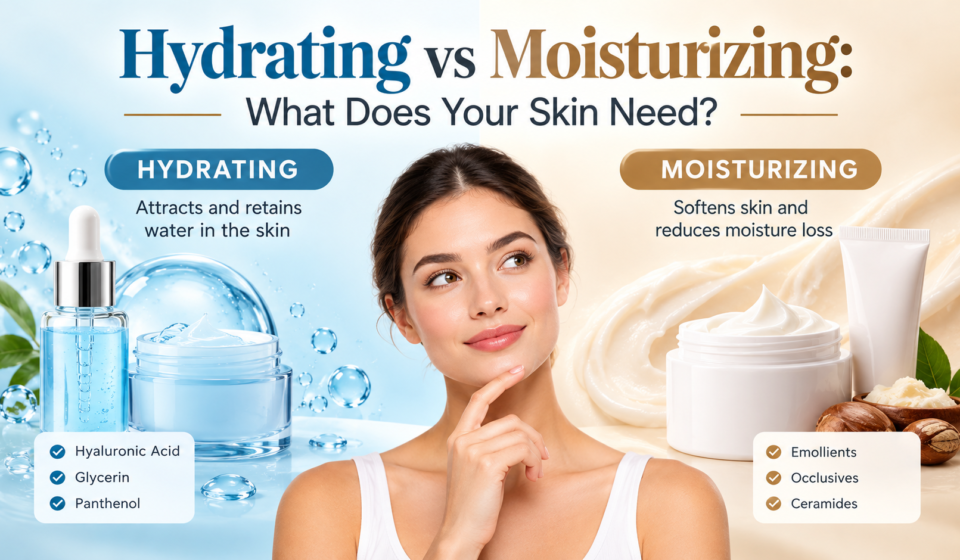
Choosing skincare products can be confusing when labels promise hydration, moisture, softness, and a healthy-looking complexion. Although hydrating and moisturizing products are often discussed together, they serve different purposes. Hydrating skincare focuses on attracting and retaining water in the skin’s outer layers, while moisturizing products help soften the skin and reduce water loss. Understanding the difference between hydrating vs moisturizing can help you build a routine that better suits your skin’s needs without buying unnecessary products.
Dehydrated skin may feel tight or look dull, while dry skin often feels rough, flaky, or uncomfortable. These concerns can overlap, which is why many people benefit from both hydration and moisture support. Learning to recognize useful ingredients and choose appropriate product textures is a practical starting point for a simpler skincare routine.
Save More on Every Order – Grab the Latest Coupons & Deals:
What Is Skin Hydration?
Skin hydration refers to the water content of the outermost skin layer. Adequate hydration helps skin feel supple and comfortable rather than tight or rough.
Hydrating products commonly contain humectants, ingredients that attract water and help hold it in the skin. Two familiar examples are hyaluronic acid and glycerin.
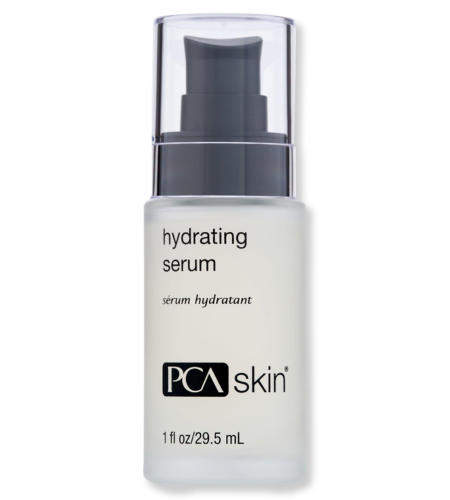
Hyaluronic acid can bind water, helping the skin appear plumper and feel smoother. Glycerin attracts water and supports the skin’s hydration. Other formulas may include panthenol or urea, depending on the product’s intended use and concentration.
A hydrating serum is often lightweight and may suit people whose skin feels dehydrated without needing a heavy cream. However, hydration alone may not address moisture loss, especially when the skin barrier needs additional support.
What Is Skin Moisturizing?
Moisturizing focuses on keeping the skin comfortable, soft, and better protected against water loss. Moisturizers can combine several types of ingredients to support these goals.
Emollients, including certain oils and fatty ingredients, help smooth rough areas and improve the feel of the skin. Occlusives, such as petrolatum and dimethicone, create a protective layer that slows water evaporation. Some moisturizers also contain humectants, so one product can provide hydration and moisture support together.
The right texture depends on your skin. Lotions and lightweight gels may feel comfortable on oilier skin, while richer creams or ointments may suit very dry areas. A heavier product is not automatically better for everyone; comfort, formulation, and individual skin response matter.
Hydrating vs Moisturizing: The Main Differences
The easiest way to understand the difference is to consider what each approach does.
- Hydrating: Adds water to the skin.
- Moisturizing: Softens skin and prevents moisture loss.
- Serum: Focuses on hydrating ingredients like hyaluronic acid.
- Cream: Helps soften skin and lock in moisture.
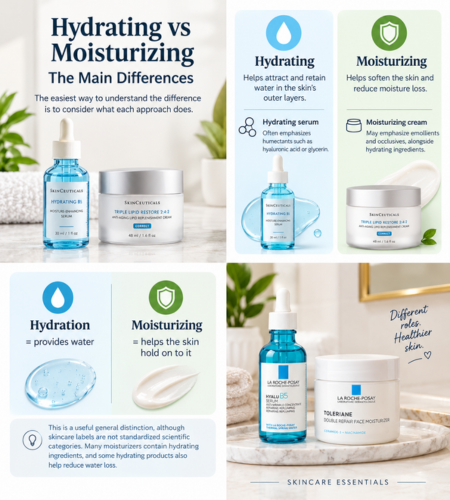
Think of hydration as helping provide water and moisturizing as helping the skin hold on to it. This is a useful general distinction, although skincare labels are not standardized scientific categories. Many moisturizers contain hydrating ingredients, and some hydrating products also help reduce water loss.
Key Ingredients to Look For
Understanding ingredient labels can make skincare shopping more straightforward.
Hyaluronic acid: A humectant commonly used to attract water and improve the appearance of skin suppleness.
Glycerin: A widely used humectant that helps attract and retain water. It appears in many serums, lotions, and creams.
Ceramides: Lipids that help support the skin barrier. They are useful ingredients to consider when skin feels dry or has difficulty retaining moisture.
Petrolatum: An occlusive ingredient that helps reduce water loss. It can be particularly useful for very dry areas, although its texture may feel too heavy for some people.
Dimethicone: A silicone-based ingredient that forms a protective layer and helps skin feel smooth.
You do not need every ingredient in separate products. A well-formulated moisturizer may already combine several ingredient types.
How to Layer Hydrating and Moisturizing Products
If your routine includes both a hydrating serum and a moisturizer, the order is usually straightforward.
- Cleanse with a gentle product suited to your skin.
- Apply your hydrating serum according to its instructions, often while the skin is slightly damp.
- Follow with a moisturizer to soften the skin and help reduce water loss.
- In the morning, finish with broad-spectrum sunscreen with SPF 30 or higher.
Allow each product to settle comfortably before applying the next. You generally do not need multiple serums simply because they contain different hydrating ingredients.
If your moisturizer already leaves your skin comfortable and hydrated, a separate serum may be unnecessary. Introduce new products gradually, particularly if your skin is sensitive, and discontinue anything that causes persistent irritation.
Which Does Your Skin Need?
Your skin’s appearance and comfort can help guide your choices, although they cannot establish a diagnosis.
- Skin that feels tight or looks dull: Consider a hydrating product containing glycerin or hyaluronic acid, followed by a suitable moisturizer.
- Skin that feels rough or looks flaky: Consider a moisturizer with emollients and ingredients that help reduce water loss.
- Oily but dehydrated-feeling skin: A lightweight, non-comedogenic moisturizer may offer hydration without an excessively heavy finish.
- Very dry skin: A richer cream or ointment may provide more effective moisture support than a lightweight lotion.
- Sensitive skin: Look for a simple, fragrance-free formulation and introduce new products carefully.
Dryness and dehydration can occur together. Climate, cleansing habits, exfoliation, and other skincare products can also influence how your skin feels. Persistent redness, itching, cracking, or irritation warrants advice from a qualified healthcare professional.
How Skincare Essentials Fits Your Routine
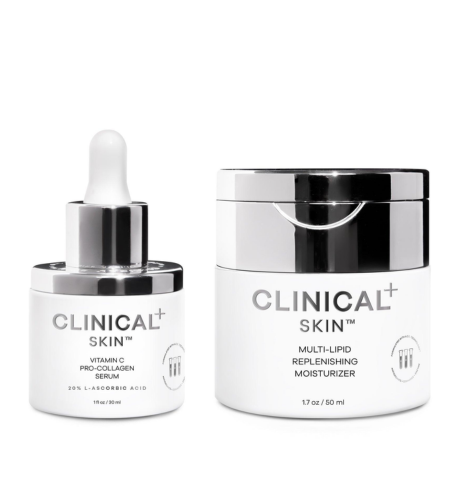
When exploring products for a skincare routine, prioritize formulas that match your actual needs rather than choosing products based only on marketing claims. Skincare Essentials can serve as the theme for comparing hydration-focused serums and moisture-supporting creams, but the supplied official store address should be verified before treating it as a skincare retailer.
The provided website address is Guard Blinds, and its relevance to skincare products could not be established from the supplied information. Therefore, specific products, prices, shipping policies, customer ratings, and product benefits should not be attributed to that store without verification.
Before purchasing, review the full ingredient list, product instructions, suitability for your skin type, and return policy. A thoughtful choice based on ingredients and personal comfort is more useful than buying several products that perform similar functions.
Save More on Every Order – Grab the Latest Coupons & Deals:
Frequently Asked Questions
Can I use a hydrating serum and moisturizer together?
Yes. A hydrating serum followed by a suitable moisturizer can help support water retention and skin softness.
Is hyaluronic acid a moisturizer?
Hyaluronic acid is primarily a humectant. It attracts water, but whether a product provides sufficient moisture support also depends on its overall formulation.
Does oily skin need moisturizer?
Oily skin can still benefit from moisturizing. A lightweight, non-comedogenic formulation may be a comfortable option.
Should I apply moisturizer to damp skin?
Applying moisturizer to slightly damp skin can help retain water. Follow the instructions for your specific product and avoid applying products that irritate your skin.
How long does it take to notice a difference?
Skin feel may improve relatively quickly, but results vary by product, formulation, and individual skin condition. No particular result or timeline is guaranteed.
Related Resources
For more guidance on building a straightforward routine, explore the topic covered in the Simple Skincare Routine Guide. It can help you understand how cleansing, moisturizing, and other basic steps fit together.
Conclusion
Understanding hydrating vs moisturizing makes it easier to choose skincare products with a clear purpose. Hydrating ingredients such as hyaluronic acid and glycerin help attract water, while emollients and occlusives help soften the skin and reduce water loss. Many people can benefit from both functions, whether they come from one well-formulated moisturizer or a serum-and-cream combination.
Start with your skin’s needs, keep your routine simple, and pay attention to how products feel over time. When exploring skincare essentials, prioritize suitable ingredients, transparent product information, and realistic expectations rather than unnecessary steps.