Table Of Content
- 🎉 Exclusive Deals & Special Savings
- Why Kids’ Independence Matters
- How TinCan Fits the Idea of a Simple Phone for Kids
- Key Features That Support Independent Communication
- Approved Contacts
- Screen-Free Design
- Calling Hours and Quiet Time
- Speed Dial, Voicemail, and Speakerphone
- Plans and Buying Considerations
- Pros and Cons of TinCan
- Pros
- Cons
- ✨ Unlock Great Offers & Discounts
- Frequently Asked Questions
- What is TinCan?
- Does TinCan need a phone jack?
- Can kids call regular phone numbers?
- Can TinCan call other TinCan phones?
- Does TinCan support emergency calling?
- Conclusion
Giving children more independence can be challenging in a world where smartphones often come with apps, social media, texting, games, and constant notifications. Many parents want their children to communicate with friends and family without immediately handing them a fully connected smartphone. This is where a simple phone for kids can offer an interesting alternative.
A screen-free phone can give children the opportunity to make their own calls, practice conversations, and stay connected with approved people while parents maintain important controls. TinCan takes this idea and applies it to a Wi-Fi-enabled home phone designed specifically for children. Instead of trying to recreate every feature of a smartphone, it focuses on one thing: voice communication.
For families looking for a middle ground between no phone and a smartphone, this approach may be worth considering.
🎉 Exclusive Deals & Special Savings
Why Kids’ Independence Matters
Independence develops gradually. As children grow, they begin making more decisions, managing social relationships, and taking responsibility for everyday tasks. Communication is an important part of that process.
For example, a child may want to:
- Call a friend and arrange a conversation independently.
- Speak with grandparents without borrowing a parent’s phone.

- Practice introducing themselves and holding a conversation.
- Learn basic phone etiquette.
- Communicate without navigating distracting apps.
A traditional smartphone can provide communication, but it also introduces many additional features that some families may prefer to delay. A kids’ home phone with a more focused design can provide communication without requiring access to a screen-based ecosystem.
The goal is not necessarily to replace every form of technology. Instead, families can choose tools that match a child’s age, maturity, and household rules.
How TinCan Fits the Idea of a Simple Phone for Kids
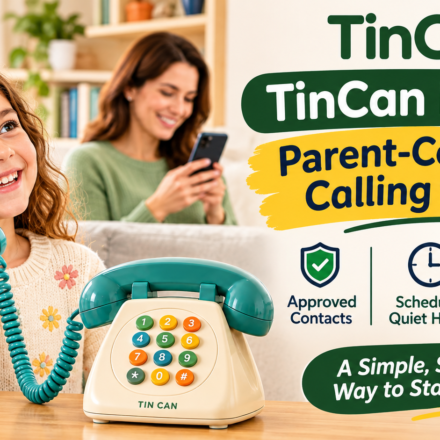
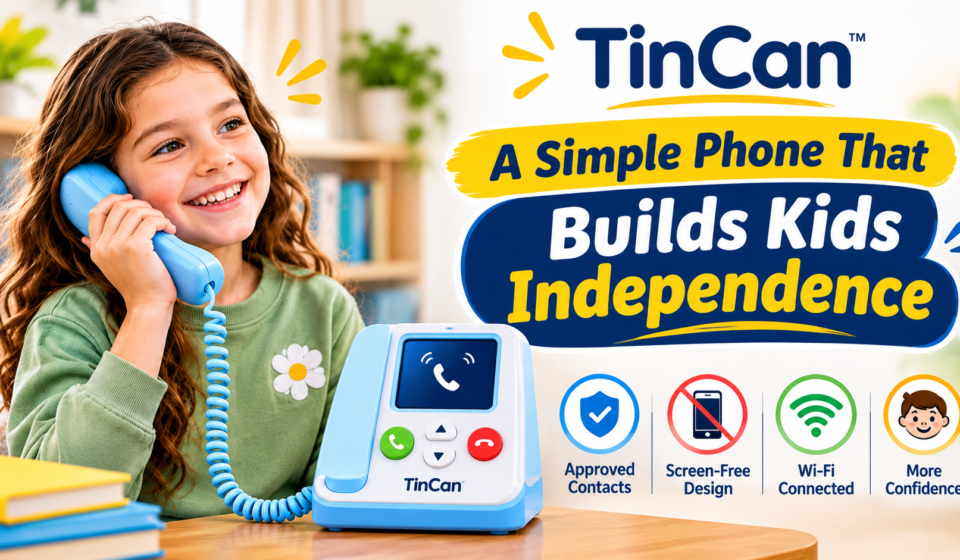
TinCan is a Wi-Fi-enabled, screen-free home phone designed for children. It lets kids make and receive calls with parent-approved contacts managed through a companion app. It connects to a compatible 2.4 GHz Wi-Fi network and does not require a traditional phone jack.
The central idea behind the product is straightforward: children can communicate through voice calls without using a smartphone for apps, texting, or internet browsing.

Parents manage the phone through the companion app, including approved contacts and certain calling settings. This can help create a more controlled communication environment while allowing children to take more responsibility for making their own calls.
That balance is what makes the concept particularly relevant for families exploring alternatives to an early smartphone.
Key Features That Support Independent Communication
Approved Contacts
One of the most important features is the approved-contact system. Parents choose who can call the TinCan and who the child can contact, depending on the selected plan and account setup.
This means a child can have more freedom to communicate with people the family already knows while parents retain control over the contact list.
Screen-Free Design
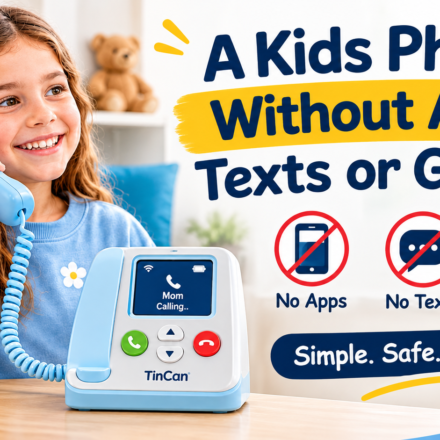
TinCan is designed around voice communication rather than a traditional smartphone experience. The absence of apps, texting, and internet browsing can make the device easier for children to understand and use for its main purpose: talking to people.
For families trying to reduce unnecessary digital distractions, this focused design may be one of its biggest advantages.
Calling Hours and Quiet Time
Parents can manage when the phone is available for ordinary calls. The official information describes calling hours and quiet settings that can help fit the device into routines such as bedtime, homework, or family time.
This gives families another way to introduce communication technology with clear boundaries.
Speed Dial, Voicemail, and Speakerphone
TinCan also offers useful calling features such as speed dial, voicemail, and speakerphone to make everyday communication easier. Speed dial helps users quickly reach their frequently called contacts, while voicemail allows them to receive messages when unavailable. The speakerphone feature provides added convenience for hands-free conversations. These practical tools make regular phone calls simple and comfortable. Overall, TinCan offers essential calling functions without the extra complexity of a smartphone.
Plans and Buying Considerations
TinCan costs $100 on its U.S. store. It offers free device-to-device calling through Can 2 Can and external calling through Party Line for $9.99/month.
Families need 2.4 GHz Wi-Fi, the companion app, a power outlet, and an internet connection. Pricing and availability may vary by location.
Pros and Cons of TinCan
Pros
- Screen-free communication focused on voice calls.
- Parents manage approved contacts.
- No traditional phone jack required.
- Can help children practice independent communication.
- Includes useful calling features such as voicemail and speakerphone.
- Calling schedules can support household routines.
- Free Can 2 Can calling is available.
Cons
- Requires Wi-Fi and power.
- The companion app is required for setup and management.
- Calling regular external numbers requires the applicable paid plan.
- The device is designed for home-based use rather than smartphone-style portability.
- Families need to consider whether friends and relatives have compatible ways to communicate with the child’s approved account.
✨ Unlock Great Offers & Discounts
Frequently Asked Questions
What is TinCan?
TinCan is a screen-free Wi-Fi home phone designed for children to make and receive calls with approved contacts.
Does TinCan need a phone jack?
No. According to the official product information, it connects through Wi-Fi and does not require a traditional phone jack.
Can kids call regular phone numbers?
Yes, when using the applicable Party Line plan and when the numbers are added as approved contacts.
Can TinCan call other TinCan phones?
Yes. Approved TinCan-to-TinCan calling is available through the Can 2 Can plan.
Does TinCan support emergency calling?
The official product information states that emergency calling is available, but the company also recommends having an alternative method of contacting emergency services because service can be affected by power, internet, or network disruptions.
Conclusion
A simple phone for kids does not need to compete with every feature of a smartphone. For many families, the value may come from doing one thing well: helping children communicate more independently.
TinCan offers a screen-free approach built around voice conversations, approved contacts, parental management, and Wi-Fi connectivity. Its focused design may appeal to families that want children to practice calling friends and family without immediately introducing the wider distractions associated with smartphones.
Before making a decision, consider your home’s Wi-Fi setup, the people your child is likely to call, and whether the available calling plans fit your family’s needs. For current product details, pricing, availability, and policies, check the official TinCan store.