
Table Of Content
- 🎉 Exclusive Deals & Special Savings
- Why Screen-Free Communication Matters
- How Tin Can Fits the Topic
- Why Choose Tin Can for Kids?
- 1. Screen-Free Calling Experience
- 2. Parent-Approved Contacts
- 3. Scheduled Calling Hours
- 4. Emergency Calling
- 5. Companion Mobile App
- Top Relevant Products and Accessories
- Pricing and Calling Plans
- Pros and Cons of Tin Can
- Pros
- Cons
- ✨ Unlock Great Offers & Discounts
- Frequently Asked Questions
- 1. What is Tin Can used for?
- 2. Does Tin Can require a subscription?
- 3. Can parents control who calls their children?
- 4. Does Tin Can work without Wi-Fi?
- 5. Is Tin Can a good alternative to a smartphone?
- 6. Where can families purchase Tin Can?
- Conclusion
Choosing a first phone for a child can be challenging. Parents want their children to stay connected with friends and family, but smartphones also bring concerns about screen time, social media, online distractions, and unrestricted internet access. This is why screen-free communication devices are becoming an interesting alternative. In these Tincan Reviews, we explore how Tin Can works, its key features, calling plans, and what families should consider before purchasing.

Tin Can combines the simplicity of traditional landline phones with modern Wi-Fi technology and parent-managed contact controls. It gives children a way to communicate more independently without the distractions of a typical smartphone. But does it offer enough convenience and flexibility for modern families? Let’s take a closer look at what makes Tin Can different and whether it’s a practical choice for a child’s first communication device.
🎉 Exclusive Deals & Special Savings
Why Screen-Free Communication Matters
Children increasingly grow up surrounded by smartphones, tablets, games, and digital entertainment. Although technology can be useful, younger children do not necessarily need unrestricted access to every feature available on a smartphone.
A dedicated calling device can provide a middle ground. It allows children to develop communication habits without introducing unnecessary digital distractions.

Some potential benefits include:
- More direct conversations: Children can speak with friends and relatives instead of relying entirely on messaging.
- Fewer digital distractions: A voice-focused device avoids the usual entertainment features found on smartphones.
- Growing independence: Children can initiate conversations without constantly borrowing a parent’s phone.
- Communication skills: Regular conversations may help children practice listening, speaking, and phone etiquette.
- Family connections: Calling grandparents and relatives can become a simple part of everyday family life.
However, screen-free communication does not automatically replace parental supervision. Families should still establish appropriate calling rules and decide which contacts their children can reach.
How Tin Can Fits the Topic
Tin Can is a Wi-Fi-enabled landline-style phone designed specifically for children. Its central idea is straightforward: give kids a dedicated device for talking to approved people without providing access to apps, social media, or general internet browsing.
According to the company’s About page, Tin Can was developed because its founders wanted a simpler communication option for their own children. They wanted kids to connect with friends independently without needing a smartphone.

The device combines a traditional handset and cord-based experience with modern connectivity. It is managed through a companion mobile app, allowing parents to control communication settings.
This approach may appeal to families who want to delay introducing personal smartphones while still giving children a convenient way to communicate.
Why Choose Tin Can for Kids?
One of the most interesting aspects of Tin Can is its focus on simplicity. Instead of trying to combine calling, entertainment, messaging, and internet access, it concentrates on voice communication.
Here are some features worth considering.
1. Screen-Free Calling Experience
Tin Can does not function like a conventional smartphone. Its voice-first design focuses on conversations rather than applications, videos, games, or social feeds.
This can be useful for parents who want their children to have communication access without introducing another screen-based activity into their daily routine.

2. Parent-Approved Contacts
Contact management is an important consideration when choosing a communication device for children.
Tin Can allows parents to approve who can call their child’s device and which people their child can contact. This gives families greater control over their child’s calling network.
Instead of providing unrestricted communication access, parents can establish a list of familiar people, such as relatives and friends.

3. Scheduled Calling Hours
Another useful feature is the ability to manage calling hours.
Parents can decide when the phone should be available and when calls should stop. This can help families maintain routines around homework, meals, bedtime, and other activities.
4. Emergency Calling
Tin Can also advertises emergency services calling as part of its available features. Its Can 2 Can plan includes emergency calling, according to the official website.
Parents should review the current emergency-calling requirements and availability for their location before relying on any connected device during an emergency.

5. Companion Mobile App
The companion app gives parents access to important management features. These include approving contacts, managing calling hours, viewing call history, and controlling multiple devices.
This makes the product more than a traditional landline. It combines a familiar calling experience for children with management tools for adults.

Top Relevant Products and Accessories
Tin Can’s main product is its Wi-Fi-enabled children’s phone. The company also offers accessories that can add practical and decorative elements to the calling experience.
Tin Can Phone: The primary device is designed for children who want to communicate with approved contacts without using a smartphone. It is available in different color options, allowing families to consider appearance alongside functionality.
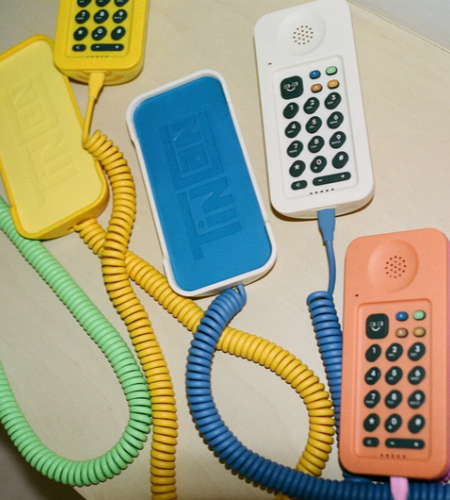
Twirly Cord Charms: Decorative phone-cord accessories available in themed packs, including Sportsballs, Nonsense, and Fish.
Contact Keeper: A tabletop organizer that holds up to 20 Calling Cards for easy access to contact information.
Both are optional accessories that families can purchase based on their preferences.
Pricing and Calling Plans
Tin Can offers two calling options:
- Can 2 Can: Free with the device, allowing calls between Tin Can devices and emergency services.
- Party Line: An optional subscription for calling approved external numbers, including mobile phones and landlines.
The official US website lists Party Line at $9.99/month, with the first month free. Pricing and availability may vary by country. Check the official store for device pricing, shipping, taxes, and other costs before ordering.
Pros and Cons of Tin Can
Pros
- Screen-free, voice-focused communication.
- Parent-approved incoming and outgoing contacts.
- Scheduled calling hours.
- Emergency calling functionality.
- Companion app for managing settings.
- Optional calling subscription.
- Accessories for personalization and organization.
Cons
- Requires Wi-Fi connectivity.
- External phone calls require an optional paid plan.
- Not designed for texting, apps, or internet browsing.
- Calling availability can vary by country.
- Parents need to manage contacts and initial setup.
✨ Unlock Great Offers & Discounts
Frequently Asked Questions
1. What is Tin Can used for?
Tin Can is a Wi-Fi-enabled phone designed to help children make voice calls to approved contacts without using a traditional smartphone.
2. Does Tin Can require a subscription?
Not necessarily. Its Can 2 Can plan is included with the device and supports calls between Tin Can devices and emergency services. The optional Party Line plan provides access to approved external phone numbers.
3. Can parents control who calls their children?
Yes. Parents can use the companion app to approve incoming and outgoing contacts and manage calling hours.
4. Does Tin Can work without Wi-Fi?
Tin Can is a Wi-Fi-enabled device, so an appropriate internet connection is necessary for its connected calling features. Families should review the official setup requirements.
5. Is Tin Can a good alternative to a smartphone?
It may be a useful alternative for families who want their children to communicate through voice calls without having access to smartphone applications, games, or social media. However, it does not provide the wider functionality of a smartphone.
6. Where can families purchase Tin Can?
Families can explore the device, available colors, accessories, and calling plans through the official Tin Can website. Checking current availability and regional pricing before ordering is recommended.
Conclusion
Tin Can offers a different approach to children’s communication by combining the familiar experience of a traditional landline with modern Wi-Fi connectivity and parent-managed controls. Its screen-free calling design, approved contact lists, scheduled calling hours, and optional external calling plan make it worth considering for families who want to delay giving their children smartphones.
However, it is important to understand the Wi-Fi requirements, subscription options, and regional calling limitations before making a decision.
Overall, Tin Can may be a practical choice for parents looking for a simpler way to help children stay connected with friends and family. If this approach matches your household’s needs, visit the official Tin Can store to review the available options and decide whether the device is right for your family.