Table Of Content
- Who Flashforge Is and What They Focus On
- Main Product Families
- Adventurer Series – Everyday and Entry-Friendly Printing
- Creator Series – Multicolor and Multi-Material Capability
- Guider Series – Larger Format and Professional Work
- Other Notable Lines
- How to Choose a Flashforge 3D Printer
- Software, Filaments, and Everyday Use
- Frequently Asked Questions
- Conclusion
Flashforge has been making desktop and professional 3D printers since 2011. The company, officially Zhejiang Flashforge 3D Technology, focuses on reliable FDM machines that balance speed, ease of use, and material flexibility for hobbyists, educators, makers, and small workshops in the United States and beyond.
If you are researching Flashforge for the first time or comparing specific models such as the Adventurer series, Creator Pro lineage, or newer high-speed machines, this guide explains what the brand offers, how the main product families differ, and what to consider before buying.
Who Flashforge Is and What They Focus On
Flashforge designs and manufactures its own printers, filaments, and supporting software. The company positions itself around practical reliability rather than pure cutting-edge specs alone. Its product range covers entry-level enclosed and open-frame machines, multi-toolhead multicolor systems, and larger industrial-oriented units.
Key points that consistently appear across the lineup:
- Emphasis on out-of-the-box usability and automatic bed leveling on many recent models
- Support for common materials (PLA, PETG, TPU) plus higher-temperature or composite options on more advanced machines
- Official software options including FlashPrint and Orca-Flashforge for high-speed printers
- Availability of filaments, spare parts, and accessories through the official store
The brand maintains a presence in the U.S. market with warranty, shipping, and support options aimed at American customers. You can explore the full current catalog and accessories directly on the official Flashforge website.
Main Product Families
Flashforge organizes its printers into several practical categories. Understanding these helps match a machine to your needs.
Adventurer Series – Everyday and Entry-Friendly Printing
The Adventurer line has long been one of Flashforge’s most recognized consumer ranges. Earlier popular models include the Adventurer 3, Adventurer 3 Pro, Adventurer 3 Lite, Adventurer 4, and Adventurer 4 Lite. These machines typically feature compact build volumes, enclosed designs on many versions, touchscreen interfaces, and relatively straightforward setup.
Newer entries in the family (such as the Adventurer 5M and Adventurer 5M Pro) shift toward high-speed CoreXY kinematics. They target users who want faster print times while keeping the footprint manageable for home or classroom use. The Pro variants often add fuller enclosure and filtration for better material versatility and quieter operation.
These printers suit beginners, educators, and hobbyists who primarily print PLA, PETG, and similar materials and value reliability over extreme customization.
Creator Series – Multicolor and Multi-Material Capability
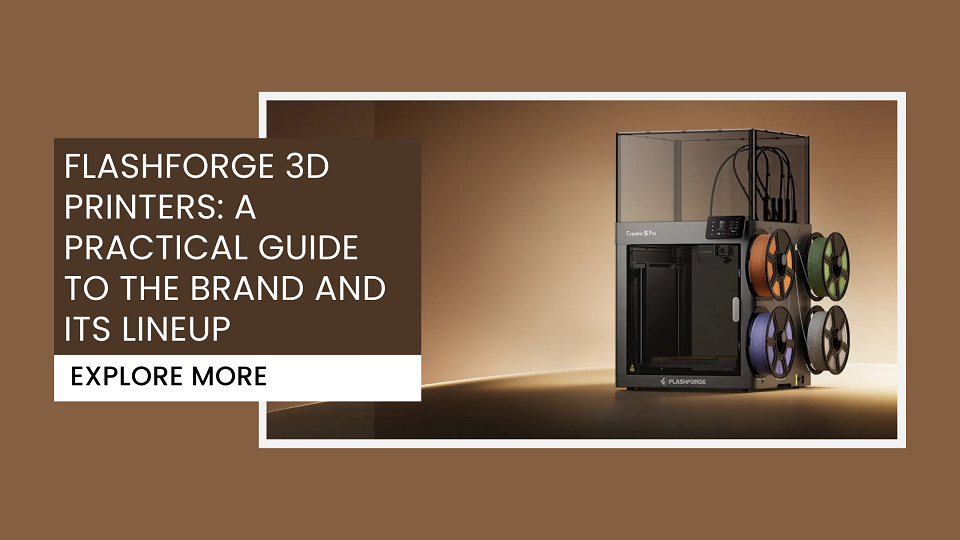
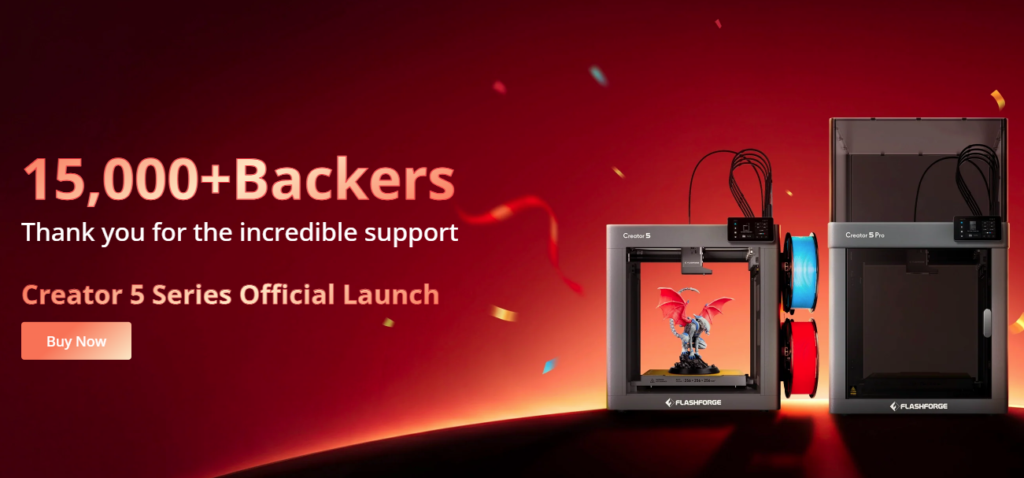
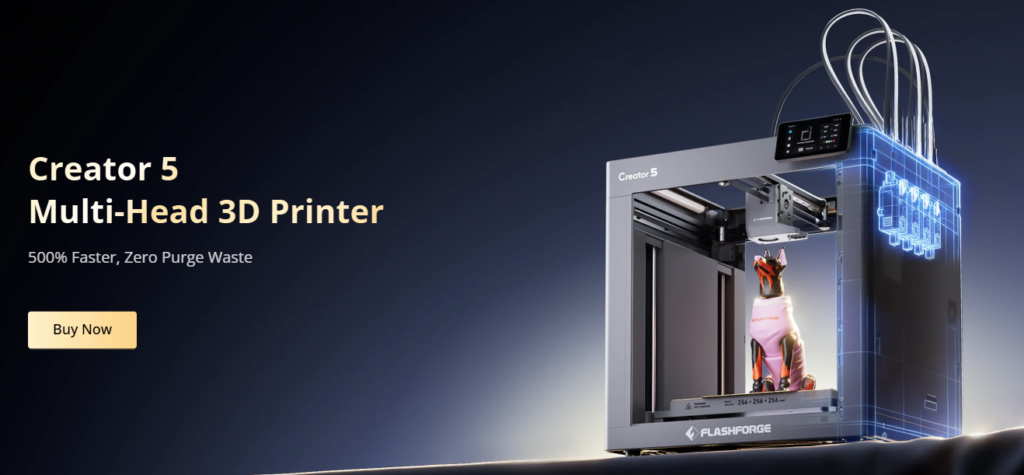
The Creator family has evolved from dual-extruder machines such as the well-known Creator Pro and Creator Pro 2 into modern tool-changer systems. The Creator 5 and Creator 5 Pro represent the current direction: four independent toolheads that enable multicolor or multi-material printing with reduced purge waste compared with traditional single-nozzle color systems.
These machines appeal to users who want efficient multicolor prints, small-batch production, or the ability to combine different materials in one job. The enclosed Pro version adds chamber temperature control and filtration, which expands the range of usable engineering-oriented filaments.
Older Creator Pro models remain popular in the used and secondary markets because of their dual-extruder capability and solid build quality for the time.
Guider Series – Larger Format and Professional Work
Guider printers (including Guider 2, Guider 2S, Guider 3, and Guider 3 Ultra / Plus variants) target users who need bigger build volumes or more robust performance. These machines often feature larger printable areas, dual extrusion on some models, and features oriented toward prototyping or light production rather than pure desktop convenience.
They are commonly chosen by small studios, designers, and educational or institutional users who print larger functional parts.
Other Notable Lines
- Finder series (Finder, Finder 3, etc.): Compact, simpler machines historically aimed at first-time users.
- Dreamer and Inventor lines: Earlier dual-extruder or feature-rich consumer models.
- Resin options (Foto series such as Foto 8.9, Foto 9.25, Foto 13.3, and industrial DLP/Hunter systems): LCD or DLP resin printers for higher-detail applications.
- Specialized systems: WaxJet machines for jewelry casting patterns and other industrial solutions.
Flashforge also sells compatible filaments (PLA, ABS, PETG, specialty blends) and accessories such as build plates, nozzles, and enclosure kits.
How to Choose a Flashforge 3D Printer
Matching a printer to your use case matters more than chasing the newest model name. Consider these practical factors:
Build volume and speed needs
Compact Adventurer-style machines work well for small-to-medium models and learning. Larger Guider or Creator machines suit bigger parts or higher throughput.
Material goals
Basic PLA and PETG run on almost every current Flashforge printer. ABS, ASA, nylon, or carbon-fiber composites generally require higher nozzle temperatures, a heated chamber or enclosure, and sometimes specialized nozzles. Check the specific model’s temperature ratings and enclosure type.
Multicolor or multi-material requirements
Single-extruder machines are simpler and sufficient for most monochrome work. Tool-changer or multi-extruder systems (Creator 5 series or older dual-extruder Creators) become useful when color changes or soluble supports are frequent.
Environment and noise
Open-frame high-speed machines can be louder and release more fumes. Enclosed models with filtration are preferable for shared homes, offices, or classrooms.
Software and ecosystem
Flashforge provides its own slicers and supports community options such as Orca Slicer on many recent machines. Connectivity usually includes USB, Wi-Fi, and sometimes Ethernet or LAN.
Support and parts availability
Buying through the official channel or authorized sellers helps with warranty, firmware updates, and genuine spare parts. The U.S. market has access to official shipping and customer support channels.
A side-by-side comparison of current models is available on the manufacturer’s site under their printer comparison tools.
Software, Filaments, and Everyday Use
Most Flashforge printers ship with or recommend FlashPrint (or the newer Orca-Flashforge variant for high-speed machines). These tools handle slicing, machine profiles, and basic remote management. Many users also successfully run third-party slicers once profiles are dialed in.
Flashforge offers its own filament line, including standard PLA, ABS, PETG, and specialty options. Using manufacturer-recommended settings and materials typically reduces the learning curve, though the machines accept a wide range of third-party 1.75 mm filament when temperatures and cooling are adjusted appropriately.
Routine maintenance is similar to other FDM printers: keep the build plate clean, check nozzle condition, lubricate motion systems as recommended, and keep firmware current. Quick-swap nozzles on many recent models simplify material changes and wear replacement.
Frequently Asked Questions
Is Flashforge a good brand for beginners?
Many Adventurer-series machines are designed with first-time users in mind—automatic leveling, enclosed options, and relatively simple interfaces. Success still depends on following setup guidance and starting with easy materials such as PLA.
What is the difference between Adventurer 3 / 4 and the newer 5M series?
Earlier Adventurer models focused on reliable enclosed desktop printing at moderate speeds. The 5M generation emphasizes high-speed CoreXY motion, updated extruders, and faster practical print times while retaining a compact footprint.
Can Flashforge printers handle ABS or engineering materials?
Some can, especially enclosed models with higher temperature ratings and chamber control (certain Creator and Guider variants). Always verify the specific model’s maximum nozzle and bed temperatures and whether an enclosure or filtration is present.
Does Flashforge support multicolor printing?
Yes. Older dual-extruder Creators and current four-toolhead Creator 5 series are built for multicolor and multi-material work with different approaches to filament switching and waste reduction.
Where can I buy Flashforge printers and parts in the USA?
The official Flashforge online store ships to the United States and offers warranty coverage, filaments, and accessories. Authorized retailers and educational suppliers also carry select models.
Conclusion
Flashforge offers a broad range of 3D printers that cover beginners through professional users. The Adventurer series remains a practical starting point for many, the Creator line addresses multicolor and multi-material needs, and the Guider family serves larger-format requirements. Newer high-speed CoreXY machines bring faster print times while older models such as the Creator Pro and Adventurer 3/4 continue to appear in searches because of their established track records.
The best choice depends on your primary materials, desired build size, need for color or multi-material capability, and whether you prefer an open or enclosed machine. Review current specifications, compare models on the official site, and consider total ownership factors such as filament cost, spare parts, and support before deciding.
For the latest models, filaments, accessories, software downloads, and U.S. purchasing options, visit the official Flashforge website.