Table Of Content
- Why Countertop Reverse Osmosis Water Filters Matter
- How Does Reverse Osmosis Water Filtration Work?
- Top AquaTru Products and Their Features
- AquaTru Classic
- AquaTru Carafe
- AquaTru Classic Smart
- Pricing, Filters, and Maintenance
- How AquaTru Fits the Topic
- What to Consider Before Choosing a Water Purifier
- Pros and Cons of Countertop Reverse Osmosis Systems
- Frequently Asked Questions
- 1. Are countertop reverse osmosis water filters worth considering?
- 2. Does reverse osmosis remove fluoride from drinking water?
- 3. How often should reverse osmosis filters be replaced?
- 4. Does AquaTru require plumbing installation?
- 5. Can filtered water be used for cooking?
- Conclusion
Clean drinking water is an important part of everyday life, but many people want to understand more about what comes out of their kitchen tap. Depending on the water source and local supply, tap water may contain substances that affect its taste, smell, or overall quality. This is why countertop reverse osmosis water filters have become an option worth considering for households looking for additional water filtration. These systems use multiple filtration stages to reduce selected contaminants and improve water quality. However, choosing the right purifier involves more than comparing appearances or prices. Understanding how reverse osmosis works, what a filtration system can reduce, and how much maintenance it requires can help you make a more informed decision. AquaTru offers countertop purification systems designed to make multi-stage filtration accessible without permanent plumbing changes.
Why Countertop Reverse Osmosis Water Filters Matter
Water quality can vary depending on location, treatment processes, plumbing, and the original water source. Municipal water treatment helps make public supplies suitable for consumption, but some people still prefer additional filtration at home.
A countertop reverse osmosis system offers extra filtration to reduce dissolved substances, chemicals, and contaminants that basic filters may miss.
Some potential advantages include:
- Additional filtration for selected contaminants.
- Improved taste and odor when substances such as chlorine are reduced.
- Convenient access to filtered water for drinking and cooking.
- Less dependence on purchasing bottled water.
- A practical filtration option for kitchens without space for under-sink installation.
It is important to remember that no filtration system removes every possible contaminant. Checking independent testing information and product performance data is essential before choosing a purifier.
How Does Reverse Osmosis Water Filtration Work?
Reverse osmosis uses a specialized membrane to separate water from many dissolved substances. Water passes through the membrane under pressure, allowing water molecules to move through while reducing selected impurities.
Many modern systems combine reverse osmosis with other filtration methods to improve the overall purification process.
A multi-stage system generally works through the following steps:
1. Pre-filtration: The initial filter captures larger particles and sediment that could affect later filtration stages.
2. Carbon filtration: Activated carbon helps reduce chlorine, chloramine, and certain substances that can influence water taste and odor.
3. Reverse osmosis membrane: This stage provides deeper filtration by reducing various dissolved contaminants, depending on the system’s tested capabilities.
4. Final carbon filtration: An additional carbon stage helps improve the taste and overall drinking experience.
Understanding these stages makes it easier to compare water purifiers based on their actual performance rather than marketing descriptions.
Top AquaTru Products and Their Features
AquaTru Classic
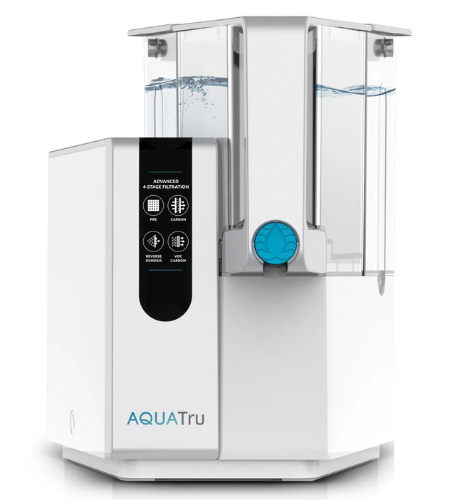
The AquaTru Classic is a countertop reverse osmosis purifier designed for convenient everyday use. It features a four-stage filtration process and a push-button dispensing system.
Some notable features include:
- No permanent plumbing installation required.
- A 0.75-gallon purified water tank.
- Four-stage reverse osmosis filtration.
- Replaceable filters with different service lives.
- A compact countertop format compared with permanent under-sink systems.
The system may suit households that want filtered water readily available without modifying their kitchen plumbing.
AquaTru Carafe
The AquaTru Carafe offers another countertop format for people who prefer a separate water container. Its design provides an alternative to the larger Classic configuration.
When comparing the two, consider available capacity, kitchen space, household water consumption, and the convenience of filling and storing the purified water.
AquaTru Classic Smart
The Classic Smart adds connected features to the Classic system. Its app functionality can help users monitor filter life, receive replacement reminders, and manage filter-related information.
This option may appeal to people who prefer digital maintenance reminders instead of tracking replacement schedules manually.
Pricing, Filters, and Maintenance
The purchase price is only one part of the overall cost of owning a water purifier. Replacement filters, electricity requirements, cleaning, and long-term maintenance should also be considered.
AquaTru lists different replacement filters and accessories for its systems. The brand indicates that filter lifespans vary by filter type, with certain filters lasting approximately six months and the reverse osmosis filter lasting up to two years under specified conditions.
Actual replacement frequency may depend on water quality and usage. Always follow the instructions for your particular model.
Before purchasing, check the current official product price, compatible filter options, subscription terms, and warranty conditions. The US website lists a one-year limited manufacturer warranty for its purifier, subject to the applicable terms and exclusions.Countertop Reverse Osmosis Water Purifier+1
How AquaTru Fits the Topic
AquaTru focuses on reverse osmosis water purification, offering products for people who want additional filtration without necessarily installing a permanent under-sink system.
Its product range includes countertop options such as AquaTru Classic and AquaTru Carafe, alongside other configurations. The countertop models are designed to provide purified water through a multi-stage filtration process.
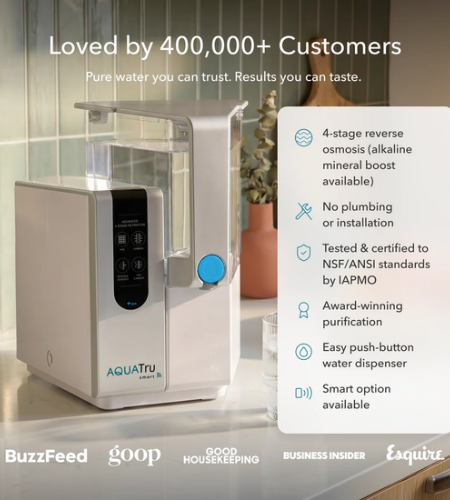
The AquaTru Classic uses a four-stage purification system combining pre-filtration, reverse osmosis, and carbon filtration. According to the brand’s product information, the system is independently tested and certified by IAPMO to applicable NSF standards for reducing 84 contaminants.
Listed contaminants include lead, PFAS, fluoride, chlorine, arsenic, and microplastics. Actual performance depends on the contaminant, testing conditions, and product specifications, so reviewing the performance data sheet is worthwhile.Countertop Reverse Osmosis Water Purifier+1
What to Consider Before Choosing a Water Purifier
Not every household needs the same type of filtration system. Before selecting a countertop reverse osmosis purifier, consider these important factors:
Water quality: Review your local water quality report to understand which contaminants may be present. This can help you identify the filtration capabilities that matter most.
Available space: Measure your kitchen counter before purchasing. Consider the purifier’s dimensions and whether you have enough room for its water tank.
Household consumption: A smaller household may have different water requirements from a family that regularly uses filtered water for cooking, drinking, and filling bottles.
Filter replacement costs: Check the price and availability of replacement filters. A purifier is a long-term purchase, so maintenance expenses should fit your budget.
Independent certification: Look for credible third-party testing and certification. Pay attention to the specific contaminants covered rather than relying on broad claims about water purity.
Pros and Cons of Countertop Reverse Osmosis Systems
Potential advantages
- Provide multiple stages of water filtration.
- Can reduce selected contaminants beyond those targeted by basic carbon filters.
- Some models require no permanent plumbing installation.
- Replacement filters make ongoing maintenance possible.
- May reduce the need for single-use bottled water.
Potential disadvantages
- Initial purchase costs can be higher than basic water pitchers.
- Replacement filters create recurring expenses.
- Countertop models occupy kitchen space.
- Some systems require electricity.
- Reverse osmosis produces wastewater during the purification process.
Considering both advantages and limitations helps establish realistic expectations before making a purchase.
Frequently Asked Questions
1. Are countertop reverse osmosis water filters worth considering?
They can be worth considering if you want additional filtration for selected contaminants. Your decision should depend on local water quality, filtration requirements, maintenance costs, and available space.
2. Does reverse osmosis remove fluoride from drinking water?
Reverse osmosis systems can reduce fluoride, but performance varies by product. Check the manufacturer’s independently verified performance data for the specific model.
3. How often should reverse osmosis filters be replaced?
Replacement schedules depend on the filter type, water consumption, and incoming water quality. Follow the manufacturer’s recommended replacement intervals.
4. Does AquaTru require plumbing installation?
The AquaTru Classic countertop purifier does not require permanent plumbing installation. It uses a refillable water tank and an electrical connection.
5. Can filtered water be used for cooking?
Yes. Properly maintained filtered water can be used for everyday purposes such as preparing beverages, washing ingredients, and cooking.
Conclusion
Choosing the right countertop reverse osmosis water filter starts with understanding your water quality, filtration needs, available space, and long-term maintenance requirements. A good system should offer clearly documented filtration performance and a practical design that fits your household routine.
AquaTru provides several purification options, including the Classic, Carafe, and Classic Smart models. Its multi-stage filtration approach and countertop designs make the brand worth considering when researching home water purification solutions. Compare the available models, review their performance information, and check replacement filter costs before making your decision.
If you want to learn more about countertop reverse osmosis water filters, visit the official AquaTru website to review its current products, features, and specifications.