Table Of Content
- Save More on Every Order – Grab the Latest Coupons & Deals
- Why Hormone Balance After 40 Matters
- 1. Hormones Can Fluctuate
- 2. Sleep Deserves Attention
- 3. Energy and Mood May Change
- 4. Lifestyle Still Plays a Major Role
- 5. Treatment Should Be Personal
- How Inner Balance Fits the Topic
- Top Relevant Option From Inner Balance
- Pricing and Shipping
- Pros and Cons
- Save More on Every Order – Grab the Latest Coupons & Deals
- Frequently Asked Questions
- Related Resources
- Conclusion
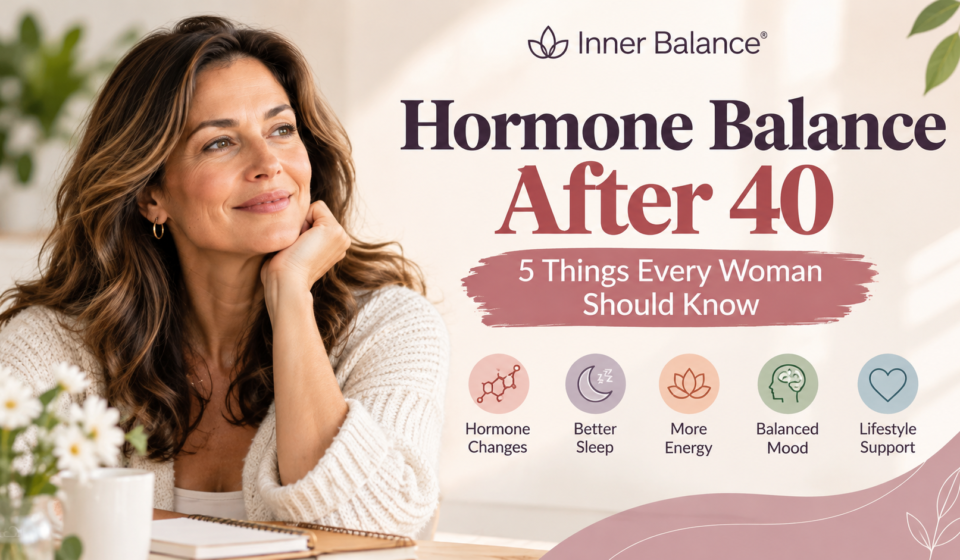
Hormone balance after 40 can become a confusing topic because changes in estrogen and progesterone may occur gradually, while symptoms can vary widely from woman to woman. Perimenopause, the transition leading up to menopause, often begins in the 40s, although timing differs. Changes may include irregular periods, hot flashes, sleep disruption, mood changes, vaginal dryness, and difficulty concentrating. The National Institute on Aging notes that estrogen and progesterone decline substantially during the menopausal transition, while ACOG explains that hormone levels can fluctuate during perimenopause. These changes do not mean every symptom is caused by hormones, so tracking symptoms and discussing persistent or disruptive changes with a qualified healthcare professional is important.
Save More on Every Order – Grab the Latest Coupons & Deals
Why Hormone Balance After 40 Matters
The first important point is that “hormone balance” does not mean keeping every hormone at one fixed level. Hormones naturally change during perimenopause and menopause, which can affect the body in different ways. Menopause is confirmed only after 12 consecutive months without a menstrual period, making it important to understand these natural changes rather than expecting hormones to remain constant.

1. Hormones Can Fluctuate
Estrogen levels can rise and fall during perimenopause, while progesterone patterns also change. These shifts can affect menstrual cycles and may occur alongside hot flashes, sleep problems, mood changes, or vaginal symptoms. ACOG notes that period changes are often an early sign of perimenopause.
2. Sleep Deserves Attention
Sleep problems can become part of the menopause transition. Night sweats may interrupt sleep, while mood changes and other midlife factors can also contribute. A consistent sleep schedule, a comfortable bedroom environment, regular physical activity, and limiting caffeine later in the day are practical steps recommended by health organizations.
3. Energy and Mood May Change
Feeling different in your 40s does not automatically mean you have a hormone disorder. Perimenopause can overlap with stress, changing responsibilities, sleep loss, and other health conditions. ACOG notes that some women experience irritability, low energy, tearfulness, anxiety, or concentration difficulties during perimenopause. If mood symptoms are persistent or severe, professional evaluation matters.
4. Lifestyle Still Plays a Major Role
Hormone changes are only one part of midlife wellness. Regular movement, adequate sleep, balanced nutrition, stress management, and avoiding smoking can support overall health. These habits are useful whether or not someone ultimately chooses medical treatment.
5. Treatment Should Be Personal
There is no single hormone therapy plan that fits every woman. Depending on symptoms and health history, options can include lifestyle measures, nonhormonal treatments, or hormone therapy. ACOG emphasizes that hormone therapy can help some menopausal symptoms but is not appropriate for everyone. A clinician can help weigh benefits, risks, medical history, and personal preferences.
How Inner Balance Fits the Topic
For women exploring prescription hormone care, Inner Balance offers clinician-guided treatment focused on hormonal changes associated with perimenopause and menopause. Its Oestra product is a prescription compounded cream containing bioidentical estradiol and micronized progesterone. Inner Balance says the formula is designed for vaginal delivery and systemic hormone support. Because it is prescription treatment, suitability should be determined through the provider’s clinical process rather than by choosing a product solely from a wellness checklist.
Top Relevant Option From Inner Balance
Oestra is the main hormone-therapy option presented by Inner Balance for perimenopause and menopause. The company describes it as a daily cream combining estradiol and progesterone in one formula. Its site states that the product is compounded in a licensed U.S. pharmacy and undergoes third-party potency testing. These are company-provided details, so readers should still discuss the formulation, potential benefits, risks, and alternatives with their clinician.

Pricing and Shipping
Inner Balance currently lists Oestra at $199 per month for the first six months, followed by $99.50 per month, and states that free shipping is included. Pricing and service terms can change, so check the official store before making a decision.
Pros and Cons
Potential advantages include clinician-guided prescription care, a combined estradiol-and-progesterone formula, and an online treatment process. Potential considerations include prescription requirements, ongoing cost, the need for medical screening, and the fact that compounded hormone products are not the same as an FDA-approved finished drug product. Individual suitability also varies.
Save More on Every Order – Grab the Latest Coupons & Deals
Frequently Asked Questions
Can hormone changes start after 40?
Yes. Perimenopause commonly begins in the 40s, but the timing varies. Symptoms and menstrual changes can appear gradually.
What are common signs of perimenopause?
Common symptoms include changing periods, hot flashes, night sweats, sleep problems, mood changes, vaginal dryness, and changes in sexual function.
Does everyone need hormone therapy after 40?
No. Some women have mild symptoms or no symptoms, while others may consider treatment. The appropriate approach depends on symptoms, medical history, risks, and preferences.
Is Oestra right for everyone?
No. Oestra is prescription hormone therapy, so a qualified clinician needs to determine whether it is appropriate for an individual.
When should I talk with a doctor?
Consider speaking with a healthcare professional when symptoms are persistent, disruptive, unusually severe, or difficult to explain. New or abnormal bleeding also deserves medical attention.
Related Resources
For a deeper look at the provider and its approach, see this Inner Balance review and guide to bioidentical hormone therapy for women.
Conclusion
Hormone balance after 40 is less about chasing a perfect hormone number and more about understanding the changes happening in your body. Tracking symptoms, protecting sleep, maintaining healthy habits, and getting professional guidance can make the transition easier to navigate. For women considering prescription options, Inner Balance provides clinician-guided hormone therapy through Oestra, but treatment decisions should be individualized. Exploring the official Inner Balance website can help you review the current treatment details and determine what questions to discuss with a healthcare professional.