

Table Of Content
- Save More on Every Order – Grab the Latest Coupons & Deals
- Why Gut Microbiome Testing Matters
- How Does the Viome Gut Intelligence Test Work in 4 Steps?
- Step 1: Register Your Test Kit
- Step 2: Collect Your Stool Sample
- Step 3: Send Your Sample for Laboratory Analysis
- Step 4: Explore Your Results and Food Recommendations
- What Do You Receive With the Viome Gut Intelligence Test
- Is the Viome Gut Intelligence Test Worth Considering?
- Save More on Every Order – Grab the Latest Coupons & Deals
- Frequently Asked Questions
- How long does the Viome Gut Intelligence Test take?
- Does the Viome test require a stool sample?
- Does the test diagnose digestive conditions?
- What happens after I receive my results?
- Where can I check the current price?
- Conclusion
Understanding your gut microbiome can help you learn more about how microorganisms interact with digestion, food, and other aspects of human biology. However, knowing where to start can be confusing, especially when general nutrition advice does not explain why different people may respond differently to the same foods. The Viome Gut Intelligence Test offers an at-home approach to exploring gut microbial activity and receiving personalized nutrition insights.
So, how does the Viome Gut Intelligence Test work? The process involves registering your kit, collecting a stool sample, sending it to a laboratory for analysis, and reviewing your results through Viome’s digital platform. These steps are designed to make gut microbiome testing accessible without requiring an in-person sample collection appointment. Understanding each stage can help you decide whether this type of testing fits your nutritional goals.
Save More on Every Order – Grab the Latest Coupons & Deals
Why Gut Microbiome Testing Matters
The gut microbiome is a community of microorganisms living in the digestive tract. These microorganisms interact with the food you eat and contribute to processes such as digestion and the production of certain compounds.
Diet, lifestyle, medications, and other factors can influence the gut’s microbial environment. Although general dietary guidelines provide a useful starting point, individual nutritional needs can differ.
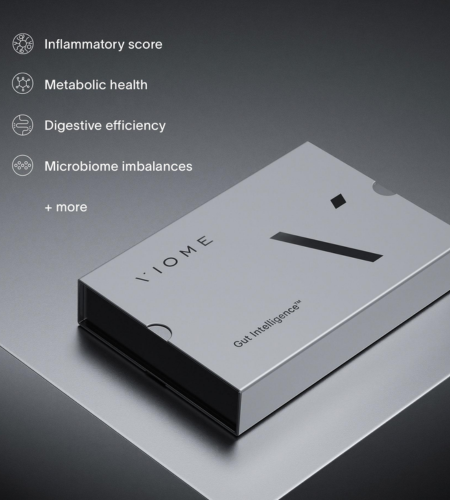
Gut microbiome testing aims to provide additional information about this environment. Viome’s Gut Intelligence Test uses RNA-based analysis to examine microbial gene activity rather than focusing only on which microorganisms are present. Its results include gut health scores and personalized food recommendations. However, the test is intended for informational purposes, not as a medical diagnosis or replacement for professional care.
How Does the Viome Gut Intelligence Test Work in 4 Steps?
The four-step process explained in the accompanying infographic.
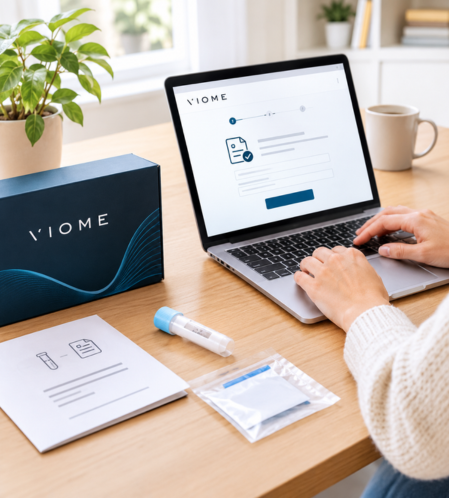
Step 1: Register Your Test Kit
After receiving your Viome test kit, the first step is to register it according to the supplied instructions. Registration connects your kit to the testing process and helps you follow the appropriate steps for submitting your sample.
Read the kit instructions carefully, including registration, sample handling, and required questionnaires, to ensure proper preparation.
Step 2: Collect Your Stool Sample
The second step involves collecting a stool sample at home using the materials and directions provided with your kit. Stool samples contain information that can be analyzed to investigate the gut microbiome.
Follow the collection and storage instructions precisely, including any packaging requirements. Once your sample is prepared, use the return materials supplied with your kit and follow Viome’s shipping directions.
The process is designed for at-home collection, so an in-person collection appointment is generally not part of the standard workflow.
Step 3: Send Your Sample for Laboratory Analysis
After collection, send your sample to the designated laboratory using the provided return instructions. Viome states that its Gut Intelligence Test uses RNA sequencing to examine microbial gene expression and activity across biological pathways.
This approach looks beyond the simple presence of microorganisms to investigate aspects of their activity. The resulting analysis is used to generate information about different gut functions and to inform the personalized recommendations provided with the test.
Laboratory analysis does not mean that every digestive symptom or health concern can be explained by the results. Your findings should be understood within their intended scope.
Step 4: Explore Your Results and Food Recommendations
Once the laboratory has processed your sample and you have completed the required questionnaire, Viome says results generally take about two to three weeks to arrive.
Your results are available digitally and include gut health scores and personalized food recommendations. Depending on the test offering, additional wellness or supplement recommendations may also be available.
You can review these insights to understand the patterns identified by the test and consider how they relate to your existing eating habits. Treat the recommendations as informational guidance rather than a diagnosis, and do not disregard known food allergies or medical advice.
What Do You Receive With the Viome Gut Intelligence Test
Viome’s official product page lists several types of information intended to help users explore their gut microbiome. These include:
- Gut health scores: Insights into digestion, microbial diversity, gas production, and gut lining.
- Food recommendations: Personalized guidance based on test results.
- Wellness support: Possible supplement, prebiotic, and probiotic recommendations.
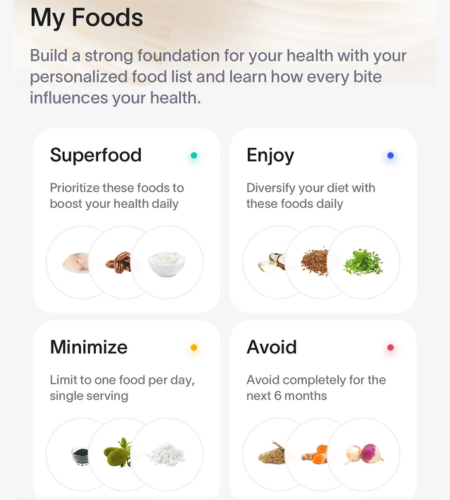
The exact inclusions depend on the test or bundle you select. These insights can help organize nutrition-related information, but they do not guarantee improvements in digestion or overall health.
Is the Viome Gut Intelligence Test Worth Considering?
The test may interest people who want a more personalized approach to understanding their gut microbiome. Before purchasing, consider these potential advantages and limitations.
Pros
- Convenient at-home sample collection.
- RNA-based analysis of microbial activity.
- Digital gut health scores and food recommendations.
- A structured way to explore nutrition-related information.
Cons
- Requires collecting and returning a stool sample.
- Results take time rather than arriving immediately.
- Recommendations do not replace medical assessment.
- Testing and optional personalized products involve additional costs that should be reviewed before ordering.
Save More on Every Order – Grab the Latest Coupons & Deals
Frequently Asked Questions
How long does the Viome Gut Intelligence Test take?
Viome states that results typically arrive within two to three weeks after the company receives your sample and you complete the required questionnaire.
Does the Viome test require a stool sample?
Yes. The Gut Intelligence Test uses an at-home stool sample to analyze gut microbial activity.
Does the test diagnose digestive conditions?
No. Viome’s testing information is intended for educational purposes and is not a substitute for medical diagnosis or professional healthcare advice.
What happens after I receive my results?
You can review your gut health scores and personalized food recommendations through Viome’s digital platform. Additional recommendations depend on the test or products selected.
Where can I check the current price?
Visit Viome’s official website to review the current test options, package inclusions, pricing, and applicable shipping terms before purchasing.
Conclusion
The Viome Gut Intelligence Test follows four main steps: register your kit, collect a stool sample, send it for laboratory analysis, and explore your personalized results. Understanding this process helps you know what to expect from at-home gut microbiome testing and how its insights may fit into your nutrition routine.
If you want to explore personalized gut health testing, visit Viome to review the Gut Intelligence Test, its current inclusions, and its limitations before deciding whether it suits your needs.