Table Of Content
- 🎉 Unlock Exclusive Sitewide Deals & Savings
- 1. Understand Your Airline’s Baggage Policy
- 2. Choose a Carry-On Bag That Meets Airline Requirements
- 3. Pack Only What You Actually Need
- 4. Use Packing Cubes and Organization Accessories
- 5. Pay Attention to Luggage Weight
- 6. Make Better Use of Your Personal Item Allowance
- 7. Consider Travel Bags Designed for Organized Packing
- 8. Avoid Last-Minute Airport Baggage Charges
- 🔥 Enjoy Massive Savings & Special Deals
- Frequently Asked Questions
- 1. How can I avoid airline baggage fees completely?
- 2. What is the standard carry-on luggage size?
- 3. Are soft-sided travel bags better than hard-shell suitcases?
- 4. Does a carry-on bag have a weight limit?
- 5. Is Luhxe Travel Bag 2.0 suitable for carry-on travel?
- Related Resources
- Conclusion
Airline baggage fees can quickly increase the cost of a trip, especially when travelers arrive at the airport with oversized suitcases, overweight luggage, or more bags than their ticket allows. Learning how to avoid extra airline baggage fees is an important part of planning a budget-friendly and stress-free journey.
The good news is that a few simple decisions can help you reduce unnecessary luggage expenses. Choosing the right carry-on bag, checking airline restrictions, organizing your belongings, and packing only essential items can make a significant difference. Whether you are planning a weekend getaway or an extended vacation, smart luggage choices can help you travel comfortably. Brands such as Luhxe also offer travel bags designed around organized packing and carry-on convenience.
🎉 Unlock Exclusive Sitewide Deals & Savings
1. Understand Your Airline’s Baggage Policy
One of the easiest ways to avoid unexpected baggage fees is to review your airline’s baggage policy before packing.
Different airlines have different rules regarding luggage dimensions, weight limits, and the number of bags passengers can bring.
Before departure, check:
- Maximum carry-on bag dimensions.
- Personal item size restrictions.
- Checked baggage weight allowances.
- Fees for additional luggage.
- Restrictions for basic economy tickets.
For example, American Airlines generally allows one carry-on bag measuring up to 22 x 14 x 9 inches, including handles and wheels, alongside one personal item. However, some fares and routes have different baggage allowances.
Never assume that another airline follows the same rules. Checking your specific flight details can help prevent unexpected airport charges.
2. Choose a Carry-On Bag That Meets Airline Requirements
Your luggage choice plays an important role in controlling travel expenses.
A properly sized carry-on bag allows you to bring essential clothing, accessories, and personal belongings without automatically paying for checked baggage.
When comparing travel bags, consider:
- Overall dimensions.
- Empty bag weight.
- Storage compartments.
- Material and durability.
- Comfortable carrying options.
- Compatibility with your airline’s requirements.
Soft-sided luggage can sometimes offer more flexibility when fitting into overhead compartments, although it must still meet the airline’s size restrictions.
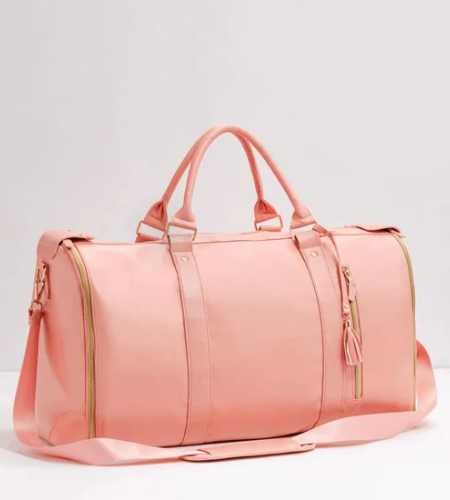
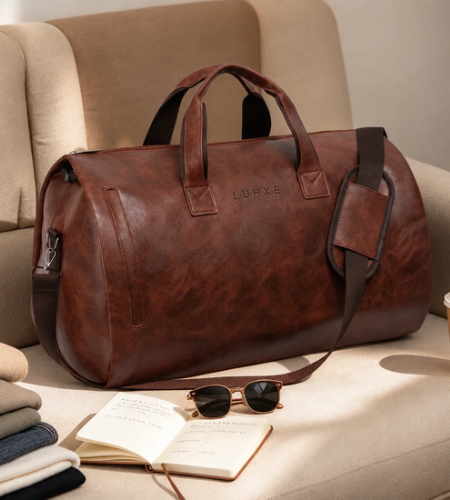
Luhxe offers travel bags designed for carry-on convenience, including its Travel Bag 2.0. The product listing gives dimensions of 20 x 9 x 12.5 inches and highlights features such as organized storage, a built-in garment system, and an optional detachable roller design.
Travelers should still confirm compatibility with their particular airline before departure.
3. Pack Only What You Actually Need
Overpacking is one of the biggest reasons travelers end up paying for additional luggage.
Instead of filling every available space, create a packing list based on your destination, weather, activities, and trip duration.
A practical packing strategy includes:
- Two or three versatile outfits that can be mixed and matched.
- Comfortable shoes suitable for planned activities.
- Essential toiletries in travel-sized containers.
- Necessary electronics and chargers.
- Important travel documents.
- Weather-appropriate accessories.
Choose clothing that works for multiple occasions. Neutral colors and lightweight layers make it easier to create different outfits without bringing excessive items.
This approach saves space and makes your luggage easier to manage throughout the journey.
4. Use Packing Cubes and Organization Accessories
Organizing your luggage properly can help you maximize available storage space.
Packing cubes separate clothing into categories, making it easier to locate specific items without unpacking your entire bag.
Consider organizing your belongings into:
- Everyday clothing.
- Underwear and socks.
- Shoes and accessories.
- Toiletries.
- Electronics.
- Laundry.
Rolling softer clothing can also make packing more manageable, while structured garments may benefit from careful folding.
A separate shoe bag helps prevent dirt from transferring onto clean clothing. Small toiletry organizers can keep personal care products together and reduce unnecessary clutter.
5. Pay Attention to Luggage Weight
A bag can meet an airline’s size requirements and still exceed its permitted weight limit.
Overweight baggage may result in additional charges, depending on your airline and ticket conditions.
Use a portable luggage scale before leaving home to check your suitcase.
If your bag is too heavy, consider removing:
- Unnecessary shoes.
- Duplicate clothing.
- Heavy accessories.
- Items available at your destination.
- Nonessential electronic equipment.
Also remember that some airlines apply different weight restrictions to carry-on and checked luggage.
Checking both requirements before departure helps you avoid last-minute repacking at the airport.
6. Make Better Use of Your Personal Item Allowance
Many airlines allow passengers to bring a personal item in addition to their main carry-on bag.
Depending on the airline, this might include a small backpack, handbag, laptop bag, or similar item that fits underneath the seat.
Use this allowance strategically for essentials such as:
- Passport and travel documents.
- Phone and charging accessories.
- Wallet and valuables.
- Headphones.
- Medication.
- Travel entertainment.
Keep important belongings accessible rather than placing everything inside your overhead carry-on.
However, remember that personal item dimensions vary between airlines, so check the rules before selecting your bag.
7. Consider Travel Bags Designed for Organized Packing
The right luggage can make airport preparation easier.
Luhxe is a travel accessories brand offering bags designed around practical storage, organized packing, and modern travel needs.
Its Travel Bag 2.0 includes features such as a garment organization system, dedicated shoe storage, and a detachable roller option on selected models.
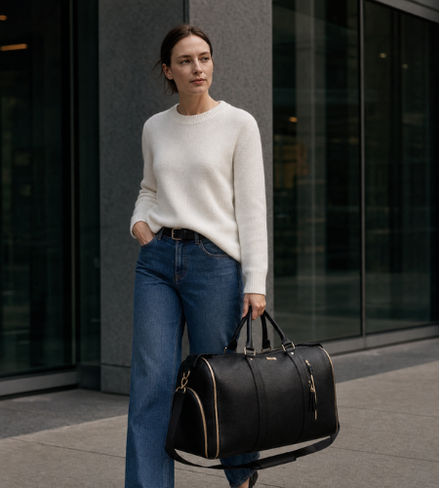
The brand also highlights its PU leather construction and water-resistant coating.
These features may appeal to travelers who want an alternative to traditional suitcases while keeping clothing and accessories organized.
Advantages:
- Designed for carry-on convenience.
- Multiple storage and organization features.
- Optional rolling functionality.
- Garment organization for clothing.
Considerations:
- Airline approval should always be checked individually.
- Travelers who prefer traditional hard-shell luggage may prefer another style.
- Product availability and current pricing should be confirmed before ordering.
Exploring Luhxe’s travel bag collection can help you compare available designs and decide whether one suits your packing routine.
8. Avoid Last-Minute Airport Baggage Charges
Preparing before reaching the airport is much easier than dealing with unexpected luggage problems at check-in.
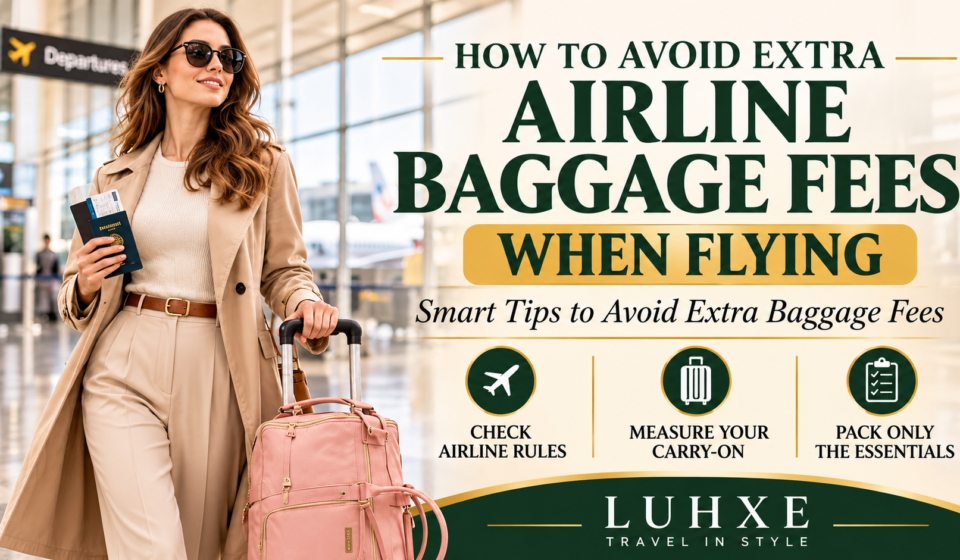
Follow this simple checklist:
- Review your airline’s baggage allowance.
- Measure your carry-on bag.
- Check the weight of your luggage.
- Confirm your personal item allowance.
- Remove unnecessary belongings.
- Review additional baggage charges before online check-in.
Some airlines offer different prices depending on when baggage is purchased. Checking the available options online before arriving at the airport may help you avoid higher last-minute charges.
🔥 Enjoy Massive Savings & Special Deals
Frequently Asked Questions
1. How can I avoid airline baggage fees completely?
Traveling with an included carry-on and personal item may help you avoid checked baggage charges. However, allowances depend on your airline, ticket type, and route.
2. What is the standard carry-on luggage size?
A commonly used carry-on reference size is 22 x 14 x 9 inches. However, individual airline requirements vary, so always check the official baggage policy.
3. Are soft-sided travel bags better than hard-shell suitcases?
Soft-sided bags can offer flexible storage and easier organization. Hard-shell suitcases may provide more rigid protection. The better option depends on your travel requirements.
4. Does a carry-on bag have a weight limit?
Some airlines specify carry-on weight limits, while others primarily focus on dimensions and safe handling. Check your airline’s current requirements.
5. Is Luhxe Travel Bag 2.0 suitable for carry-on travel?
Luhxe markets its Travel Bag 2.0 as a carry-on travel option. Its listed dimensions are 20 x 9 x 12.5 inches. Travelers should verify these measurements against their airline’s specific rules.
Related Resources
For additional information about travel bag features, product details, and purchasing considerations, explore our related guide: Luhxe Travel Bag Review 2026.
Conclusion
Learning how to avoid extra airline baggage fees starts with understanding airline restrictions, choosing appropriately sized luggage, and packing efficiently.
Small changes, such as checking bag dimensions, using packing organizers, monitoring luggage weight, and making better use of your personal item allowance, can make traveling more affordable and convenient.
Choosing practical luggage is equally important. Luhxe offers travel bags designed to combine organized storage with carry-on convenience. Explore its official collection to find a travel bag that matches your packing preferences and upcoming travel plans.