Table Of Content
- Save More on Every Order – Grab the Latest Coupons & Deals
- Why Comfortable Nursing Shoes Matter
- 5 Features to Check Before Buying Nursing Shoes
- 1. Proper Fit and Toe Room
- 2. Cushioning and Arch Support
- 3. Traction and Outsole Grip
- 4. Easy-Clean Materials
- 5. Support for Your Workday
- Which Nursing Shoe Style Should You Choose?
- How Uniform Advantage Fits Your Nursing Footwear Needs
- Pricing and Shopping Considerations
- Pros and Cons of Shopping at Uniform Advantage
- Save More on Every Order – Grab the Latest Coupons & Deals
- Frequently Asked Questions
- What are the most important features in nursing shoes?
- Are sneakers or clogs better for long nursing shifts?
- Should nursing shoes be tight or loose?
- How can I choose nursing shoes for wide feet?
- Are slip-resistant nursing shoes necessary?
- Where can I compare nursing shoes online?
- Related Resources
- Conclusion
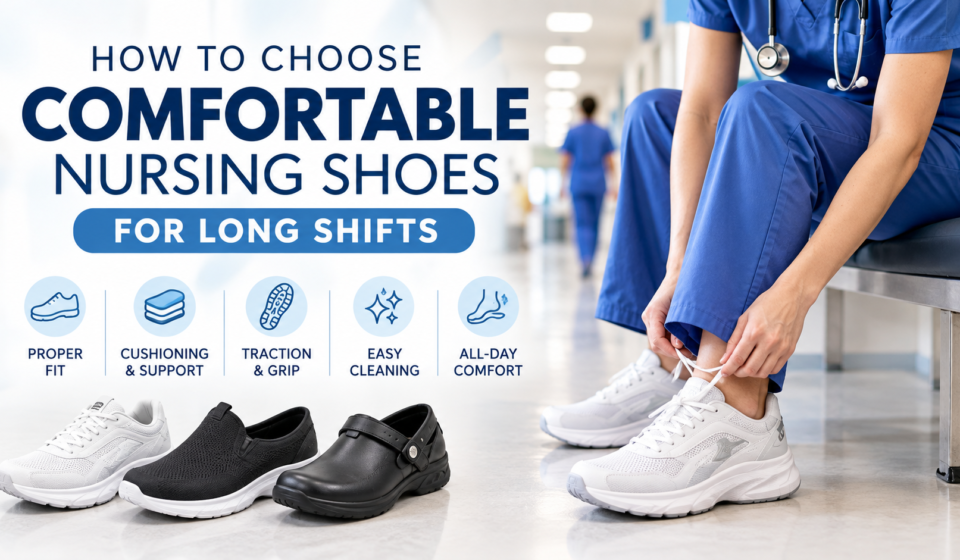
Long nursing shifts can be demanding, especially when your work involves standing, walking between patient rooms, and moving across hard hospital floors. The right footwear can make your workday more manageable, while poorly fitting shoes may contribute to discomfort, pressure points, and tired feet. That is why knowing how to choose comfortable nursing shoes for long shifts matters before investing in a new pair.
A good nursing shoe should offer a secure fit, appropriate cushioning, dependable traction, and materials that suit your workplace. It should also meet your employer’s footwear requirements. From athletic-style sneakers to slip-on work shoes and professional clogs, different designs offer different advantages. Uniform Advantage carries nursing footwear across several categories, giving healthcare professionals options to compare when choosing shoes for their daily responsibilities.
Save More on Every Order – Grab the Latest Coupons & Deals
Why Comfortable Nursing Shoes Matter
Healthcare workers often spend extended periods on their feet, so ordinary casual footwear may not suit the demands of a clinical environment. Shoes need to accommodate repeated movement, prolonged standing, and the practical requirements of the workplace.
Comfort depends on proper fit, toe space, heel stability, and suitable cushioning. Choose footwear with adequate traction for your workplace.
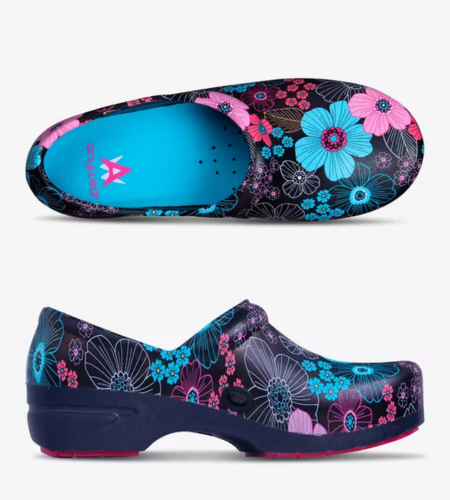
Before shopping, consider your usual shift length, the surfaces you walk on, your foot shape, and any specific dress-code requirements. These factors help narrow your options and make it easier to compare features that matter throughout the day.
5 Features to Check Before Buying Nursing Shoes
1. Proper Fit and Toe Room
Fit should be your first priority. Your toes need enough room to move naturally without pressing against the front or sides of the shoe. At the same time, the heel should feel secure without excessive slipping.
Try shoes later in the day, when your feet may be slightly larger than they are in the morning. Wear your usual work socks and check both feet, since they may differ slightly in size.
Look for:
- Enough room around the toes.
- A secure heel that does not rub.
- No pinching across the sides.
- A fit that feels comfortable while standing and walking.
Do not assume that sizing is identical across brands. Check each manufacturer’s sizing guidance before ordering.
2. Cushioning and Arch Support
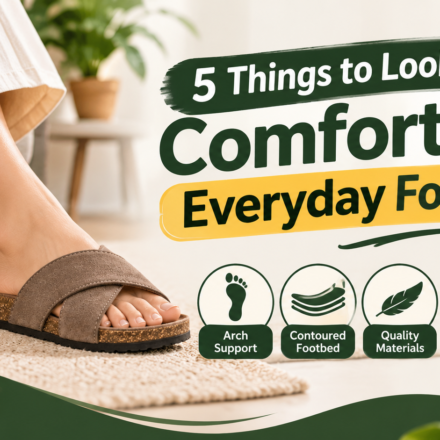
Cushioning helps absorb some of the impact associated with walking and standing on hard surfaces. Arch support helps the shoe fit and support the structure of your foot, although the ideal level varies between individuals.
Look for a midsole that feels supportive rather than excessively soft or unstable. If you use orthotics, check whether the shoe has a removable insole and enough internal space to accommodate them comfortably.
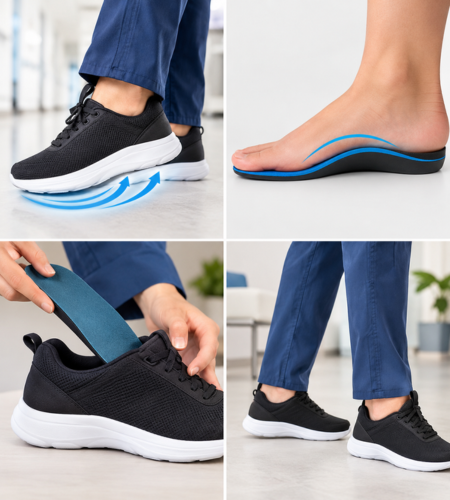
Remember that more cushioning does not automatically mean a better fit. The shoe should feel stable, supportive, and comfortable for your particular needs.
3. Traction and Outsole Grip
Hospital corridors and other clinical workplaces may have smooth floors that become slippery when wet. An appropriate outsole can help provide grip during routine movement.
Check the manufacturer’s description for an explicitly slip-resistant design, rather than relying on appearance alone. Review your employer’s footwear policy because some departments require specific safety features.
Pay attention to the outsole material and tread pattern. The shoe should feel stable when walking and turning, without an excessively slippery or awkward sole.
4. Easy-Clean Materials
Nursing shoes can encounter dust, spills, and everyday workplace mess. Choosing materials that are easy to maintain can make footwear care simpler.
Some smooth or coated uppers are easier to wipe clean than porous knit fabrics, although cleaning suitability varies by product. Read the manufacturer’s care instructions before using cleaning products or disinfectants.
Consider a closed-toe design and a construction suitable for your working environment. If your department has specific hygiene requirements, make sure the shoe meets them before purchasing.
5. Support for Your Workday
Your footwear should match the tasks you perform. A nurse who walks continuously may prefer an athletic-style shoe, while someone who values quick entry and removal may consider a slip-on design. Professional clogs offer another option, depending on their fit, support, and workplace suitability.
Think about whether you need adjustable laces, a secure heel, a roomy interior, or compatibility with orthotics. The best choice is the one that balances these needs without compromising your workplace requirements.
Which Nursing Shoe Style Should You Choose?
Three common footwear styles are worth considering:
- Athletic-style sneakers: A practical starting point for workers who walk frequently and prefer a lace-up fit. Check cushioning, stability, and whether the outsole meets workplace requirements.
- Slip-on work shoes: Convenient for people who prefer not to adjust laces. Check that the shoe stays securely on your foot and does not rub your heel.
- Professional clogs: An alternative for workers who prefer a clog-style design. Consider heel security, weight, cushioning, and whether the style meets your department’s dress code.
Uniform Advantage lists all three broad styles within its nursing footwear selection. However, the suitability of each option depends on the specific model and your working conditions.
How Uniform Advantage Fits Your Nursing Footwear Needs
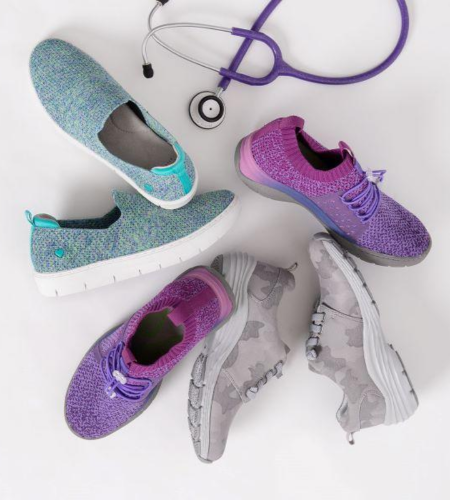
Uniform Advantage is a healthcare apparel retailer that also offers nursing shoes and medical footwear. Its footwear selection includes athletic shoes, clogs, slip-on shoes, and slip-resistant styles, making it possible to compare different designs in one place.
When browsing its collection, use the available category and size filters to narrow your choices. Compare the features of individual products instead of selecting a pair based on brand recognition or appearance alone.
Pricing and Shopping Considerations
Footwear prices vary by brand, model, and availability. Uniform Advantage displays product-specific pricing on its website, and some styles may be discounted. Check the current price, size availability, shipping terms, and return conditions before placing an order. Do not assume that every shoe qualifies for the same promotion or delivery offer.
For a more useful comparison, shortlist two or three pairs and evaluate their fit, cushioning, traction, cleaning requirements, and total cost. A lower price is not necessarily better value if the shoe does not suit your shift.
Pros and Cons of Shopping at Uniform Advantage
Pros
- Multiple nursing footwear styles in one retailer.
- Options from a range of footwear brands.
- Category and size filters for narrowing selections.
- A convenient destination for comparing work footwear with other healthcare essentials.
Cons
- Available sizes, styles, and prices can change.
- Not every shoe will provide the same support or traction.
- You may need to compare several models to find a suitable fit.
- Online shopping cannot fully replace trying shoes on and walking in them.
Save More on Every Order – Grab the Latest Coupons & Deals
Frequently Asked Questions
What are the most important features in nursing shoes?
Start with proper fit, suitable cushioning, adequate support, reliable traction, and easy-care materials. Also check your workplace footwear policy.
Are sneakers or clogs better for long nursing shifts?
Neither style is automatically better. Compare the individual shoe’s stability, comfort, fit, outsole grip, and suitability for your work environment.
Should nursing shoes be tight or loose?
They should feel secure without squeezing your toes or causing pressure. Allow adequate toe room and check that the heel does not slip excessively.
How can I choose nursing shoes for wide feet?
Look for models available in wide widths or with a naturally roomy toe box. Check the manufacturer’s sizing information and try the shoes with your usual work socks whenever possible.
Are slip-resistant nursing shoes necessary?
Requirements depend on your workplace and duties. Because floors can become slippery, check your employer’s safety rules and choose footwear with clearly stated traction features when required.
Where can I compare nursing shoes online?
Uniform Advantage offers athletic footwear, clogs, slip-on styles, and slip-resistant options. Compare the details of each product and verify current availability before ordering.
Related Resources
Explore additional educational content about nursing footwear, workplace comfort, and practical shoe-shopping considerations. An existing internal blog URL was not supplied, so a specific related article cannot be linked or verified.
Conclusion
Choosing comfortable nursing shoes for long shifts starts with understanding your feet, work environment, and daily responsibilities. Prioritize a secure fit, balanced cushioning, suitable support, dependable traction, and manageable cleaning requirements. Compare athletic sneakers, slip-on work shoes, and professional clogs before deciding which style suits your routine.
Uniform Advantage offers a range of nursing footwear categories to explore. Review individual product specifications, sizing, current prices, and workplace requirements to make a more informed decision about your next pair of work shoes.