Table Of Content
- 🎉 Save More on Every Order – Grab the Latest Coupons & Deals
- What Does “Methylated” Mean?
- What Does “Methyl-Free” Mean?
- Methylated vs Methyl-Free Vitamins: Key Differences
- How Seeking Health Fits the Topic
- What About B Minus?
- How to Choose Between the Forms
- 🎉 Save More on Every Order – Grab the Latest Coupons & Deals
- Frequently Asked Questions
- Is methylated B12 better than methyl-free B12?
- What is the difference between 5-MTHF and folinic acid?
- Is B Complex MF completely free of B12 and folate?
- What is B Minus?
- Should everyone take methylated vitamins?
- Related Resources
- Conclusion
Choosing a B-vitamin supplement can get confusing when labels use terms such as methylated, non-methylated, active, or methyl-free. The main difference is the form of certain B vitamins, especially folate (B9) and vitamin B12. Methylated forms commonly include 5-MTHF folate and methylcobalamin B12, while methyl-free formulas may use forms such as folinic acid and hydroxycobalamin. NIH notes that supplements can contain several forms of B12 and that research has not established one supplemental B12 form as universally superior.
Understanding the label helps when choosing a product. Seeking Health offers both methylated and methyl-free B-vitamin options, making it useful to compare formulations by ingredients rather than marketing language.
🎉 Save More on Every Order – Grab the Latest Coupons & Deals
What Does “Methylated” Mean?
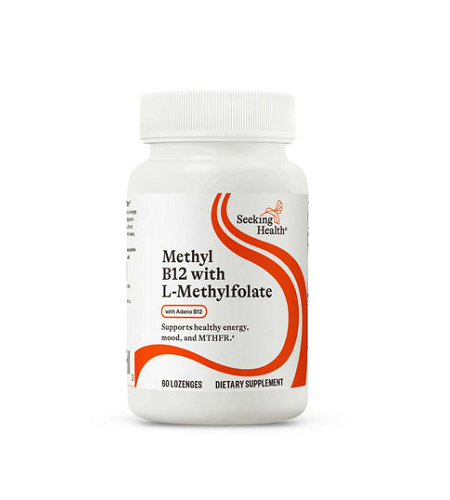
“Methylated” generally refers to nutrients that contain or provide a methyl group used in methylation-related biochemical reactions. In supplements, it is most commonly associated with 5-MTHF, a form of folate, and methylcobalamin, a form of vitamin B12.
Methylated B vitamins are often selected by people who specifically want these forms in their supplement routine. It does not automatically mean better results.
What Does “Methyl-Free” Mean?
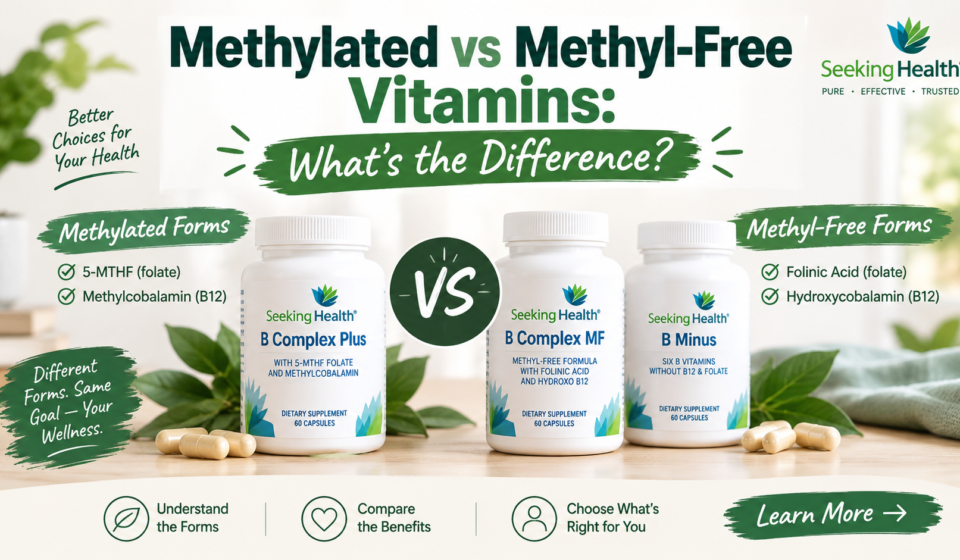
Methyl-free or non-methylated formulas use alternative forms of nutrients rather than methylated folate or methylcobalamin. Seeking Health’s B Complex MF, for example, contains eight essential B vitamins and uses folinic acid for folate and hydroxo B12 for vitamin B12. The company positions it as a methyl-free B-complex and lists it as suitable for people described as methyl sensitive.
This can help people who want to avoid methylated B12 or folate.
Methylated vs Methyl-Free Vitamins: Key Differences
The simplest way to compare them is to look at the actual Supplement Facts label.
- Folate form: Methylated formulas may use 5-MTHF; methyl-free formulas may use folinic acid.
- B12 form: Methylated formulas may use methylcobalamin; methyl-free formulas may use hydroxycobalamin or adenosylcobalamin.
- Formula flexibility: Some methyl-free products allow users to add B12 or folate separately in the form they prefer.
- Individual response: Tolerance and personal needs can differ, so a label comparison is more useful than assuming one form is universally superior.
NIH also notes that vitamin B12 supplements can contain cyanocobalamin, adenosylcobalamin, methylcobalamin, or hydroxycobalamin, and current evidence does not show one supplemental form is better than all others.
How Seeking Health Fits the Topic
Seeking Health has a dedicated methyl-free supplements collection alongside its broader B-vitamin range. Its current B Complex MF provides all eight essential B vitamins while using non-methylated B12 and folate. The company also offers B Complex Plus, which contains all eight essential B vitamins plus choline and includes 5-MTHF folate.
This lets readers compare formulations by ingredient form.
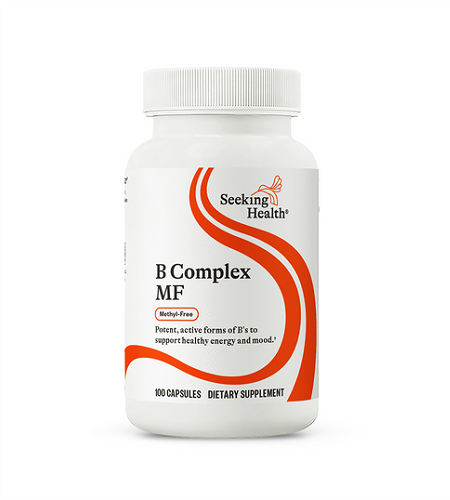
B Complex MF is currently listed at $32 for a one-time purchase, with subscription options also shown. Prices and purchasing terms can change, so check the official product page before ordering.
What About B Minus?
Another relevant option is Seeking Health’s B Minus. Unlike a complete B-complex, B Minus contains six essential B vitamins and intentionally leaves out vitamin B12 and folate. The company says this allows users to customize those two nutrients separately with methylated or methyl-free forms.
That can make the label particularly relevant for people who want to choose their B12 and folate forms independently rather than taking both in a single formula.
How to Choose Between the Forms
Start by identifying what you want from the supplement. If you specifically want 5-MTHF and methylcobalamin, a methylated formula may match those ingredient preferences. If you want folinic acid and hydroxycobalamin, a methyl-free option may be more appropriate for that preference.
Check the dose, serving size, other B-vitamin forms, and directions. If you have a deficiency, are pregnant, take medication, or have a medical condition, discuss supplements with a healthcare professional rather than choosing solely from an online comparison.
🎉 Save More on Every Order – Grab the Latest Coupons & Deals
Frequently Asked Questions
Is methylated B12 better than methyl-free B12?
Not necessarily. NIH lists several B12 forms and says research has not shown that one supplemental form is better than the others overall.
What is the difference between 5-MTHF and folinic acid?
Both are forms of folate used in supplements, but they are chemically different. 5-MTHF is a methylated folate form, while folinic acid is a non-methylated folate form.
Is B Complex MF completely free of B12 and folate?
No. Seeking Health’s B Complex MF includes B12 and folate, but uses hydroxo B12 and folinic acid rather than methylcobalamin and 5-MTHF.
What is B Minus?
B Minus is a six-B-vitamin formula without B12 or folate, designed to let users add those nutrients separately according to their preferred forms.
Should everyone take methylated vitamins?
No. Supplement needs and preferred nutrient forms vary. A product label and individual circumstances should guide the choice rather than assuming methylated forms are automatically superior.
Related Resources
For a broader look at Seeking Health products, including supplements such as Prenatal, Histamine Block, and ProBiota HistaminX, see this [complete Seeking Health supplements review and guide]complete Seeking Health supplements review and guide.
Conclusion
The difference between methylated and methyl-free vitamins mainly comes down to the forms of specific nutrients, particularly folate and vitamin B12. Methylated formulas may feature 5-MTHF and methylcobalamin, while methyl-free products can use alternatives such as folinic acid and hydroxycobalamin. Neither label alone establishes which option is right for every person.
Seeking Health currently provides both approaches, including B Complex Plus, B Complex MF, and B Minus. Comparing the Supplement Facts panel can help you understand what you are actually taking and choose a formulation that fits your preferences and professional guidance. Explore the official Seeking Health store to review the current formulas and product details.