Table Of Content
- Why Choosing the Right Faux Tree Matters
- 1. Check the Tree Height and Overall Size
- 2. Examine the Foliage for a Natural Appearance
- 3. Review the Trunk and Branch Details
- 4. Consider the Planter and Finish
- 5. Plan the Placement Before Ordering
- How Rootless Plants Fits Your Faux Tree Search
- Pricing and Practical Considerations
- Pros and Cons of Faux Trees
- Frequently Asked Questions
- What should I check before buying a faux tree?
- How do I choose the right artificial tree height?
- Which faux tree style suits a modern home?
- Do artificial trees require maintenance?
- Are planters included with Rootless Plants trees?
- Conclusion
A well-chosen faux tree can bring height, texture, and a natural-looking touch of greenery to a living room, bedroom, entryway, or home office. However, not every artificial tree looks convincing in every space. A tree that is too tall may overwhelm a small room, while sparse foliage or an artificial-looking trunk can make an otherwise attractive corner feel unfinished.
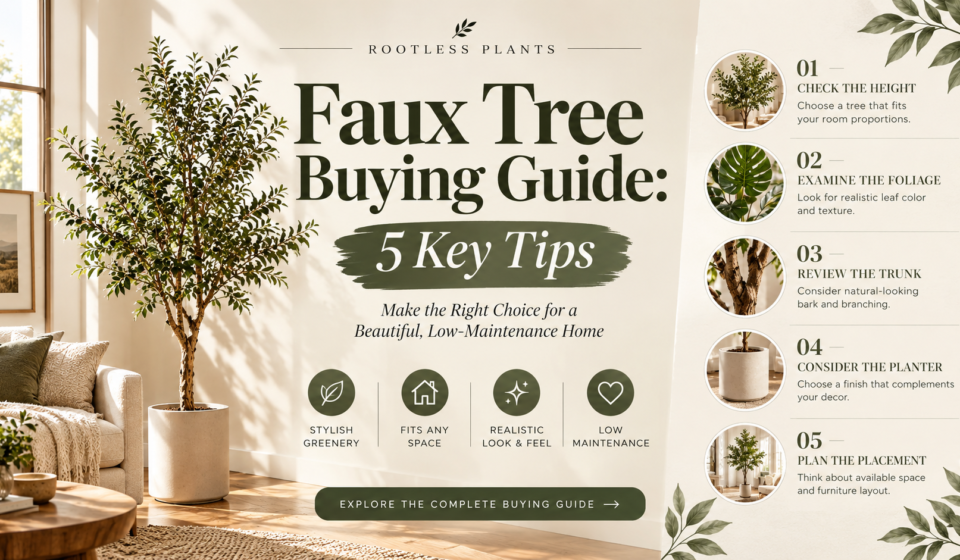
This faux tree buying guide explains five important details to consider before choosing indoor artificial greenery: height, foliage, trunk construction, planter design, and placement. By evaluating these features together, you can make a more informed decision and select a decorative tree that suits your room’s proportions and style.
If you are exploring realistic artificial trees, Rootless Plants offers options in different foliage styles and sizes, making it a relevant place to compare designs for your home.
Why Choosing the Right Faux Tree Matters
Decorative trees can help fill empty corners, soften straight furniture lines, and add visual interest without requiring the watering and pruning associated with living plants.
The key is choosing a design that looks appropriate for its surroundings. Consider your room’s natural light, available floor space, ceiling height, furniture arrangement, and existing color palette before comparing individual products.
A realistic-looking tree should complement the room rather than become an awkward obstacle or an unrelated decorative feature. These five checks can help you evaluate your options more carefully.
1. Check the Tree Height and Overall Size
Height is one of the first details to review when buying an artificial tree. A tall tree can make a statement in an open living room, while a more compact design may suit a bedroom, apartment, or narrow hallway.
Before ordering, measure the floor-to-ceiling distance and consider how much visual space the foliage occupies. Remember to account for the planter if its dimensions affect the final height.
Also check the tree’s width or canopy spread. Two artificial trees of the same height can occupy very different amounts of floor space.
For a practical comparison:
- Choose a taller silhouette for a spacious corner with sufficient overhead clearance.
- Consider a narrower tree where walkways or furniture limit the available space.
- Compare the listed dimensions with nearby sofas, consoles, and shelving.
- Leave enough room for doors, curtains, and everyday movement.
Rootless Plants lists several tree styles in 5-foot and 7-foot options, while some designs have different size availability. Check the individual product listing before deciding which dimensions suit your room.
2. Examine the Foliage for a Natural Appearance
Foliage is one of the most noticeable factors when assessing a faux tree. Look beyond the overall product photograph and examine close-up images of the leaves, their color variations, edges, and arrangement.
Real plants rarely have perfectly identical leaves arranged in repetitive patterns. An artificial tree can appear more convincing when its foliage has varied shapes, natural-looking spacing, and a balanced silhouette.
Think about the appearance you want:
- Olive-style foliage offers a fine, delicate look that can complement minimalist or Mediterranean-inspired interiors.
- Monstera-style leaves create a larger, tropical statement.
- Fiddle-leaf-style foliage adds broad leaves and a sculptural shape.
Rootless Plants features styles such as Tuscan Olive, Monstera Statement, and Iconic Fiddle, allowing shoppers to compare different foliage forms. Review product photographs carefully to determine which design best matches your preferences.
3. Review the Trunk and Branch Details
The trunk can make a significant difference to an artificial tree’s overall appearance. From a distance, foliage may attract the most attention, but the trunk and branches become more noticeable when the tree is placed beside seating or in an entryway.
Look for bark texture, natural-looking color variation, convincing branch connections, and a shape that suits the tree species. Be cautious about relying on a single promotional image; inspect close-ups whenever available.
Branch density also matters. Very sparse foliage may leave the structure looking unfinished, while an excessively dense canopy can appear bulky in a smaller room.
Rootless Plants describes features such as hand-finished bark textures and lifelike leaves on its official website. These are useful details to investigate when comparing its designs, although the finished appearance is best judged through product-specific photographs and dimensions.
4. Consider the Planter and Finish
The planter is part of the overall design, not simply a container for the tree. Its color, shape, texture, and proportions influence how the greenery fits into your interior.
A matte neutral planter can complement a warm, understated room. Darker finishes may provide contrast in a contemporary space, while textured surfaces can add interest to a simple arrangement.
Before purchasing, check whether a decorative planter is included, whether you can select its color, and whether its size suits the tree. These details vary between retailers and products, so confirm them on the specific listing rather than assuming every artificial tree comes with the same setup.
Rootless Plants advertises included designer planters with its trees. Check the current product details to confirm the available finishes and what comes with your selected model.
5. Plan the Placement Before Ordering
Even a beautiful artificial tree may look out of place if it is positioned without considering the room’s layout.
Identify the intended location before choosing a model. Empty corners beside sofas, areas near consoles, and spacious entryways can be suitable places, provided the tree does not interfere with movement.
Consider these practical points:
- Check the tree’s full height and spread against the available floor area.
- Keep leaves clear of doorways, walkways, and frequently used furniture.
- Coordinate the foliage and planter with nearby colors and materials.
- Consider how the tree will look from the main seating position and room entrance.
- Check the product’s indoor or outdoor suitability before placing it near exposed sunlight or outside.
A little planning can help the tree feel integrated into the room rather than added as an afterthought.
How Rootless Plants Fits Your Faux Tree Search
Rootless Plants offers decorative artificial trees designed for home interiors, including olive, monstera, and fiddle-style options. Its current website lists selected individual trees in 5-foot and 7-foot sizes, with displayed prices varying by design and configuration. The brand also advertises free shipping and a three-year warranty, but you should review the current terms before placing an order.
When comparing options, focus on the product details that matter most to you: dimensions, foliage shape, trunk appearance, planter finish, and the final cost. These factors provide a more useful basis for choosing than appearance alone.
Pricing and Practical Considerations
The Rootless Plants website currently displays selected 5-foot trees at $399 and 7-foot trees at $499, although prices and promotions can change. Some models have different pricing, so check the listing for your chosen tree and size.
Before purchasing, confirm shipping arrangements, included accessories, return eligibility, and warranty coverage. Artificial greenery generally requires less routine care than living plants, but it still benefits from occasional dusting and gentle cleaning according to the manufacturer’s instructions.
Pros and Cons of Faux Trees
Potential advantages
- Add greenery without a watering schedule.
- Offer decorative options for rooms with limited natural light.
- Come in different heights, silhouettes, and foliage styles.
- Can provide a consistent appearance throughout the year.
- May suit busy households looking for lower-maintenance decor.
Things to consider
- Realism varies by materials, construction, and design.
- Larger trees require adequate floor and ceiling space.
- Dust can collect on leaves and branches.
- Quality artificial trees may require a higher initial budget than smaller decorative plants.
Frequently Asked Questions
What should I check before buying a faux tree?
Check its height, width, foliage realism, trunk details, planter, and intended placement. Also review the product’s materials, included components, and return policy.
How do I choose the right artificial tree height?
Measure your ceiling height and available floor area first. Compare the tree’s complete dimensions, including the planter, with nearby furniture and the space above the foliage.
Which faux tree style suits a modern home?
Monstera-style trees can complement contemporary and tropical-inspired spaces, while olive-style designs often suit minimalist interiors. Choose according to your existing furniture, colors, and preferred visual effect.
Do artificial trees require maintenance?
They need relatively little routine care compared with living trees, but occasional dusting and gentle cleaning help maintain their appearance. Follow the product’s care instructions.
Are planters included with Rootless Plants trees?
Rootless Plants advertises designer planters with its trees. Check the specific product listing to confirm the included planter, available colors, and current terms.
Conclusion
Choosing the right artificial tree involves more than selecting an attractive photograph. Check the height, examine the foliage and trunk, consider the planter, and plan the placement before ordering. These five steps can help you find greenery that complements your home’s proportions and decorative style.
Rootless Plants offers several artificial tree designs worth comparing if you are looking for a decorative focal point with less routine maintenance. Explore its current collection and review the details of each option to find a faux tree that feels right for your space.