Table Of Content
- 🎉 Exclusive Deals & Massive Savings
- Why Semaglutide vs. Tirzepatide Matters
- Weight Management: What Does the Evidence Say?
- Side Effects and Safety Considerations
- Key Differences at a Glance
- How TrimRX Fits Into the Research
- Pros and Cons
- ✨ Unlock Special Offers & Discounts
- Frequently Asked Questions
- Is tirzepatide stronger than semaglutide?
- Can semaglutide and tirzepatide be taken together?
- Are both medications approved for weight management?
- Does insurance cover either medication?
- Related Resources
- Conclusion
Choosing between semaglutide and tirzepatide can be confusing, especially when researching modern medical weight management options. Both medications are designed to influence appetite, food intake, and metabolic processes, but they work through different hormonal pathways. Understanding semaglutide vs. tirzepatide is important for anyone exploring prescription-based weight management with professional medical guidance.
Semaglutide targets the GLP-1 receptor, while tirzepatide activates both GLP-1 and GIP receptors. These differences influence how the medications work and may affect individual treatment outcomes. Understanding their benefits, potential side effects, costs, and medical considerations can help you have a more informed conversation with a healthcare provider. TrimRX is one online platform worth exploring when researching available weight management programs.
🎉 Exclusive Deals & Massive Savings
Why Semaglutide vs. Tirzepatide Matters
Both medications belong to a newer category of treatments that work with hormones involved in appetite regulation and blood sugar control.
Their mechanisms differ.
Semaglutide is a GLP-1 receptor agonist that mimics a natural hormone involved in appetite, insulin release, and digestion.
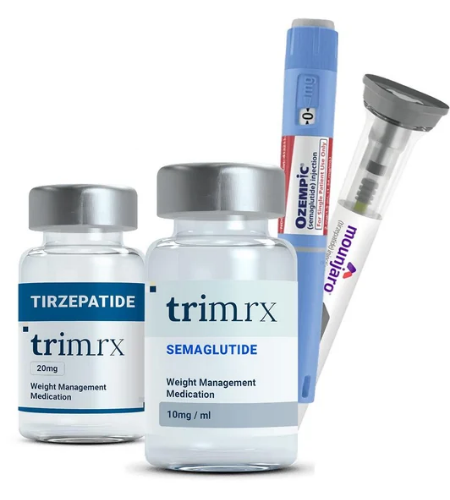
Tirzepatide is a dual GIP and GLP-1 receptor agonist. It activates two hormonal pathways that influence appetite regulation and metabolic functions.
Both are generally administered through weekly injections in their weight management formulations.
Both medicines are prescription treatments, generally given weekly. They are not interchangeable dose for dose, and should not be combined. Dosing and escalation must follow the specific product instructions and prescriber’s advice.
Weight Management: What Does the Evidence Say?
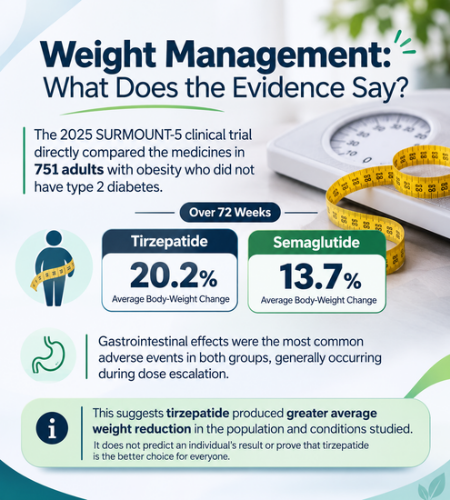
The 2025 SURMOUNT-5 trial found greater average weight loss with tirzepatide (20.2%) than semaglutide (13.7%) over 72 weeks. Both commonly caused gastrointestinal side effects.
Tirzepatide showed greater average weight reduction in the studied trial, but individual results vary. These findings apply to the specific branded medicines and doses studied, not necessarily compounded versions.
Side Effects and Safety Considerations
Both medicines can cause nausea, vomiting, diarrhea, constipation, and abdominal discomfort. Symptoms may be more noticeable when treatment begins or the dose increases.
Both products carry warnings about thyroid C-cell tumors observed in rodents; whether this risk applies to humans is unknown. They are contraindicated for people with a personal or family history of medullary thyroid carcinoma or multiple endocrine neoplasia syndrome type 2.
Other precautions include pancreatitis, gallbladder problems, dehydration-related kidney injury, and interactions with other medicines. Tirzepatide may affect oral hormonal contraceptive reliability during initiation and dose increases, so patients should ask their prescriber about backup contraception. accessdata.fda.gov+1
Pregnancy, plans for pregnancy, relevant medical conditions, diabetes medicines, and planned procedures should be discussed before treatment. Never start, stop, combine, or change doses based on an online comparison.
Key Differences at a Glance
| Consideration | Semaglutide | Tirzepatide |
|---|---|---|
| Mechanism | GLP-1 receptor agonist | Dual GIP and GLP-1 receptor agonist |
| Trial comparison | 13.7% average weight change | 20.2% average weight change |
| Common side effects | Mainly gastrointestinal | Mainly gastrointestinal |
| Weight-management schedule | Usually weekly injection | Usually weekly injection |
When comparing treatments, ask a clinician about:
- Your health history and current medicines.
- The exact product, formulation, and dose-escalation plan.
- Potential side effects and follow-up schedule.
- The total ongoing cost, including consultation, medication, shipping, and additional fees.
How TrimRX Fits Into the Research
TrimRX describes itself as an online platform connecting people with third-party, U.S.-licensed clinicians for weight-management assessments. Its website lists GLP-1 and GLP-1/GIP treatment pathways and says a clinician determines whether a prescription is appropriate. TrimRx
TrimRX may use compounded medications, which are not FDA-approved or evaluated by the FDA for safety, effectiveness, or quality.

The company states that it does not manufacture, prescribe, dispense, or ship medication itself; independent providers make clinical decisions. If a branded prescription is issued, the patient fills it separately.
Before enrolling, review provider credentials, pharmacy details, terms, refund conditions, and price. Website offers can change, so confirm current costs directly rather than relying on an older promotion.
Pros and Cons
Semaglutide
- Pros: An established GLP-1 option with substantial clinical use and weight-management evidence.
- Cons: Gastrointestinal effects can occur, and certain medical histories may make it unsuitable.
Tirzepatide
- Pros: Targets two hormone receptors; one direct trial found greater average weight reduction than semaglutide.
- Cons: It has overlapping gastrointestinal and other medication risks, and may not suit every patient.
The best comparison is not simply which number is larger. It is which treatment, if any, fits a person’s health needs and can be monitored safely.
✨ Unlock Special Offers & Discounts
Frequently Asked Questions
Is tirzepatide stronger than semaglutide?
In SURMOUNT-5, tirzepatide produced greater average weight reduction over 72 weeks in adults with obesity without type 2 diabetes. Individual outcomes vary.
Can semaglutide and tirzepatide be taken together?
No. Combining tirzepatide with a GLP-1 receptor agonist is not recommended in product labeling.
Are both medications approved for weight management?
Specific branded products have FDA-approved weight-management indications for eligible patients. Approval does not automatically extend to compounded versions.
Does insurance cover either medication?
Coverage depends on the insurer, plan, product, diagnosis, and authorization rules. Check with the insurer and prescriber for current details.
Related Resources
For details about the TrimRX platform, its process, and pricing considerations, consult the Reviewness guide titled: TrimRX Review 2026: Does It Really Work? Honest TrimRX Reviews & Complete Buying Guide.
Conclusion
Semaglutide and tirzepatide have different hormonal mechanisms, shared safety considerations, and evidence that must be interpreted in context. Tirzepatide produced greater average weight reduction in one direct trial, but medical history, side effects, access, and cost remain central to the decision.
If researching an online program, check how clinician assessment works and whether medication is FDA-approved or compounded. Explore TrimRX’s current information and discuss suitable options with a qualified healthcare professional before deciding.