Table Of Content
- Save More on Every Order – Grab the Latest Coupons & Deals
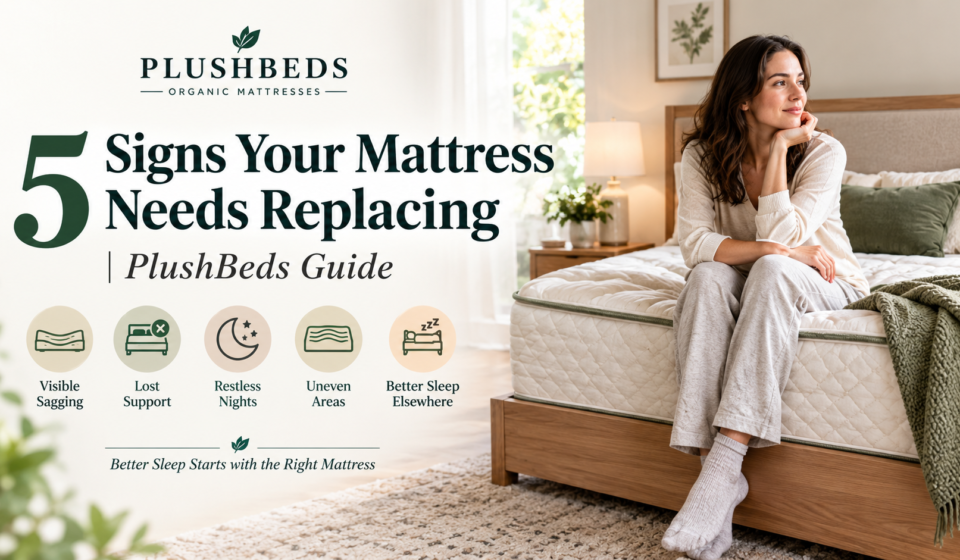
- 1. Visible Sagging or Permanent Indentations
- 2. Your Mattress Has Lost Its Comfort and Support
- 3. You Experience Frequent Restless Nights
- 4. Your Mattress Has Lumps or Uneven Areas
- 5. You Sleep Better Somewhere Else
- How to Choose a Replacement Mattress
- Why Consider PlushBeds?
- Save More on Every Order – Grab the Latest Coupons & Deals
- Frequently Asked Questions
- How often should you replace a mattress?
- Can a mattress topper fix a sagging mattress?
- Is an organic latex mattress worth considering?
- Does waking up tired mean you need a new mattress?
- Should you replace a mattress after seven years?
- Conclusion
Your mattress plays an important role in how comfortable you feel at bedtime and when you wake up. However, mattresses gradually wear down, and the changes can be easy to overlook when you use the same bed every night. Recognizing the signs your mattress needs replacing can help you decide whether your current bed still meets your comfort and support needs.
From visible sagging to frequent tossing and turning, several warning signs suggest that your mattress may no longer be performing as expected. Although mattress age is a useful consideration, its condition and your sleeping experience matter just as much. If you are considering an upgrade, understanding mattress materials and construction can help you make a more informed decision. Plush Beds offers organic latex mattress options worth exploring when comparing materials, comfort preferences, and long-term support.
Save More on Every Order – Grab the Latest Coupons & Deals
1. Visible Sagging or Permanent Indentations
One of the clearest signs that your mattress needs replacing is visible sagging. Over time, repeated pressure can cause mattress materials to soften and develop permanent indentations, especially around the areas where you sleep most often.
Check your mattress in daylight for uneven areas, dips, or a surface that no longer returns to its original shape. Also inspect the bed frame and foundation, because inadequate support underneath can contribute to sagging.

What you can do: Rotate your mattress if the manufacturer recommends it, and check that the foundation provides appropriate support. A topper may temporarily change the feel of a mattress, but it will not repair substantial structural damage. If deep indentations remain, replacement may be the more practical option.
2. Your Mattress Has Lost Its Comfort and Support
A mattress that once felt comfortable may gradually become too soft, too firm, or uneven. You might notice that your hips sink excessively, your shoulders feel uncomfortable, or you struggle to find a position that feels supportive.
These changes can happen as comfort layers wear down. However, discomfort is not automatically proof that your mattress is failing. Your pillow, sleep position, bed base, and changing preferences can also influence how your bed feels.
Before purchasing a replacement, identify what is missing from your current setup. Do you prefer a softer surface, a firmer feel, or more responsive support? Knowing your preferences can help narrow down suitable mattress designs.
Plush Beds‘ organic latex mattress range is one option to investigate if you are interested in latex construction and different firmness choices. Compare the available configurations with your needs rather than assuming one mattress will suit everyone.
3. You Experience Frequent Restless Nights
Frequent tossing and turning may mean your mattress is uncomfortable, though stress, noise, and room temperature can also disrupt sleep.
Pay attention to patterns rather than judging your mattress after one difficult night. If you regularly feel uncomfortable in your own bed but sleep more comfortably elsewhere, your mattress deserves a closer inspection.

Try this first: Keep your bedroom comfortable, check your pillow height, and evaluate whether your mattress feels supportive in your usual sleeping position. If the problem persists, compare replacement options based on comfort, firmness, and construction. Persistent sleep difficulties may have causes unrelated to your mattress, so consider professional advice when appropriate.
4. Your Mattress Has Lumps or Uneven Areas
A mattress should provide a reasonably even sleeping surface. If you notice lumps, ridges, sagging edges, or areas that feel noticeably different from the rest of the bed, its materials may be wearing unevenly.
These problems can make it difficult to find a comfortable position, particularly if you share the bed and both sleepers have different comfort preferences. Unevenness can also come from a damaged foundation or poorly supported bed frame rather than the mattress itself.
What to check: Remove the bedding and inspect the entire mattress surface. Check the bed frame, slats, and foundation for visible damage or inadequate support. Review your mattress warranty to determine whether the particular defect may qualify for coverage.
If the mattress itself has developed substantial lumps or structural damage, replacing it may be more effective than trying to disguise the uneven surface with extra padding.
5. You Sleep Better Somewhere Else
Do you consistently sleep more comfortably at a hotel, a friend’s house, or another bedroom? This is another reason to evaluate your mattress.
A different bed may feel better because of its firmness, pillow, bedding, temperature, or overall environment. Therefore, the comparison does not automatically mean your mattress is worn out. However, if you repeatedly notice better comfort elsewhere, your current mattress may no longer match your preferences.
Consider what feels different when you sleep well in another bed. Is the surface firmer? Does it feel more responsive? Do you wake up feeling more comfortable? These observations can help you identify the features to look for in a replacement.
Also consider the age of your mattress. Many mattresses last around seven to ten years, although the actual lifespan varies with materials, construction, use, and maintenance. A mattress showing several warning signs may need attention before reaching that age.
How to Choose a Replacement Mattress
Once you have identified the warning signs, focus on the features that matter most for your sleeping needs.
- Firmness: Choose a feel that suits your body, preferred sleeping position, and comfort preferences. Firmer is not automatically better for everyone.
- Materials: Compare latex, memory foam, innerspring, and hybrid construction. Each offers a different feel and support experience.
- Durability: Review construction details, warranty terms, and manufacturer care recommendations. A long warranty does not mean every type of wear is covered.
- Foundation compatibility: Confirm that your bed frame or foundation meets the manufacturer’s support requirements.
- Trial and return policies: Check the current conditions, return costs, and eligibility requirements before ordering online.
Why Consider PlushBeds?
PlushBeds offers organic mattress options, including its organic latex mattress. The product listing describes a construction featuring GOLS-certified organic Dunlop latex and a GOTS-certified organic cotton cover, with organic wool also listed as an available layer option.
These materials suit shoppers seeking natural latex and organic textiles. Compare mattress type, firmness, size, and price before deciding.

You should also review the current shipping, trial, return, and warranty conditions directly on the official website. Policies and offers can change, so confirm the terms that apply to your selected mattress and delivery location.
Save More on Every Order – Grab the Latest Coupons & Deals
Frequently Asked Questions
How often should you replace a mattress?
Many mattresses last approximately seven to ten years. However, replace yours sooner if it develops significant sagging, structural damage, or persistent comfort problems. Material quality, usage, and maintenance all influence lifespan.
Can a mattress topper fix a sagging mattress?
A topper may temporarily change the surface feel, but it cannot repair a mattress with substantial internal damage or deep sagging. Inspect the foundation and check the warranty before deciding on a replacement.
Is an organic latex mattress worth considering?
It may be worth considering if you prefer latex construction and want to compare organic material options. Check the exact certifications, construction, firmness, price, and return terms for the model you select.
Does waking up tired mean you need a new mattress?
Not necessarily. An uncomfortable mattress can contribute to disrupted sleep, but stress, sleep habits, noise, and other factors may also play a role. Look for a consistent pattern alongside other mattress warning signs.
Should you replace a mattress after seven years?
Not automatically. Seven years is a useful point to assess its condition, but age alone does not determine whether replacement is necessary. Consider sagging, support, comfort, and the manufacturer’s recommendations.
Conclusion
Recognizing the signs your mattress needs replacing can help you make a more informed decision about your bedroom comfort. Visible sagging, reduced support, restless nights, uneven surfaces, and sleeping better elsewhere are all reasons to assess your current bed.
Before replacing it, check the foundation, review the warranty, and consider whether your comfort preferences have changed. If an upgrade makes sense, compare materials, firmness, construction, and return policies rather than choosing by appearance alone.
Plush Beds is worth exploring if you are interested in organic latex mattress options. Visit the official PlushBeds store to review available mattresses and determine whether a particular model fits your needs.