Table Of Content
- 🎉 Exclusive Deals & Massive Savings
- 1. Check the Quality of Natural Latex
- 2. Look for Recognized Organic Certifications
- 3. Choose the Right Mattress Firmness
- 4. Consider Breathability and Temperature Regulation
- 5. Examine Mattress Support and Construction
- How PlushBeds Fits an Organic Mattress Buying Guide
- Pricing, Shipping, and Sleep Trial
- Pros and Cons of Organic Mattresses
- 🛏️ Exclusive Mattress Deals & Savings
- Frequently Asked Questions
- 1. What should I check before buying an organic mattress?
- 2. Are GOLS and GOTS certifications important?
- 3. Is natural latex better than memory foam?
- 4. Which mattress firmness should I choose?
- 5. Are organic mattresses worth the investment?
- 6. Does PlushBeds offer organic latex mattresses?
- Conclusion
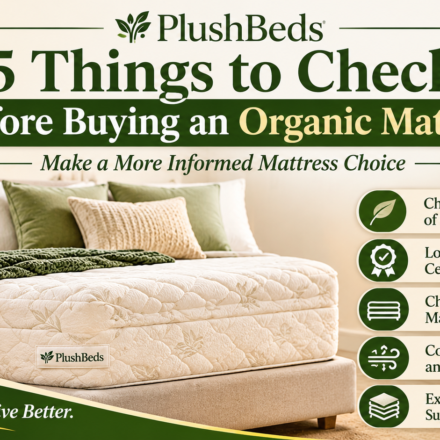
Choosing an organic mattress can feel overwhelming when different brands advertise natural materials, certifications, comfort layers, and eco-conscious construction. However, not every mattress labeled natural or organic offers the same materials or manufacturing standards. Before making a purchase, it is important to understand what is inside the mattress and how its construction matches your sleeping preferences.
An organic mattress buying guide can help you compare important details without focusing only on marketing claims. From latex quality and organic certifications to firmness, breathability, and support, a few practical checks can make your decision easier. Brands such as PlushBeds offer several organic latex mattress options, making them worth exploring when comparing natural materials and different comfort configurations.
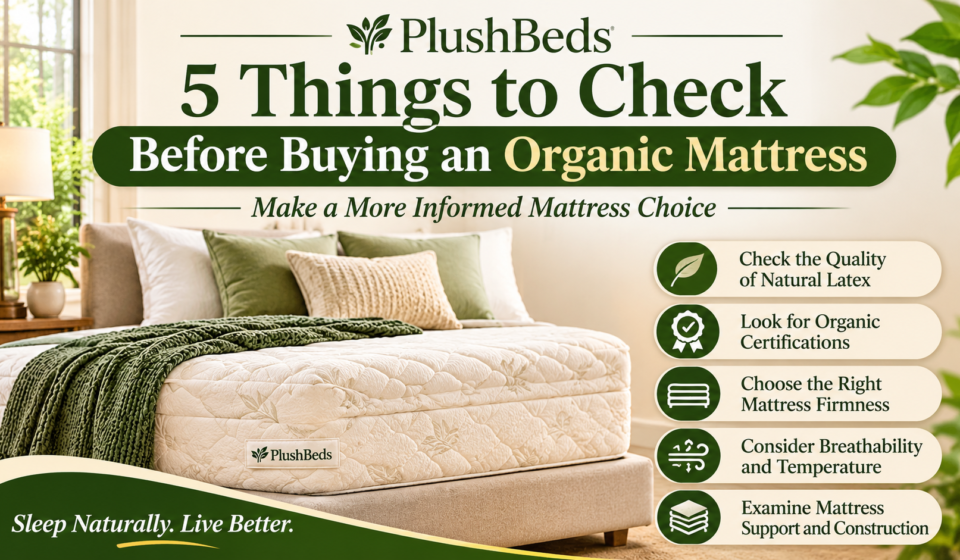
🎉 Exclusive Deals & Massive Savings
1. Check the Quality of Natural Latex
Natural latex is an important material to investigate when shopping for an organic mattress. It is commonly used in mattress comfort and support layers because of its responsive feel and ability to adapt to body movement.
However, natural latex and organic latex are not automatically the same. Their sourcing, processing, and certification standards can differ.
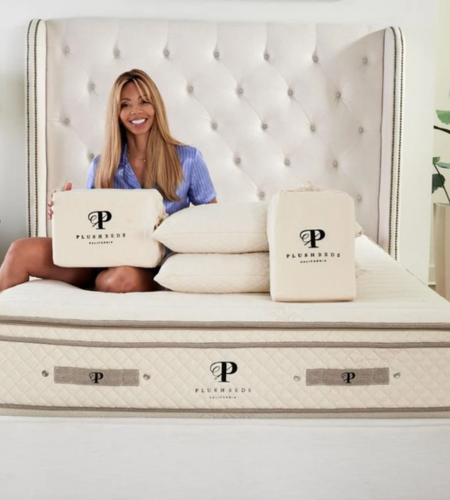
Before choosing a mattress, consider:
- Latex sourcing: Check whether the manufacturer identifies the origin of its latex.
- Processing method: Look for information about Dunlop or Talalay latex construction.
- Material composition: Determine whether the mattress uses natural latex, blended latex, or synthetic alternatives.
- Layer construction: Understand how much latex is used and where it appears in the mattress.
For example, PlushBeds’ Botanical Bliss collection features GOLS-certified organic Dunlop latex. Understanding these details helps you compare actual mattress construction rather than relying on the word natural alone.
2. Look for Recognized Organic Certifications
Certifications are among the most important things to check before buying an organic mattress. They provide independent verification of specific materials and manufacturing standards.
Two particularly relevant certifications include:
GOLS (Global Organic Latex Standard): This certification covers organic latex and its processing. It helps shoppers verify that latex meets established organic requirements.
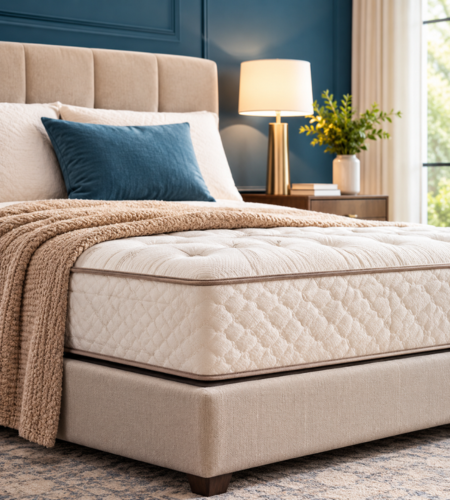
GOTS (Global Organic Textile Standard): This certification applies to organic textiles, including cotton and wool. It considers environmental and social criteria throughout textile processing.
You may also encounter GREENGUARD Gold, which focuses on chemical emissions testing rather than organic material sourcing.
PlushBeds publishes information about these certifications for its products. Its Botanical Bliss collection uses GOLS-certified organic latex, while selected mattress materials include GOTS-certified cotton and wool. plushbeds.com+1
One important point: A certification for one mattress component does not automatically mean every material in the complete mattress is organic. Always check the product-specific certification information.
3. Choose the Right Mattress Firmness
Even a mattress made with carefully selected organic materials may not feel comfortable if its firmness does not suit your preferences.
Firmness influences how a mattress feels when you lie down and how much cushioning it provides.
Consider these general differences:
- Soft: Provides a more cushioned surface and may appeal to people who prefer a plush feel.
- Medium: Offers a balance between cushioning and support.
- Medium-firm: Provides a more substantial surface that some back and stomach sleepers prefer.
- Firm: Creates a more solid sleeping feel with less surface cushioning.
Your body weight, sleeping position, and personal comfort preferences all matter.
PlushBeds offers different firmness configurations in selected mattress collections. For example, its Organic Bliss Pillowtop lists medium and medium-firm options. Comparing these choices can help you identify a configuration that better matches your needs. PlushBeds
4. Consider Breathability and Temperature Regulation
Temperature is another factor worth considering when choosing an organic mattress. Some people prefer a sleeping surface that feels less warm, particularly if they tend to overheat during the night.
Natural materials can have different airflow and moisture-handling characteristics.
Look at these components:
- Natural latex: Its open-cell structure can allow airflow through the material.
- Organic cotton: Commonly used in mattress covers because of its breathable textile properties.
- Organic wool: Can help manage moisture and is used in some mattress constructions for temperature-related comfort.
- Mattress layers: Their density, thickness, and arrangement can influence the overall sleeping experience.
Do not assume that every organic mattress offers identical temperature performance. Compare the actual materials and construction rather than relying on general cooling claims.
5. Examine Mattress Support and Construction
The final check is understanding how the complete mattress is constructed. A mattress may contain several layers, each serving a different purpose.
Before purchasing, examine:
- Overall mattress thickness.
- Number and type of comfort layers.
- Support materials and their arrangement.
- Available mattress sizes.
- Weight and handling requirements.
- Bed-frame compatibility.
Also consider whether the mattress has removable or adjustable layers. Some designs allow firmness adjustments without replacing the entire mattress.
For example, PlushBeds’ Botanical Bliss mattress uses layered organic latex construction. Its design allows shoppers to consider different firmness configurations when evaluating the product.
A detailed construction review can help you understand what you are paying for and whether the mattress suits your bedroom setup.
How PlushBeds Fits an Organic Mattress Buying Guide
After understanding the five important buying factors, it becomes easier to compare brands and their available mattress collections.
PlushBeds offers natural and organic mattresses:
- Botanical Bliss: Organic Dunlop latex mattress.
- Organic Bliss Pillowtop: Plush latex pillowtop mattress.
- – Natural Bliss: Natural latex mattress with organic cotton.
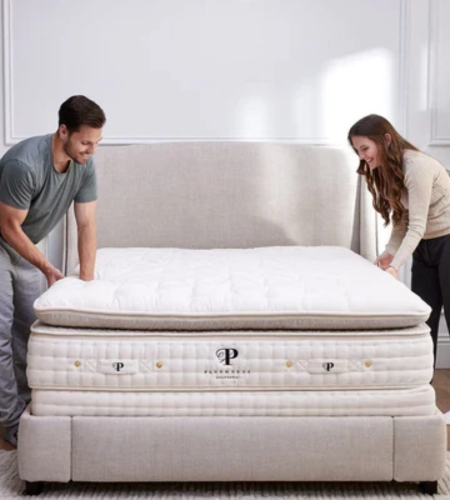
These collections offer different construction and comfort options. Comparing their materials, firmness choices, and mattress dimensions can help you decide which design deserves further consideration. PlushBeds+1
Pricing, Shipping, and Sleep Trial
Price is another important consideration when comparing organic mattresses. Organic materials, mattress thickness, size, and construction can all influence the final cost.
PlushBeds displays different prices depending on the selected mattress and configuration. Its Organic Bliss Pillowtop, for example, has displayed promotional pricing, but shoppers should check the current listing before making a purchase.
The company also advertises:
- Free shipping within the contiguous United States.
- A 365-night mattress sleep trial for eligible products.
- A one-time comfort exchange during the applicable trial period.
- Made-to-order mattresses handcrafted in California.
The sleep trial includes specific conditions, such as a minimum 30-night adjustment period for standard returns. Shipping and return eligibility can vary by destination and product. Review the current policies before ordering. plushbeds.com+1
Pros and Cons of Organic Mattresses
Potential advantages:
- Natural and organic material options.
- Different latex firmness configurations.
- Organic textile choices.
- Third-party certification opportunities.
- Multiple mattress construction styles.
Potential disadvantages:
- Organic latex mattresses can have higher upfront prices.
- Natural latex has a different feel from traditional memory foam.
- Some mattresses can be heavy and difficult to move.
- Certifications and material composition vary between products.
- Choosing the wrong firmness may affect personal comfort.
🛏️ Exclusive Mattress Deals & Savings
Frequently Asked Questions
1. What should I check before buying an organic mattress?
Check latex quality, organic certifications, firmness, breathability, and overall mattress construction. These factors help you compare materials and comfort options.
2. Are GOLS and GOTS certifications important?
Yes. GOLS applies to organic latex, while GOTS covers organic textiles such as cotton and wool. Both help shoppers verify specific material standards.
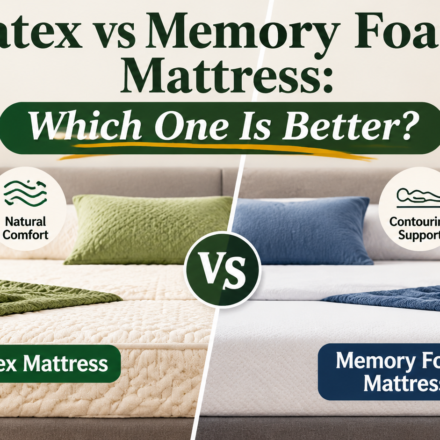
3. Is natural latex better than memory foam?
They offer different sleeping experiences. Natural latex generally has a more responsive feel, while memory foam is known for its contouring properties. Your comfort preference should guide the decision.
4. Which mattress firmness should I choose?
Consider your sleeping position, body weight, and preferred comfort level. Side sleepers often appreciate additional cushioning, while some back and stomach sleepers prefer firmer surfaces.
5. Are organic mattresses worth the investment?
They may be worth considering if you prioritize certified materials, natural latex, and specific textile choices. Compare construction, price, and warranty terms before deciding.
6. Does PlushBeds offer organic latex mattresses?
Yes. PlushBeds offers organic latex options, including Botanical Bliss and Organic Bliss Pillowtop. Their materials and construction details are available in the individual product listings.
Conclusion
Buying an organic mattress requires more than checking a product label. Latex quality, recognized certifications, appropriate firmness, breathability, and mattress construction all deserve attention before making a decision.
These five checks provide a practical starting point for comparing organic mattress options and understanding what different brands offer.
If you are exploring natural latex and certified organic bedding, PlushBeds is worth considering. Take time to compare its mattress collections, material specifications, and comfort configurations to find an option that aligns with your preferences and bedroom needs.