Table Of Content
- 🎉 Save More on Every Order – Grab the Latest Coupons & Deals
- 1. Check Your Home Wi-Fi Requirements
- 2. Understand the Power and Setup Requirements
- 3. Review Contact Management and Parental Controls
- 4. Compare Free Calling With Paid Calling Plans
- 5. Decide Whether a Home-Based Phone Fits Your Child
- 🎉 Save More on Every Order – Grab the Latest Coupons & Deals
- Frequently Asked Questions
- Is Tin Can a smartphone?
- Does Tin Can require Wi-Fi?
- Does Tin Can require a subscription?
- Can parents control who their child calls?
- Is Tin Can suitable for a child who needs a phone outside the home?
- Conclusion
Choosing a first phone for a child can be challenging. Parents may want their children to contact family members independently without introducing social media, games, messaging apps, or the distractions that come with a smartphone. A screen-free home phone can offer a simpler approach to family communication, but it is important to understand how it works before making a purchase.
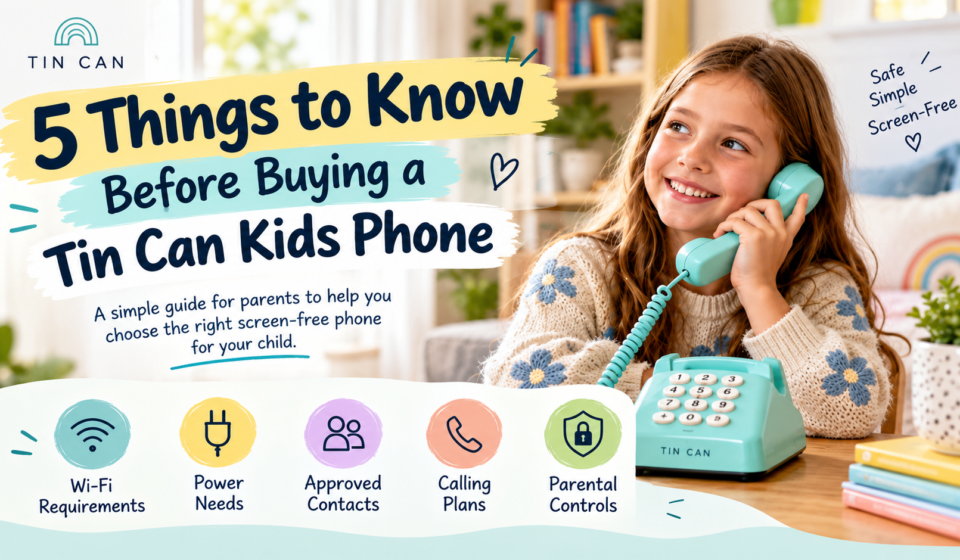
The Tin Can kids phone is designed for families looking for a dedicated calling device rather than a traditional smartphone. Before buying one, parents should consider their home Wi-Fi connection, power requirements, contact management features, calling costs, and where the phone will be used. These five factors can help you decide whether Tin Can fits your child’s needs and your family’s daily routine.
🎉 Save More on Every Order – Grab the Latest Coupons & Deals
1. Check Your Home Wi-Fi Requirements
One of the first things to know before buying a Tin Can kids phone is that it uses Wi-Fi for calling. Unlike a traditional landline phone, it does not connect through a standard telephone wall jack.
Tin Can requires compatible 2.4 GHz home Wi-Fi. Check your router settings before ordering to ensure reliable calling.

Consider these questions before purchasing:
- Does your home have a working Wi-Fi router?
- Can your router provide a compatible 2.4 GHz connection?
- Is the signal reliable in the room where the phone will be placed?
- Could router settings or network restrictions affect setup?
You should also consider where the device will sit. If your child’s playroom or bedroom has a weak Wi-Fi signal, you may need to improve coverage before relying on the phone.
2. Understand the Power and Setup Requirements
Tin Can is designed as a stationary, corded phone for home use. It requires a regular electrical outlet, so you should choose a location with convenient access to power.
This is an important difference between a home phone and a mobile device. Your child cannot carry the base around the house like a smartphone, and the phone is not intended to provide the same mobility as a cellular device.

Parents should plan the setup location before buying. A desk, shared family area, or dedicated spot in a child’s room may work, provided the Wi-Fi signal and power supply are suitable.
Tin Can also uses a companion app for setup and parental management. Check the current setup instructions and app compatibility before purchasing, particularly if you have an older smartphone or prefer to manage family devices from a particular platform.
Planning these details in advance can make installation more straightforward and help you avoid surprises after the phone arrives.
3. Review Contact Management and Parental Controls
Contact management is one of the most important features to consider when choosing a screen-free phone for kids. Parents may want their children to call trusted relatives without giving them unrestricted access to a wider phone network.
Tin Can allows parents to manage approved contacts through its companion app. This arrangement can help families decide who their children are able to contact using the device.
Before buying, consider which contacts your child is likely to need. These might include parents, grandparents, other relatives, or trusted caregivers. Discussing the list together can also help children learn when and how to use the phone responsibly.
However, parental controls should not be treated as a replacement for communication and supervision. Review the current product documentation to understand how contacts are added, how calling permissions work, and which settings parents can manage.
It is also worth considering whether the contact system suits your family. If your child needs to reach a large number of people or regularly communicates outside the approved list, check the available calling options carefully.
4. Compare Free Calling With Paid Calling Plans
The total cost of a Tin Can kids phone includes more than the initial device price. Parents should understand which calls are included and when an ongoing subscription may be required.
Tin Can’s official product information lists the device at $100, although prices and availability can change. The service distinguishes between calls to other Tin Can devices and calls to regular phone numbers.
Here are the main cost considerations:
- Device cost: Check the current price before ordering.
- Tin Can-to-Tin Can calls: The official information describes these calls as free, without a subscription.
- Calls to regular phone numbers: The Party Line plan is listed at $9.99 per month, with the first month free according to the product information.
- Ongoing expenses: Confirm the current plan terms, billing details, and any applicable taxes before subscribing.
The right choice depends on how your family plans to use the phone. If your child mainly calls another Tin Can device, the free calling option may be sufficient. If they need to call relatives using ordinary phone numbers, a paid plan may be necessary.
Calculate the initial device price and likely subscription costs together. This gives you a clearer picture of what the phone may cost over several months rather than focusing only on the upfront price.
5. Decide Whether a Home-Based Phone Fits Your Child
Tin Can is designed for home-based communication, so consider your child’s age, routine, and need for access outside the house.
A dedicated phone helps children practise independent calling at home without smartphone distractions. However, it cannot replace a mobile phone when they are away and requires compatible Wi-Fi, power, and a suitable calling setup.

Think about your main goal. If you want a simple way for your child to call family from home, Tin Can may be worth considering. If you need location sharing, mobile connectivity, text messaging, or communication while away from home, compare other options before deciding.
The best first phone is the one that matches your child’s actual needs, rather than one with features your family may never use.
🎉 Save More on Every Order – Grab the Latest Coupons & Deals
Frequently Asked Questions
Is Tin Can a smartphone?
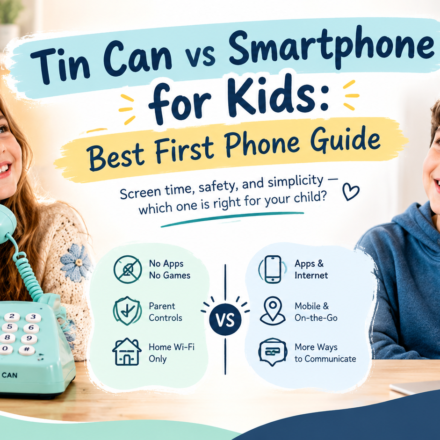
No. Tin Can is a dedicated Wi-Fi calling device designed for home use, rather than a smartphone with apps, games, and general-purpose mobile features.
Does Tin Can require Wi-Fi?
Yes. The product information specifies a compatible 2.4 GHz Wi-Fi connection. Check your network before purchasing.
Does Tin Can require a subscription?
Not for every type of call. Calls between Tin Can devices are described as free, while calling regular phone numbers requires the applicable paid plan.
Can parents control who their child calls?
Tin Can provides contact management through its companion app, allowing parents to approve contacts. Review the current settings and product instructions for details.
Is Tin Can suitable for a child who needs a phone outside the home?
It is primarily designed for stationary, home-based use. Families needing communication while a child is away should consider whether a mobile option would be more appropriate.
Conclusion
Before buying a Tin Can kids phone, check five essentials: compatible home Wi-Fi, access to electrical power, contact management, calling-plan costs, and whether a stationary device suits your child’s routine. These details will help you assess its practicality and avoid unexpected setup or subscription expenses.
Tin Can may be a useful option for families seeking a simpler, screen-free way for children to contact approved people at home. Compare the features with your family’s needs, review the latest service terms, and explore the official Tin Can store to make an informed decision.