Table Of Content
- 🎉 Save More on Every Order – Grab the Latest Coupons & Deals
- 1. Communication: Simple Calls or Multiple Features?
- 2. Screen Access, Apps, and Distractions
- 3. Parental Controls and Contact Management
- 4. Home Use vs Mobile Convenience
- 5. Price, Subscription Costs, and Long-Term Value
- 🎉 Save More on Every Order – Grab the Latest Coupons & Deals
- Frequently Asked Questions
- Is Tin Can better than a smartphone for a child’s first phone?
- Can Tin Can call regular phone numbers?
- Does Tin Can need Wi-Fi?
- Can a smartphone be made safer for children?
- What age should a child get their first smartphone?
- Conclusion
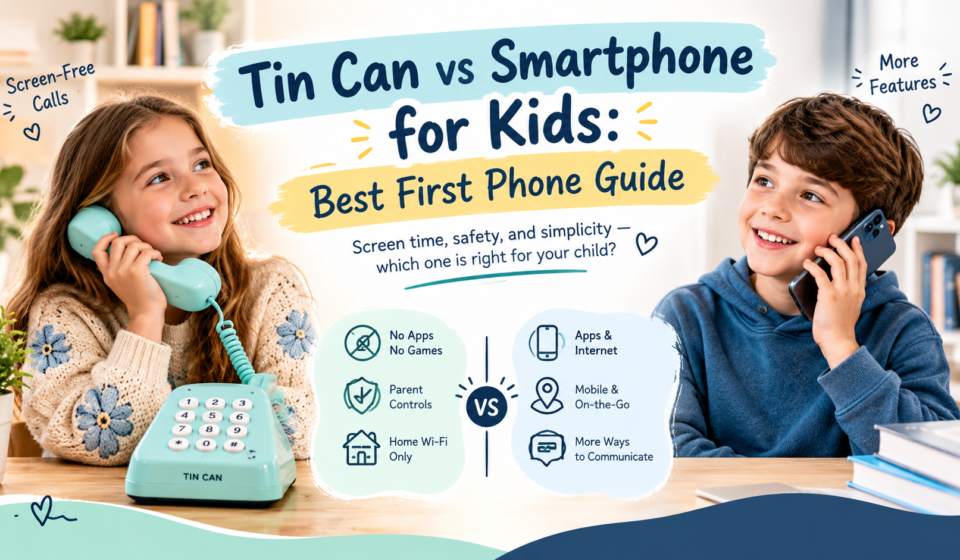
Choosing a first phone for kids is about more than staying connected. Parents may want their children to contact family and friends independently, but they may not feel ready to introduce social media, games, internet browsing, and constant notifications. This is where comparing a Tin Can vs smartphone for kids can help.
Tin Can is a screen-free, Wi-Fi home phone designed for voice calls with approved contacts. A smartphone offers more flexibility, including mobile communication and access to apps, depending on the device and settings. Neither option is automatically right for every child. The better choice depends on your family’s communication needs, your child’s maturity, and how much digital access you are comfortable allowing. Understanding the differences can help you choose a practical first phone without paying for features your child does not yet need.
🎉 Save More on Every Order – Grab the Latest Coupons & Deals
1. Communication: Simple Calls or Multiple Features?
The biggest difference between Tin Can and a smartphone is how children communicate.
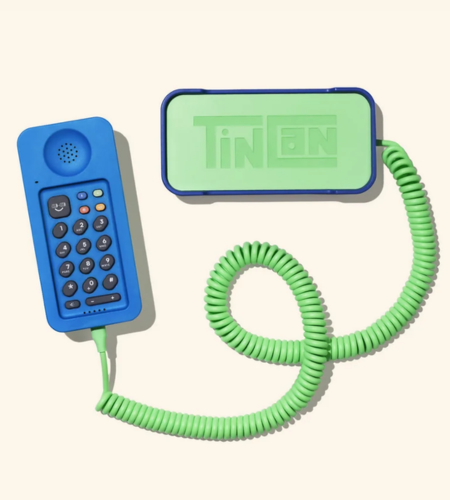
Tin Can is designed for voice conversations. It has no apps, texting, or games, making it an option for families who want a dedicated calling device. Parents manage approved contacts through the companion app, helping determine who can call the device and whom the child can contact.

A smartphone offers more communication methods. Depending on the model and installed services, children may be able to make calls, send texts, use video calls, and communicate through messaging apps.
Consider what your child actually needs. If the main goal is calling grandparents, relatives, or friends from home, a dedicated phone may be sufficient. If your child needs to coordinate school pickups, communicate while travelling, or use other essential mobile features, a smartphone may be more practical.
2. Screen Access, Apps, and Distractions
Screen access is another important consideration when comparing a Tin Can phone with a smartphone.
Tin Can focuses on voice calls without apps, games, or texting, reducing screen-based distractions. Smartphones offer more tools but require parental guidance, clear rules, and suitable controls based on a child’s readiness.
Parents can configure many smartphones with restrictions on apps, downloads, content, and usage time. These settings can help, but they require ongoing attention and do not make every smartphone experience identical.
Choose Tin Can if you want communication to remain the main purpose of the device. Consider a smartphone if your child needs its broader features and your family is prepared to establish and maintain clear boundaries.
3. Parental Controls and Contact Management
Parents should understand how each device manages communication and digital access.
Tin Can lets parents approve contacts through its companion app. It also offers calling-hour controls, allowing families to manage when the phone can be used. These features are useful for parents who prefer a dedicated home phone with a defined contact list.
Smartphone controls vary by operating system, device, and installed applications. Depending on the available settings, parents may be able to manage screen time, app downloads, content access, purchases, and certain communication features.
Neither option removes the need for family conversations about safe communication. Children should know which contacts they can trust, how to respond to unfamiliar callers or messages, and when to ask an adult for help.
Before choosing a device, check the exact controls available. If your priority is limiting communication to approved contacts without providing a general-purpose internet device, Tin Can may suit your preferences. If your child needs broader access, investigate the smartphone’s parental settings before buying it.
4. Home Use vs Mobile Convenience
Where your child needs to communicate may determine which device makes more sense.
Tin Can is a stationary home phone requiring 2.4 GHz Wi-Fi and an electrical outlet, while a smartphone allows portable communication during school trips, activities, and travel.

However, portability also means a smartphone can be present during meals, homework, bedtime, and other activities. Families should consider how they will manage device use and protect time for sleep, schoolwork, physical activity, and face-to-face interaction.
Think about your child’s routine. A home-based phone may be enough for a child who mainly needs to call people while at home. A child who regularly travels independently may need a more portable communication option.
5. Price, Subscription Costs, and Long-Term Value
Price comparisons should include both the device and any ongoing service costs.
Tin Can’s official product page lists the device at $100. Free calls to other Tin Can devices are included without a subscription, while calls to regular phone numbers require its Party Line plan, listed at $9.99 per month. The product page also advertises a free first month of that plan. Prices and terms may change, so check the latest details before ordering.
A smartphone’s total cost depends on the model, mobile plan, accessories, and any apps or services your family chooses. Some devices may require a recurring cellular plan for calls and mobile data. Budget-friendly models may reduce the initial expense, but the overall cost depends on how the phone will be used.
Tin Can’s advantage is its focused purpose. Its limitation is that it cannot replace a smartphone when mobile communication or apps are essential. A smartphone offers greater versatility, but that flexibility may come with extra costs and management responsibilities.
Compare the full cost against your child’s needs rather than choosing solely by the purchase price.
🎉 Save More on Every Order – Grab the Latest Coupons & Deals
Frequently Asked Questions
Is Tin Can better than a smartphone for a child’s first phone?
It depends on your goals. Tin Can may suit children who mainly need voice calls from home. A smartphone may be more useful when portability and additional features are necessary.
Can Tin Can call regular phone numbers?
Yes. The official product information says the Party Line plan supports calls to approved regular phone numbers. Calls between Tin Can devices are included without a subscription.
Does Tin Can need Wi-Fi?
Yes. Tin Can requires a compatible 2.4 GHz Wi-Fi connection and a standard electrical outlet.
Can a smartphone be made safer for children?
Parents can use available controls to restrict apps, content, downloads, and usage time. Settings differ between devices, and parental controls work best alongside regular conversations and clear family rules.
What age should a child get their first smartphone?
There is no single age that suits every child. Consider maturity, independence, communication needs, and readiness to follow safety rules before deciding.
Conclusion
When comparing Tin Can vs smartphone for kids, focus on what your child needs today and what they may need as they become more independent. Tin Can offers simple, screen-free home calling with parent-managed contacts. A smartphone provides greater mobility and more features, but also requires decisions about apps, internet access, and digital boundaries.
If your priority is a dedicated home phone for approved calls, explore Tin Can’s features and current calling plans. If your child needs mobile communication, compare smartphones and their parental controls. The best first phone is the one that balances practical communication, age-appropriate independence, and your family’s comfort with technology.