Table Of Content
- Save More on Every Order – Grab the Latest Coupons & Deals
- 1. Forehand Consistency Drill
- 2. Backhand Control Drill
- 3. Two-Point Footwork Drill
- 4. Spin Return Drill
- 5. Placement Target Drill
- 6. Reaction-Speed Drill
- 7. Match-Style Rally Drill
- Why PONGBOT Fits Solo Table Tennis Training
- Pricing and Shipping
- Pros and Cons
- Save More on Every Order – Grab the Latest Coupons & Deals
- Frequently Asked Questions
- Can I practice table tennis alone without a robot?
- What should beginners practice first?
- How long should a solo table tennis session be?
- Can a table tennis robot improve footwork?
- Which PONGBOT model is portable?
- Related Resources
- Conclusion
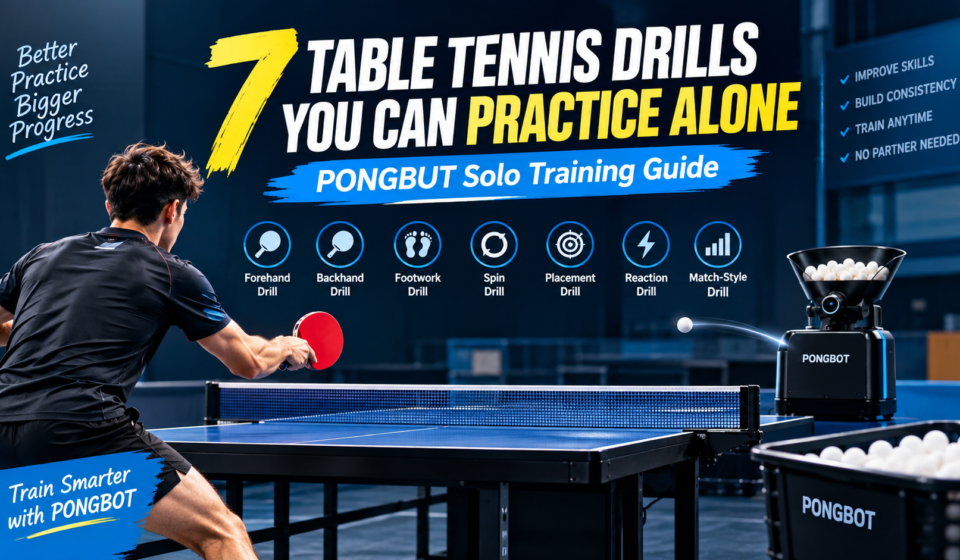
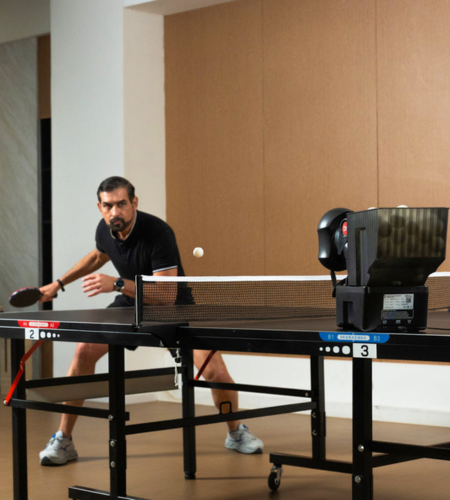
Finding a reliable practice partner is not always easy, but your table tennis training does not have to stop when nobody else is available. These table tennis drills you can practice alone can keep sessions focused on consistency, movement, spin control, placement, and match-style repetition. A robot can make solo practice more structured by delivering repeatable balls while you concentrate on technique and recovery. PONGBOT’s table tennis robots range from the portable Nova S Pro to the more advanced Omni S Pro and Halo S Pro. The key is not simply hitting as many balls as possible; each drill should have a clear purpose and progression.
Save More on Every Order – Grab the Latest Coupons & Deals:
1. Forehand Consistency Drill
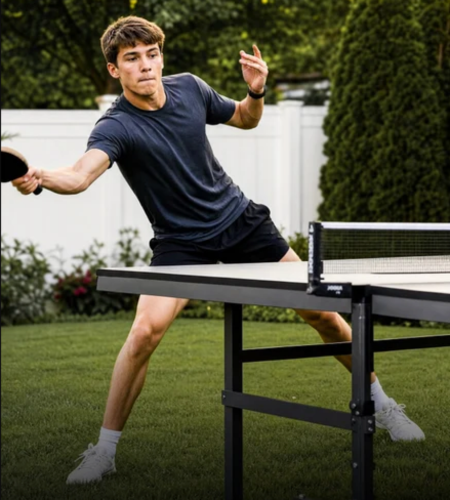
Start with a controlled feed to the forehand side. Focus on a balanced stance, consistent contact point, and recovery after every shot. Keep the speed moderate enough to repeat the stroke without rushing. Once your control improves, gradually increase the pace or spin.
2. Backhand Control Drill
Repeat the same process on the backhand side. Concentrate on compact technique, stable positioning, and returning to a ready position after each ball. This drill builds confidence before adding movement or unpredictable placement.
3. Two-Point Footwork Drill
Set the feed between your backhand and forehand zones and move laterally rather than reaching for the ball. Play one stroke, recover, move to the next position, and repeat. Footwork matters because table tennis requires players to adjust position before making a controlled shot. If your robot allows oscillation, progress from fixed placement to wider movement.
4. Spin Return Drill
Practice against different ball rotations instead of using one feed repeatedly. Start with manageable topspin or backspin, then focus on how the ball reacts after the bounce. Adjust your racket angle and stroke accordingly. PONGBOT’s Nova S Pro lists nine spin variations and adjustable spin, speed, placement, and oscillation controls, making it suitable for structured spin practice.
5. Placement Target Drill
Put a few safe targets on the table and aim for specific zones rather than simply keeping the ball in play. Alternate between cross-court, down-the-line, deep, and shorter placements. This turns a basic rally into a precision exercise with a measurable goal.
6. Reaction-Speed Drill
Increase feed frequency only after your technique remains controlled. Use shorter sets and focus on seeing the ball early, preparing the racket, and recovering quickly. Consistent repetition can help you practice timing, but quality matters more than chasing a high ball count. If your form breaks down, reduce the speed.
7. Match-Style Rally Drill
Combine several skills into a sequence such as backhand, forehand, wide forehand, recovery, then repeat with different placement or spin. The goal is to make solo practice less predictable and closer to match movement. Advanced programmable robots can make these sequences easier to customize.
Why PONGBOT Fits Solo Table Tennis Training
PONGBOT offers table tennis robots with preprogrammed and customizable drills, including the Nova S Pro, Omni S Pro, and Halo S Pro. The Nova S Pro has a 150-ball capacity, speeds of 2–15 m/s, nine spin variations, and 264+ drills. The Omni S Pro and Halo S Pro feature 250-ball capacities with more advanced programming options.
The range fits different training setups. The Nova S Pro suits portable practice, while the Omni S Pro and Halo S Pro offer more advanced programming for home or club use. Choose based on your training needs and available space.
Pricing and Shipping
PONGBOT’s current listings show the Nova S Pro at $299.99 USD, the Omni S Series from $749.99, and the Halo S Pro at $1,499.99 at the time of research. Prices can change, so check the official product page before purchasing. PONGBOT states that delivery is typically 3–7 business days for the United States and European Union, while other regions generally take 1–2 weeks depending on destination and customs.
Pros and Cons
Pros
- Structured practice without a partner.
- Repeatable drills for consistency and technique.
- Higher-end models offer more placement, spin, and programming options.
- Nova S Pro is designed for portability.
Cons
- A robot cannot fully replace live match play or a real training partner.
- Advanced models require a larger investment.
- Solo practice still requires deliberate footwork and self-correction.
Save More on Every Order – Grab the Latest Coupons & Deals:
Frequently Asked Questions
Can I practice table tennis alone without a robot?
Yes. Shadow strokes, serve practice, ball bouncing, and suitable wall practice can all be done independently. A robot adds repeatable live-ball feeding.
What should beginners practice first?
Start with forehand and backhand consistency. Then add simple footwork, spin variation, and placement drills.
How long should a solo table tennis session be?
There is no single ideal duration. Short, focused sets with a specific goal can be more useful than unfocused practice. Adjust sessions to your skill level and recovery needs.
Can a table tennis robot improve footwork?
It can provide repeatable placement patterns for movement practice, but you still need to recover between shots rather than standing in one position.
Which PONGBOT model is portable?
PONGBOT describes the Nova S Pro as backpack-portable. Its listed net weight is 4 kg.
Related Resources
For a broader look at the equipment, features, and training considerations behind PONGBOT robots, see this PONGBOT table tennis robot review and training guide.
Conclusion
The most useful table tennis drills you can practice alone have a clear objective: build consistency, move efficiently, handle spin, improve placement, react faster, and connect those skills into match-style sequences. A robot can make that process easier by supplying repeatable feeds, but progress still depends on purposeful practice and good technique. If you want to explore automated solo training, review the current PONGBOT lineup and choose a system that matches your space, goals, and budget.