Table Of Content
- Why Niacinamide and Vitamin C Matter for Skin
- Niacinamide vs Vitamin C: Key Differences
- 1. Niacinamide for Skin Barrier Support
- 2. Vitamin C for Brighter-Looking Skin
- Which Ingredient Is Better for Your Skin Type?
- Can You Use Niacinamide and Vitamin C Together?
- How Skincare Essentials Fits Your Vitamin C Routine
- Relevant Vitamin C Products to Explore
- What Should You Consider Before Buying a Serum?
- Frequently Asked Questions
- 1. Is niacinamide better than vitamin C for oily skin?
- 2. Which is better for dark spots, niacinamide or vitamin C?
- 3. Can I use niacinamide and vitamin C every day?
- 4. Should I apply niacinamide or vitamin C first?
- 5. Is vitamin C suitable for sensitive skin?
- Conclusion
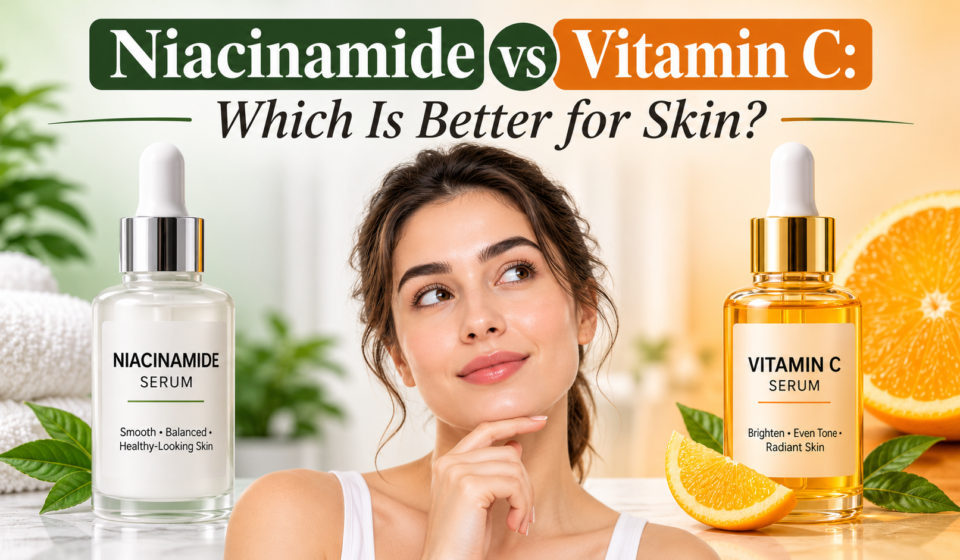
Choosing the right skincare ingredients can make a noticeable difference in how your skin looks and feels. Two popular ingredients you will frequently find in skincare products are niacinamide and vitamin C. Both are known for supporting a brighter, healthier-looking complexion, but they work differently. Understanding niacinamide vs vitamin C can help you choose a serum that matches your individual skin concerns instead of adding unnecessary products to your routine.
Niacinamide is commonly associated with skin barrier support, oil balance, and improving the appearance of uneven skin tone. Vitamin C is widely used for antioxidant protection and brighter-looking skin. If you are exploring professional skincare products, Skincare Essentials offers several vitamin C serum options worth considering.
Why Niacinamide and Vitamin C Matter for Skin
Skincare ingredients are not interchangeable. Each has different properties, and understanding their purpose makes it easier to build an effective routine.
Niacinamide, also called vitamin B3, is a water-soluble vitamin used in topical skincare formulations. It is valued for its ability to support the skin barrier and improve the appearance of redness, uneven tone, and excess oil.
Vitamin C is an antioxidant ingredient that helps protect the skin against oxidative stress caused by environmental factors. It is commonly included in skincare products designed to improve dullness, uneven pigmentation, and the appearance of fine lines.
Both ingredients have established roles in cosmetic skincare research, although individual results depend on formulation, concentration, and skin tolerance. PubMed+1
Niacinamide vs Vitamin C: Key Differences
Understanding their main benefits can help you decide which ingredient deserves a place in your routine.
1. Niacinamide for Skin Barrier Support
Niacinamide is a useful option for people concerned about oily skin, visible pores, redness, or a weakened skin barrier.
Its potential skincare benefits include:
- Supporting the skin’s natural moisture barrier.
- Helping improve the appearance of uneven skin tone.
- Managing the appearance of excess oil.
- Supporting smoother-looking skin.
- Helping reduce the appearance of redness.
Niacinamide is generally considered a well-tolerated skincare ingredient. However, higher concentrations are not automatically better, especially if your skin is sensitive.
2. Vitamin C for Brighter-Looking Skin
Vitamin C is particularly popular in morning skincare routines because of its antioxidant properties.
Its commonly recognized cosmetic benefits include:
- Helping improve the appearance of dull skin.
- Supporting a more radiant-looking complexion.
- Helping reduce the appearance of dark spots.
- Providing antioxidant support against environmental stressors.
- Supporting a smoother, more even-looking skin appearance.
L-ascorbic acid is a widely studied form of vitamin C. However, its effectiveness depends on formulation, stability, and concentration. Wiley Online Library+1
Which Ingredient Is Better for Your Skin Type?
The better ingredient depends on what you want to address.
Choose niacinamide if:
- Your skin becomes oily throughout the day.
- You want additional skin barrier support.
- You are concerned about the appearance of enlarged pores.
- Your complexion looks uneven or red.
- You prefer a generally gentle skincare ingredient.
Choose vitamin C if:
- Your skin looks dull or tired.
- You want antioxidant support.
- You are concerned about visible dark spots.
- You want to improve the appearance of uneven skin tone.
- You prefer a brightening-focused serum.
For sensitive skin, introduce new products gradually. Vitamin C, particularly acidic L-ascorbic acid formulations, can cause temporary stinging or irritation in some people.
Can You Use Niacinamide and Vitamin C Together?
Yes, niacinamide and vitamin C can generally be used in the same skincare routine. The old advice that these ingredients should never be combined is based on concerns that do not accurately represent typical modern skincare formulations.
You can use both products together or separate them between morning and evening routines.
A simple routine could look like this:
Morning routine:
- Cleanser.
- Vitamin C serum.
- Niacinamide serum, if tolerated.
- Moisturizer.
- Broad-spectrum SPF 30 or higher sunscreen.
Evening routine:
- Gentle cleanser.
- Niacinamide serum.
- Moisturizer.
If you are new to active ingredients, start with one product at a time. Patch testing can also help you identify potential irritation before applying a new product across your face. healthline.com+1
How Skincare Essentials Fits Your Vitamin C Routine
Finding a suitable vitamin C serum involves more than choosing the highest concentration. Formula type, skin sensitivity, and ingredient compatibility should all influence your decision.
Skincare Essentials is an online skincare retailer offering products from established skincare brands. Its website features categories such as serums, moisturizers, cleansers, sunscreens, and specialized treatments.
One relevant option is the Obagi Professional-C Serum collection.
Relevant Vitamin C Products to Explore
Obagi Professional-C Serum 10%
This serum contains 10% L-ascorbic acid and is positioned for dry or sensitive skin types. It may be worth exploring if you are beginning with vitamin C and prefer a lower concentration. Its listed price is $115 for 1 fl oz. SkincareEssentials
Obagi Professional-C Serum 15%
The 15% formula is positioned for normal to combination skin. It offers a middle concentration for people looking for a vitamin C-focused skincare product. Its listed price is $130 for 1 fl oz. SkincareEssentials
Obagi Professional-C Serum 20%
This higher-concentration option contains 20% L-ascorbic acid and is positioned for normal to oily skin types. The listed price is $155 for 1 fl oz. SkincareEssentials
These products offer different vitamin C concentrations, but a stronger formula does not necessarily mean better results for everyone.
One important distinction: the verified product listings above are vitamin C options. A dedicated niacinamide serum could not be confirmed in the store’s available product information, so it is better to check the current catalog before choosing a niacinamide product.
What Should You Consider Before Buying a Serum?
Before adding either ingredient to your skincare routine, consider these factors:
- Ingredient concentration: Higher percentages may increase the possibility of irritation without guaranteeing better results.
- Skin sensitivity: Choose formulations that your skin can tolerate comfortably.
- Product formulation: Packaging, stability, and supporting ingredients matter, particularly for vitamin C.
- Daily sunscreen: Sunscreen remains essential for protecting skin from UV exposure and maintaining a consistent skincare routine.
- Consistency: Give a new product time to become part of your routine before deciding whether it suits your skin.
Skincare Essentials also lists free shipping on most qualifying US orders, with typical delivery estimates of three to five business days after shipment. Its published return policy allows eligible returns within 30 days, subject to conditions. International orders do not qualify for free international shipping. SkincareEssentials
Frequently Asked Questions
1. Is niacinamide better than vitamin C for oily skin?
Niacinamide may be a suitable choice because it can help manage the appearance of excess oil and support the skin barrier. Vitamin C may still be useful if dullness or uneven tone is your primary concern.
2. Which is better for dark spots, niacinamide or vitamin C?
Both ingredients may help improve the appearance of uneven pigmentation. Vitamin C is particularly popular in brightening products, while niacinamide is also used in formulations targeting discoloration.
3. Can I use niacinamide and vitamin C every day?
Many people can use both ingredients daily, depending on their formulations and individual skin tolerance. Introduce them gradually and follow the product instructions.
4. Should I apply niacinamide or vitamin C first?
When using separate serums, a common approach is to apply vitamin C first, followed by niacinamide. However, product texture and manufacturer instructions should guide layering.
5. Is vitamin C suitable for sensitive skin?
Some vitamin C formulations can irritate sensitive skin. Starting with a lower concentration and performing a patch test may help you assess tolerance.
Conclusion
The choice between niacinamide vs vitamin C ultimately depends on your skincare priorities. Niacinamide is a useful option for supporting the skin barrier and managing visible oiliness, while vitamin C is popular for antioxidant support and improving the appearance of dullness and uneven tone.
You do not necessarily have to choose only one, as both ingredients can complement each other in a suitable routine. If you are considering vitamin C skincare, explore the available Obagi Professional-C options at Skincare Essentials and compare their formulations before making a decision.
A consistent routine built around your skin’s needs is more valuable than using multiple active ingredients without a clear purpose.