Table Of Content
- Save More on Every Order – Grab the Latest Coupons & Deals
- 1. Check for Window Edge Gaps
- 2. Confirm the Window Fit and Installation
- 3. Look at Light-Blocking Tracks and Frames
- 4. Compare Fabric Construction and Overall Design
- How to Choose a More Effective Blackout Solution
- Save More on Every Order – Grab the Latest Coupons & Deals
- Frequently Asked Questions
- Why do blackout blinds let light in around the edges?
- Will thicker blackout fabric stop edge leakage?
- Are side tracks useful for blackout blinds?
- Should blackout blinds fit inside or outside the window recess?
- What should I check before ordering blackout blinds?
- Conclusion
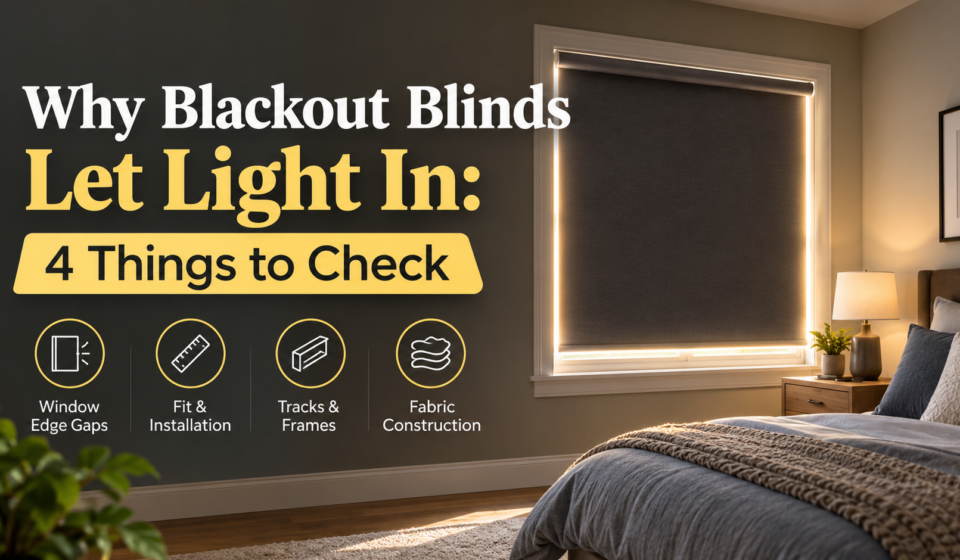
Blackout blinds are designed to reduce unwanted light, but they do not always make a bedroom completely dark. You might notice bright lines around the window edges, light above the blind, or small gaps that become especially noticeable early in the morning. The reason is often not the fabric itself. Even an opaque blackout material cannot block light that travels around its edges or through gaps left during installation.
Understanding why blackout blinds let light in can help you identify the actual problem before replacing your window coverings. Four areas deserve particular attention: window edge gaps, accurate window fitting, light-blocking tracks, and fabric construction. Each affects how well a blind covers your window. Guard Blinds offers blackout solutions that are worth exploring when comparing different approaches to window coverage, but the right choice starts with understanding your window and its specific light-leakage points.
Save More on Every Order – Grab the Latest Coupons & Deals
1. Check for Window Edge Gaps
One of the most common reasons blackout blinds let light in is the space between the blind and the window frame. Inside-mounted blinds need enough clearance to move without rubbing against the sides of the recess. That clearance can leave narrow strips where daylight enters the room.
Check both sides, the top, and bottom of the lowered blind to identify where light enters.
Consider these checks:
- Side gaps: Look for narrow vertical lines of light along the left and right edges.
- Top gaps: Check whether light passes around the headrail or roller mechanism.
- Bottom gaps: See whether the blind ends above the windowsill or leaves an uncovered section.
A thicker fabric will not solve an open gap. Depending on your window, a wider outside-mounted blind, overlapping coverage, or a suitable side-channel system may reduce unwanted light more effectively.
2. Confirm the Window Fit and Installation
Accurate sizing is essential when choosing blackout blinds. A blind that is too narrow may leave visible gaps, while an incorrectly fitted system can sit unevenly or fail to cover the intended area.
Before ordering a replacement, measure the window carefully and follow the manufacturer’s instructions. Check whether measurements should cover the glass, the inside recess, or the complete window frame. These dimensions are not interchangeable, and the correct method depends on the product and mounting style.
Installation also matters. Loose brackets, misaligned components, or a headrail that does not sit in its intended position may create unnecessary openings. If your blind includes a frame or side channels, check that the components align correctly according to the installation guide.
Avoid assuming every window needs the same mounting arrangement. Window handles, trim, sill depth, wall space, and the shape of the recess can affect compatibility. When comparing custom-fit options from Guard Blinds, review the measuring instructions and product requirements before selecting a configuration.
3. Look at Light-Blocking Tracks and Frames
A blackout blind can cover the main glass area while still allowing light around its perimeter. Light-blocking tracks and framed systems are designed to address this issue by helping cover or guide the edges of the blind.
Side channels and enclosed frames can reduce light gaps, but results depend on the design, accurate measurements, and proper installation.
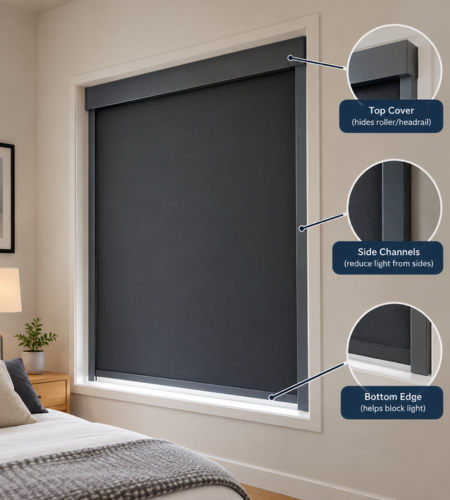
When comparing systems, ask these practical questions:
- Does the design address light entering from the sides?
- How does the upper edge cover the roller or headrail area?
- Is the system compatible with your window frame?
- Can the blind operate smoothly without leaving large gaps?
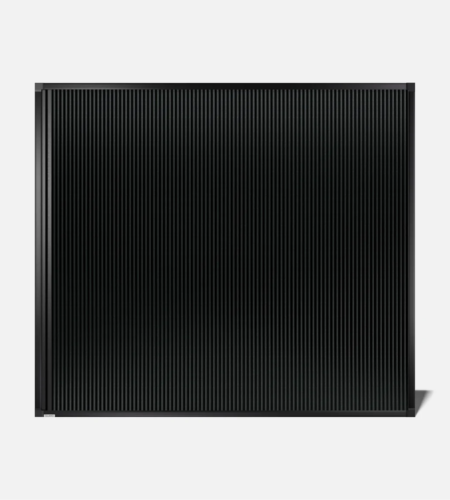
Guard Blinds’ Guard 2 product is presented on its official website as a total blackout solution with a framed design. Review the current product details and fitting instructions to understand how its construction suits your particular window.
No window covering should be assumed to eliminate every trace of light in every installation. Small gaps, uneven surfaces, or compatibility issues can still affect the final result.
4. Compare Fabric Construction and Overall Design
Fabric construction is another important consideration, but it helps to distinguish light passing through the material from light entering around it.
Blackout fabrics are intended to prevent most or all light from passing directly through the covered material, depending on the product’s specifications. If the fabric itself glows when daylight falls on it, inspect the material and its stated light-blocking performance. If the fabric remains dark but bright lines appear around the edges, the main issue is more likely to involve coverage or installation.
When comparing blackout blinds, consider:
- Material opacity: Check the manufacturer’s description of the fabric’s light-blocking properties.
- Frame construction: Consider whether the design helps cover exposed edges.
- Insulation and privacy: Review these as separate product features rather than assuming all blackout blinds perform identically.
- Maintenance and durability: Follow the care instructions and check the materials used in the frame and fabric.
Guard Blinds lists blackout performance and additional features on its official website. Read the specifications for the exact model you are considering instead of relying on general claims about blackout blinds as a category.
How to Choose a More Effective Blackout Solution
Start by identifying where the light enters. If it comes through the fabric, investigate the material’s specifications. If it appears around the edges, focus on measurements, mounting position, and perimeter coverage.
Compare standard blinds with framed or tracked designs, considering window size, installation, appearance, and budget. Prioritise edge coverage and window compatibility to reduce light gaps.
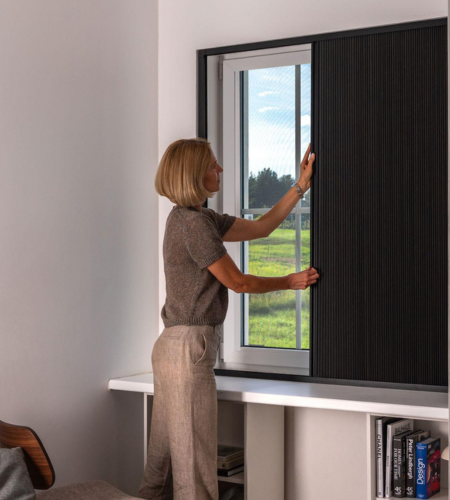
Guard Blinds may be one option to evaluate when researching total blackout window coverings. Before making a decision, check current product dimensions, available configurations, installation guidance, warranty terms, and return conditions on the official website. These details can change, so confirm them before ordering.
Save More on Every Order – Grab the Latest Coupons & Deals
Frequently Asked Questions
Why do blackout blinds let light in around the edges?
The blind may not cover the entire window opening. Small gaps beside the fabric, above the headrail, or beneath the bottom edge can allow light into the room even when the material blocks light effectively.
Will thicker blackout fabric stop edge leakage?
Not necessarily. Thicker or more opaque fabric may reduce light passing through the material, but it will not close gaps between the blind and the window frame.
Are side tracks useful for blackout blinds?
They can be. Suitable side tracks help guide or cover the edges of certain blinds, reducing the openings through which light can enter. Their effectiveness depends on design, fit, and installation.
Should blackout blinds fit inside or outside the window recess?
Either arrangement may work, depending on your priorities and window design. Inside mounting can create a neat appearance but may leave edge gaps. Outside mounting can provide more overlap when properly sized and installed.
What should I check before ordering blackout blinds?
Measure the window according to the manufacturer’s instructions, identify where light currently enters, check mounting compatibility, and review the product’s construction and installation requirements.
Conclusion
Blackout blinds that let light in do not always need to be replaced with thicker fabric. Start by checking window edge gaps, sizing and installation, light-blocking tracks, and fabric construction. These four checks help distinguish a material problem from a coverage problem, making it easier to compare suitable solutions.
If you are considering a framed blackout system, explore Guard Blinds and review the specifications for its current products. The most useful choice is one that fits your window correctly and addresses the places where unwanted light enters.