Table Of Content
- Save More on Every Order – Grab the Latest Coupons & Deals
- 5 Table Tennis Training Mistakes to Avoid
- 1. Only Practicing Your Strong Side
- 2. Ignoring Footwork
- 3. Doing Random Reps Without a Plan
- 4. Never Changing Spin or Placement
- 5. Training Without a Clear Goal
- How PONGBOT Can Support Smarter Practice
- Save More on Every Order – Grab the Latest Coupons & Deals
- Frequently Asked Questions
- Are table tennis robots good for training?
- Should beginners use fast robot settings?
- How can I improve footwork with a table tennis robot?
- What should I track during robot practice?
- Which PONGBOT model has the largest listed drill library?
- Related Resources
- Conclusion
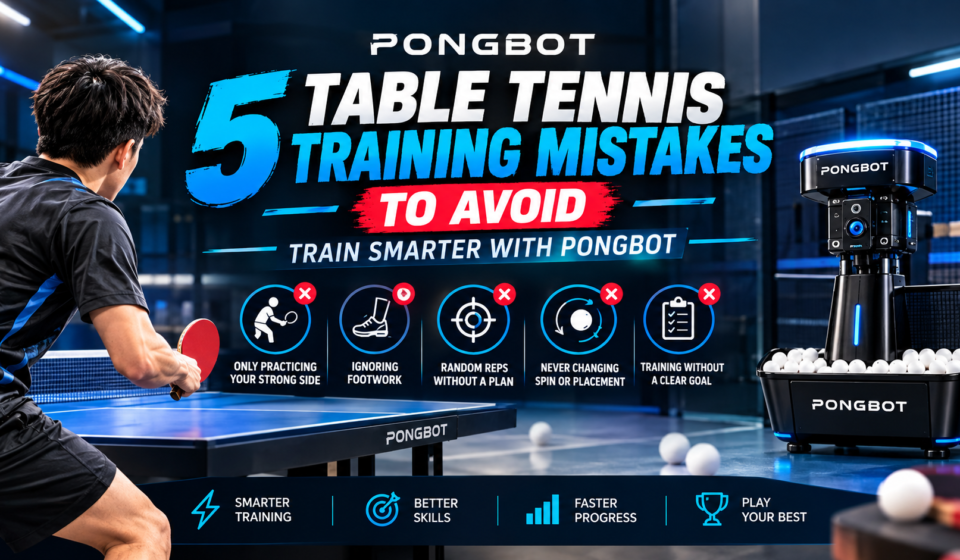
Good table tennis practice is not simply about hitting as many balls as possible. The structure of a training session matters because repeated habits can become easier to perform, even when they are not helping your overall game. The five table tennis training mistakes shown in this Pinterest guide focus on common problems: practicing only your strong side, ignoring footwork, doing random repetitions without a plan, never changing spin or placement, and training without a clear goal. Fixing these issues can make solo practice more purposeful and easier to measure. A table tennis robot can help by providing repeatable feeds that can be adjusted for speed, spin, placement, and drill patterns. PONGBOT’s current lineup is built around these structured practice options.
Save More on Every Order – Grab the Latest Coupons & Deals:
5 Table Tennis Training Mistakes to Avoid
1. Only Practicing Your Strong Side
It is natural to spend more time on the stroke that feels comfortable. However, balanced practice should include both forehand and backhand work. PONGBOT’s beginner guidance recommends developing basic drives on both sides and adding movement between strokes.
Divide practice into simple blocks: forehand control, backhand control, then a drill that requires switching between both sides.
2. Ignoring Footwork
Good strokes are less useful if you cannot reach the ball properly. Include footwork and recovery in solo practice.
Start with fixed feeds, then add wider or alternating placements. Return to a ready position after each shot.
3. Doing Random Reps Without a Plan
Random practice is not always productive. Start with fixed targets, build consistency, then add speed, spin, or placement changes.
Track successful returns or completed patterns to measure progress.
4. Never Changing Spin or Placement
Repeating the same ball helps consistency but should not be the whole session. Once comfortable, vary placement, spin, or both.
PONGBOT models offer adjustable speed, spin, placement, and drills.
5. Training Without a Clear Goal
Set a specific goal instead of only training for a certain time. Focus on areas such as backhand, footwork, serves, or spin.
Track simple results so each session has a clear purpose.
How PONGBOT Can Support Smarter Practice
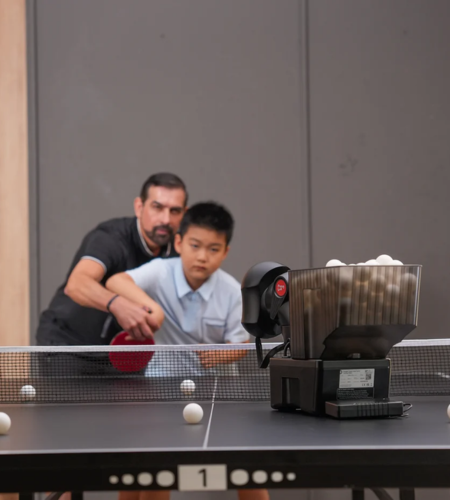
A training robot does not replace every form of table tennis practice. It can provide repeatable feeds for specific drills while you focus on technique, movement, placement, or consistency.
PONGBOT currently lists the Nova S Pro, Omni S Series, and Halo S Pro. The Nova S Pro has a 150-ball capacity and 264+ built-in drills, while PONGBOT lists 522 pre-programmed drills for the Omni S Pro and 702 for the Halo S Pro.
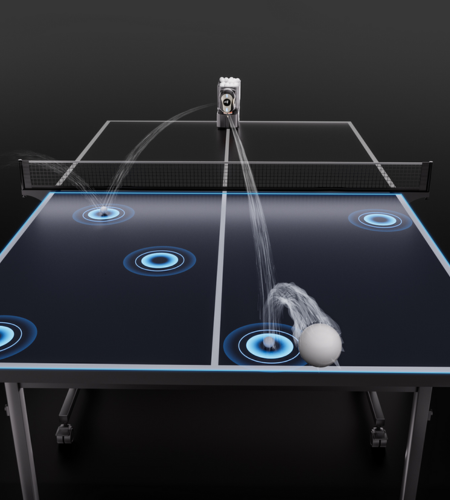
The Nova S Pro focuses on portability and flexible solo training, with app and remote control for convenience. It offers adjustable speed, spin, and placement for different drills and skill levels. Its compact design makes it practical for players with limited space or those who want easier setup. The Halo S Pro is designed for more advanced training with a floor-standing format. It provides a larger drill library for practicing different strokes, placements, and movement patterns. Both models can support structured practice when used with clear training goals.
The key is to use the robot for a specific objective rather than simply hitting balls as quickly as possible.
Save More on Every Order – Grab the Latest Coupons & Deals:
Frequently Asked Questions
Are table tennis robots good for training?
They can be useful for repeatable solo drills when you want to focus on a particular stroke, placement, or movement pattern.
Should beginners use fast robot settings?
Not necessarily. Building control first can be more useful than increasing speed before basic movement and contact are consistent.
How can I improve footwork with a table tennis robot?
Start with controlled placements, recover after each shot, and gradually add wider or alternating feeds as movement becomes more reliable.
What should I track during robot practice?
Track successful returns, target hits, completed patterns, or consistency across several sessions.
Which PONGBOT model has the largest listed drill library?
PONGBOT currently lists the Halo S Pro with 702 pre-programmed drills, followed by the Omni S Pro with 522 and Nova S Pro with 264.
Related Resources
For a deeper look at the brand and its table tennis robots, see our PONGBOT table tennis robot review and 2026 buying guide.
Conclusion
The five mistakes in this Pinterest guide share one theme: practice should have structure. Work on both sides, include footwork, avoid meaningless random repetitions, vary spin and placement gradually, and give every session a clear goal. PONGBOT can support this process with repeatable, adjustable feeds, while a complete routine should also include live rallies and match practice. If you are exploring a table tennis robot for organized solo training, review the current PONGBOT models and features on the official store before choosing a setup that fits your needs.