Table Of Content
- Save More on Every Order – Grab the Latest Coupons & Deals
- Why a Smarter Table Tennis Training Routine Matters
- How PONGBOT Fits the Practice Plan
- Building Your Practice Session
- 1. Warm Up With Control
- 2. Isolate Technique
- 3. Add Footwork and Placement
- 4. Finish With Match-Style Variety
- Which PONGBOT Model Fits a Routine?
- Pros and Cons of Robot-Based Practice
- Save More on Every Order – Grab the Latest Coupons & Deals
- Frequently Asked Questions
- Is a table tennis robot good for beginners?
- How often should I use a table tennis robot?
- Can a robot improve footwork?
- Does a robot replace a training partner?
- Which PONGBOT models are available?
- Related Resources
- Conclusion
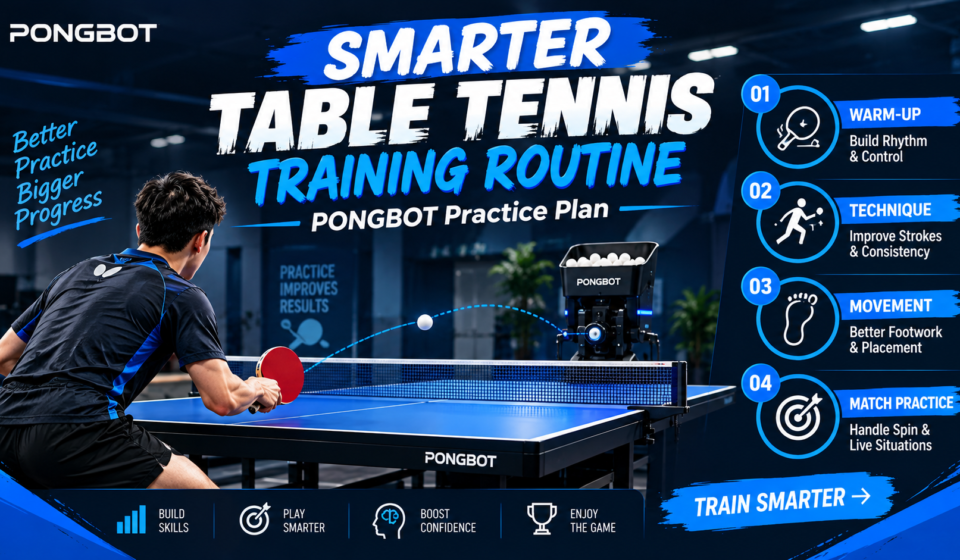
A smarter table tennis training routine is not simply about hitting more balls. Progress usually comes from practicing the right skills in the right order, then repeating them with enough structure to notice what needs improvement. The routine shown in this guide follows four useful stages: warm-up, technique, movement, and match practice. That sequence can help players move from controlled strokes toward more realistic table tennis situations without making every session feel random.
Solo practice can be difficult when you do not have a reliable training partner, especially when you want repeatable balls for footwork, placement, or spin work. This is where a table tennis robot can become a practical training tool. PONGBOT’s current table tennis range includes the Nova S Pro, Omni S Series, and Halo S Pro, giving players different equipment options for structured practice.
Save More on Every Order – Grab the Latest Coupons & Deals:
Why a Smarter Table Tennis Training Routine Matters
A better table tennis session should progress step by step:
- Warm-up: Begin with easy rallies and comfortable movement.
- Technique: Practice forehand, backhand, timing, and consistency.
- Movement: Add footwork and varied ball placement.
- Match practice: Finish with different spins, placements, and realistic sequences.
How PONGBOT Fits the Practice Plan
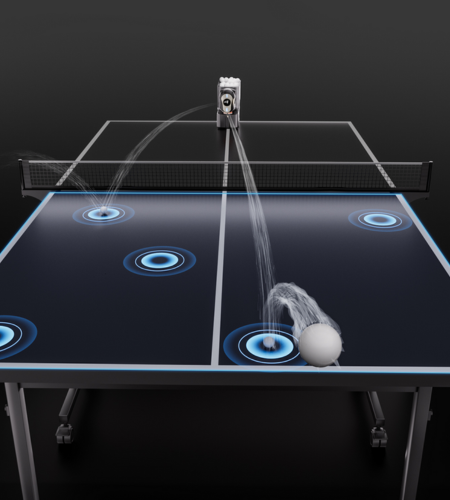
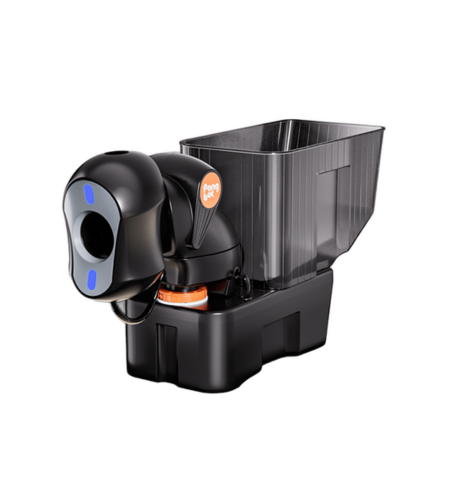
PONGBOT describes its table tennis robots as tools for scheduled, repeatable practice, with customizable drills and different training options for players at multiple levels. Its official table tennis page currently lists Nova S Pro, Omni S Pro, and Halo S Pro models.
A robot can deliver repeated balls without requiring another player to feed every shot, making it useful for stroke, placement, movement, and longer drills.
The Nova S Pro is the more compact option in the current comparison. PONGBOT lists 2–15 m/s ball speed, up to 60 r/s spin speed, 150-ball capacity, and 264 pre-programmed drills. The Omni S Pro and Halo S Pro are larger models with broader spin and drill specifications.
Building Your Practice Session
1. Warm Up With Control
Begin with simple balls and comfortable strokes. Focus on timing, balance, and clean contact. Avoid turning the warm-up into a maximum-speed workout.
2. Isolate Technique
Choose one technical objective, such as forehand consistency or backhand control. Keep the drill simple enough that you can notice errors rather than simply react to the next ball.
3. Add Footwork and Placement
Once the stroke feels controlled, introduce movement. Alternating placement can make the player recover and prepare for the next ball instead of hitting every shot from the same position.
4. Finish With Match-Style Variety
Use different placements and spin patterns when you are ready. This stage should feel less predictable than technique practice and can help connect repetition with practical table tennis movement.
Which PONGBOT Model Fits a Routine?
The current PONGBOT lineup offers different options for training setups. The Nova S Pro is listed at $299.99 USD on the official store at the time of writing and suits portable solo training, while the Omni S Series adds advanced spin and drill features, and the Halo S Pro is the largest model. Prices and promotions can change, so check the product page before making a purchase.
Pros and Cons of Robot-Based Practice
Potential advantages
- Repeatable ball delivery for focused drills
- Solo practice without waiting for a partner
- Useful structure for technique, movement, and placement work
- Multiple models and drill capabilities to match different training needs
Potential limitations
- A robot does not replace every aspect of playing another person
- Equipment cost varies significantly by model
- Players still need to choose appropriate drills and focus on technique
A balanced routine can therefore combine robot sessions with rallies, coaching, serves, returns, and match play.
Save More on Every Order – Grab the Latest Coupons & Deals:
Frequently Asked Questions
Is a table tennis robot good for beginners?
It can be useful for beginners when drills are kept simple. Repeated, manageable balls can help a new player focus on basic contact and consistency.
How often should I use a table tennis robot?
Short, focused sessions can be more useful than simply increasing practice time without a clear objective.
Can a robot improve footwork?
A robot can be incorporated into footwork drills by changing ball placement and requiring movement between shots. The effectiveness depends on how the drill is structured.
Does a robot replace a training partner?
Not completely. A robot can provide repeatable practice, but a human partner offers unpredictable returns, tactical decisions, and natural rally interaction.
Which PONGBOT models are available?
PONGBOT’s current table tennis range includes Nova S Pro, Omni S Pro, and Halo S Pro. Their specifications differ in areas such as weight, spin capability, ball capacity, and pre-programmed drills.
Related Resources
For a deeper look at the equipment itself, see the PONGBOT table tennis robot review and buying guide, which provides additional context for evaluating the robot options.
Conclusion
A smarter table tennis training routine is built around purpose, progression, and consistency. Start with control, work on technique, add movement, and then finish with more varied practice. A PONGBOT robot can fit into that structure by providing repeatable balls and programmable training options, but it works best as one part of a broader practice plan.
If you are considering a robot for solo training, explore the official PONGBOT range and compare the current models, specifications, and pricing before deciding which setup matches your practice goals.