Table Of Content
- Save More on Every Order – Grab the Latest Coupons & Deals
- Table Tennis Robot vs Training Partner: Key Differences
- When a Table Tennis Robot Makes Sense
- When a Training Partner Is More Useful
- How PONGBOT Fits Into Solo Training
- A Practical Way to Combine Both
- Pros and Cons
- Table Tennis Robot
- Training Partner
- Save More on Every Order – Grab the Latest Coupons & Deals
- Frequently Asked Questions
- Is a table tennis robot better than a training partner?
- Can you improve at table tennis with a robot?
- Which PONGBOT robot should beginners consider?
- Can a robot replace match practice?
- Are PONGBOT robots suitable for solo practice?
- Related Resources
- Conclusion
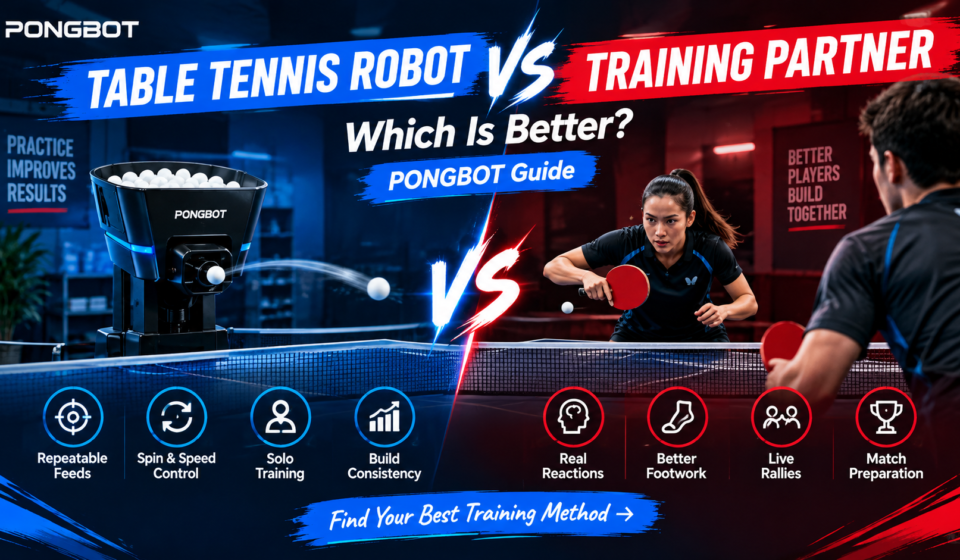
Choosing between a table tennis robot and a training partner depends on what you want from practice. A robot can provide repeatable feeds, solo training, and controlled drills whenever you have table access. A human partner adds natural reactions, changing placement, tactical decisions, and visual cues that happen during real rallies. The table tennis robot vs training partner question is therefore less about finding one universal winner and more about understanding what each method can train well. PONGBOT’s robots are built around independent practice, with the Nova S Pro, Omni S Pro, and Halo S Pro offering different levels of ball-feed and drill capability. Combining structured robot work with regular partner play can cover more parts of a complete training routine.
Save More on Every Order – Grab the Latest Coupons & Deals:
Table Tennis Robot vs Training Partner: Key Differences
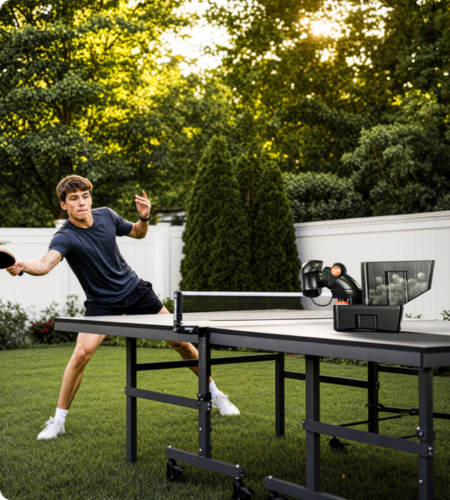
A training robot is useful when you need repetition. You can work on one stroke, movement pattern, or ball placement without waiting for another player to feed the next ball. PONGBOT positions its robots for customizable drills, solo practice, and repeatable training.
A partner adds variety in placement, timing, spin, and shot selection, helping you react and adjust to unpredictable play.
When a Table Tennis Robot Makes Sense
A robot can be useful when your main goal is technical repetition or when finding a consistent practice partner is difficult. It lets you structure sessions around specific weaknesses.
Useful goals include:
- Repeating forehand or backhand strokes.
- Practicing footwork between locations.
- Building consistency before increasing speed.
- Working on different spin types and placements.
- Practicing alone on a flexible schedule.
The main advantage is control. You can repeat a drill and gradually change variables instead of dealing with a completely different ball on every attempt.
When a Training Partner Is More Useful
Partner practice becomes especially valuable when you need realistic reactions. A human player can change the ball based on your previous shot, disguise spin, alter placement, and create rallies that do not follow a predictable sequence.
Partner sessions can help with:
- Reading racket and body cues.
- Adjusting to unexpected placement.
- Practicing rally patterns.
- Developing point construction.
- Experiencing competitive situations.
A robot can deliver programmed variations, but it does not make tactical decisions in response to your play in the same way a person does. Robot practice is therefore better viewed as a complement to human practice rather than a complete replacement.
How PONGBOT Fits Into Solo Training
PONGBOT currently lists the Nova S Pro, Omni S Pro, and Halo S Pro. Its official comparison shows differences in weight, spin capability, ball speed, programmed drills, and ball capacity.
The Nova S Pro is the lightest option in the comparison, with a 4 kg net weight, 2–15 m/s ball speed, nine spin types, and 264 pre-programmed drills. The Omni S Pro and Halo S Pro are heavier and offer expanded spin and drill capabilities.
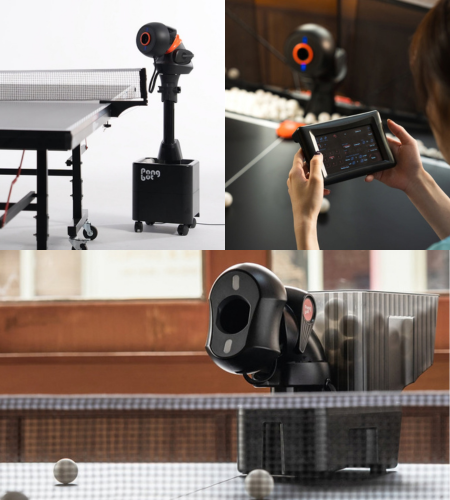
Instead of choosing only by feature count, consider your table space, training frequency, skill level, preferred drills, and whether you mainly need simple repetition or more varied practice.
A Practical Way to Combine Both
Give each training method a specific job. Use the robot for controlled repetition, then use partner sessions to test whether those skills transfer to unpredictable rallies.
For example, start with robot drills for forehand and backhand consistency, move into footwork patterns, and finish with partner rallies or match play. This creates a progression from controlled practice to reactive practice.
Table tennis training resources commonly describe this distinction: robots are useful for high-volume repetition, while human practice develops reaction, tactical adjustment, and opponent-reading skills.
Pros and Cons
Table Tennis Robot
Pros
- Allows solo practice.
- Provides repeatable feeds.
- Makes structured drills easier.
- Can support adjustable speed, spin, and placement depending on the model.
Cons
- Does not fully reproduce human decision-making.
- Requires equipment, setup, and table access.
Training Partner
Pros
- Produces natural rallies.
- Adds unpredictable placement and timing.
- Helps develop reaction and tactical awareness.
Cons
- Practice depends on another person’s availability.
- Repeating one exact ball pattern may be harder.
Save More on Every Order – Grab the Latest Coupons & Deals:
Frequently Asked Questions
Is a table tennis robot better than a training partner?
Neither method covers every training need. A robot is useful for repeatable drills and solo practice, while a partner is important for unpredictable rallies, tactical decisions, and reading human cues.
Can you improve at table tennis with a robot?
A robot can support improvement in stroke consistency, footwork, repetition, and controlled ball response. Progress still depends on how drills are structured and how consistently you practice.
Which PONGBOT robot should beginners consider?
The choice depends on training goals, portability, desired drill variety, and budget. PONGBOT lists different specifications for its models, so comparing those details is more useful than choosing only by model name.
Can a robot replace match practice?
No single training method covers everything. Match and partner practice remain important for reading opponents, adapting to changing situations, and making tactical decisions.
Are PONGBOT robots suitable for solo practice?
Yes. PONGBOT specifically positions its table tennis robots for practice without a partner and offers models designed around different levels of training capability.
Related Resources
For a broader look at PONGBOT equipment, features, and model differences, see our [PONGBOT table tennis robot review and 2026 guide]PONGBOT table tennis robot review and 2026 guide.
Conclusion
The table tennis robot vs training partner comparison is really a question of training purpose. A robot can make repetition, solo drills, and controlled practice easier, while a human partner provides unpredictable reactions and tactical interaction. PONGBOT offers several robot options for players who want structured solo training. If you are considering one, compare the official models and specifications at the PONGBOT official store and choose a setup that matches the way you actually practice