Table Of Content
- Save More on Every Order – Grab the Latest Coupons & Deals
- 1. Repeating Only Easy Shots
- 2. Ignoring Footwork
- 3. Training Without Targets
- 4. Avoiding Different Spins
- 5. Practicing Without Structure
- How PONGBOT Can Support Better Training
- Pricing and Shipping
- Pros and Cons
- Save More on Every Order – Grab the Latest Coupons & Deals
- Frequently Asked Questions
- What is the biggest table tennis training mistake?
- Should I practice difficult shots every session?
- How important is footwork in table tennis?
- Can a PONGBOT robot help with solo training?
- Do PONGBOT robots use standard balls?
- Related Resources
- Conclusion
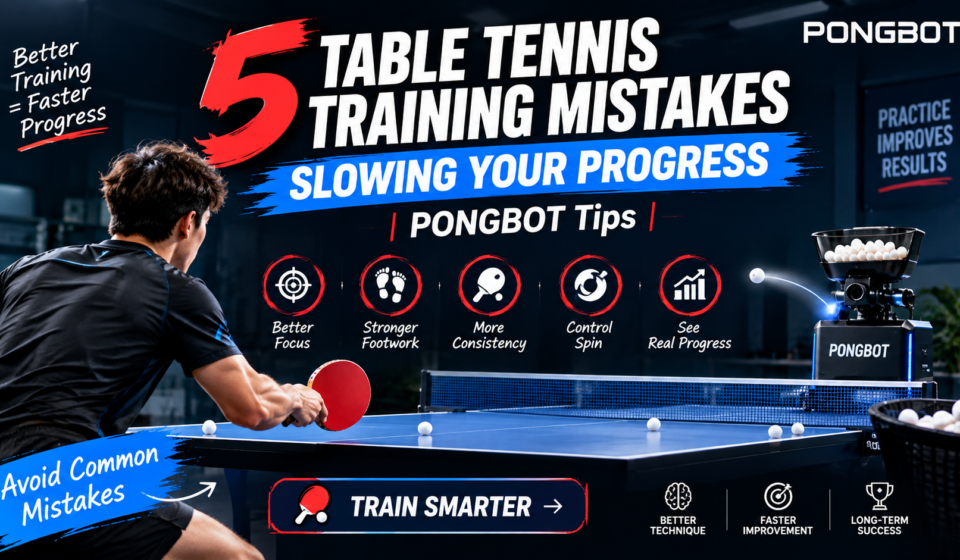
Progress in table tennis is not only about playing more often. The way you practice matters just as much. Many players spend hours hitting balls but see limited improvement because their sessions repeat the same easy shots, ignore footwork, lack measurable targets, avoid different spins, or have no clear structure. These table tennis training mistakes can make practice feel productive without addressing the skills that actually need work. The good news is that each mistake can be corrected with a more deliberate routine. A training robot can also make this easier by providing repeatable feeds for controlled practice, movement, spin, and placement. PONGBOT offers several table tennis robots designed for solo training, giving players options for building more purposeful sessions.
Save More on Every Order – Grab the Latest Coupons & Deals:
1. Repeating Only Easy Shots
One common mistake is staying with shots that already feel comfortable. Repetition is useful, but practicing only easy forehands or predictable feeds can leave weaker areas untouched.
Start with controlled repetition, then gradually add placement, speed, movement, or spin. PONGBOT’s own training guidance recommends keeping drills connected to a specific skill and changing one variable at a time. This helps you challenge technique without making every practice session chaotic.
2. Ignoring Footwork
A technically sound stroke can still break down when your body is out of position. Players sometimes reach for balls with their arms instead of moving their feet, remain stationary after a shot, or wait too long before recovering.
Footwork should be part of stroke practice, not an afterthought. Use drills that require movement between forehand and backhand positions, then return to a ready stance after every shot. Training resources from PingSkills and other coaching sources emphasize positioning, balance, movement, and recovery as important parts of consistent table tennis technique.
3. Training Without Targets
Simply counting how many balls you hit does not always tell you whether the session was successful. A better approach is to give every drill a measurable objective.
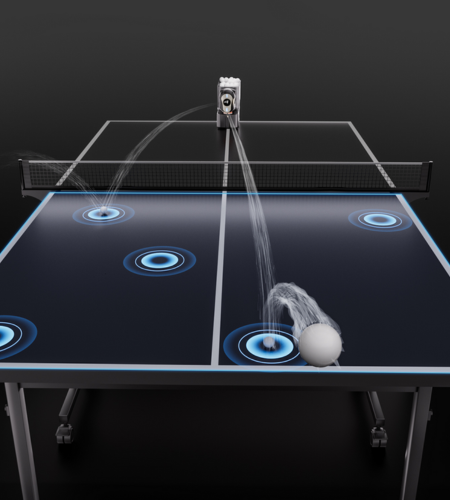
For example, choose a target area and track how many balls land there. You can also record consecutive successful shots, completed movement patterns, or controlled returns during a set. Butterfly’s deliberate-practice guidance recommends setting specific goals, getting feedback, and measuring progress rather than practicing without a defined objective.
4. Avoiding Different Spins
Another mistake is becoming comfortable against only one type of ball. Table tennis requires players to adjust to different amounts and directions of spin, so training should eventually include variation.
Start with manageable topspin, backspin, or sidespin feeds and focus on racket angle and timing. Once the basic response becomes consistent, increase variation. PONGBOT’s current robot lineup includes multiple spin capabilities, making its machines relevant for players who want more varied solo practice.
5. Practicing Without Structure
A practice session can become inefficient when you simply start hitting and stop when you are tired. A simple plan makes it easier to work on weaknesses and track changes over time.
A useful session could include:
- Warm-up and basic racket control
- Forehand and backhand consistency
- Footwork and placement
- Spin-focused practice
- A more variable match-style drill
- A short review of what needs attention next time
PONGBOT similarly recommends focused practice blocks and recording a result from each block, such as rally length, target hits, or completed patterns.
How PONGBOT Can Support Better Training
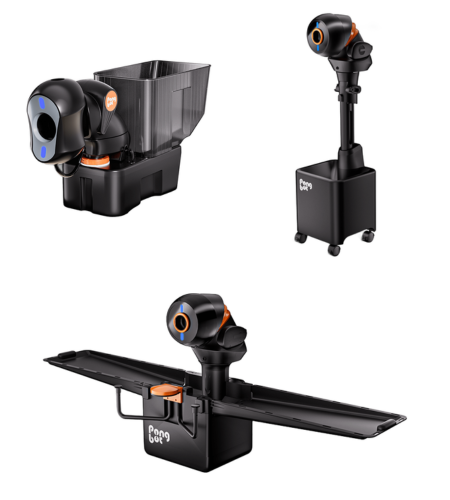
PONGBOT currently lists the Nova S Pro, Omni S Pro, and Halo S Pro for table tennis training. The Nova S Pro is the lightest model at 4 kg and lists 150-ball capacity, 2–15 m/s ball speed, nine spin types, and 264 pre-programmed drills. The Omni S Pro lists 9 kg net weight, 250-ball capacity, 360° spin customization, and 522 pre-programmed drills. The Halo S Pro lists 11 kg net weight, 250-ball capacity, and 702 pre-programmed drills.
The important point is not simply having more features. Choose capabilities that match your training needs. A player who mainly wants portable repetition may have different priorities from someone building a dedicated home training setup.
Pricing and Shipping
PONGBOT’s current store listings show the Nova S Pro at $299.99 USD, the Omni S Series from $749.99, and the Halo S Pro at $1,499.99. Prices and promotional offers can change, so verify the current listing before purchasing. PONGBOT states that delivery to countries outside its main listed regions typically takes 1–2 weeks, depending on destination and local customs procedures.
Pros and Cons
Pros:
- Repeatable solo practice without depending on a partner.
- Useful for consistency, placement, movement, and spin drills.
- Different models provide different levels of portability and programming.
Cons:
- A robot does not replace live opponents and unpredictable match decisions.
- More advanced features come with a higher price.
- Equipment is most useful when paired with a structured training plan.
Save More on Every Order – Grab the Latest Coupons & Deals:
Frequently Asked Questions
What is the biggest table tennis training mistake?
Practicing without a clear purpose can make it difficult to identify what is improving. Give each drill a specific skill and measurable target.
Should I practice difficult shots every session?
Not necessarily. Build consistency first, then progressively add speed, movement, placement, or spin.
How important is footwork in table tennis?
Footwork helps you reach the ball with better positioning and balance, giving your stroke a more consistent starting point.
Can a PONGBOT robot help with solo training?
Yes. PONGBOT specifically markets its table tennis robots for solo practice and customizable drills.
Do PONGBOT robots use standard balls?
PONGBOT states that standard 40+ table tennis balls can be used without a specific brand or material requirement.
Related Resources
For a broader look at PONGBOT models, features, and buying considerations, see the PONGBOT table tennis robot review and 2026 guide.
Conclusion
Fixing table tennis training mistakes does not require making every session harder. It means making practice more purposeful. Replace endless easy-shot repetition with progressive drills, include footwork, set measurable targets, train against different spins, and follow a simple session structure. PONGBOT can support this approach by providing repeatable feeds and programmable training options, but the training plan remains the key part. Explore the current PONGBOT lineup to see which features fit your practice setup and goals.