Table Of Content
- Save More on Every Order – Grab the Latest Coupons & Deals
- Why Practice Table Tennis Alone?
- How Pongbot Fits Solo Training
- Pongbot Models for Solo Practice
- A Simple Pongbot Solo Training Routine
- Pricing and Practical Considerations
- Pros and Cons of Solo Robot Training
- Save More on Every Order – Grab the Latest Coupons & Deals
- Frequently Asked Questions
- Can you practice table tennis alone without a robot?
- Is a table tennis robot good for beginners?
- Can a robot improve footwork?
- Does robot training replace playing with people?
- Which Pongbot robot should I choose?
- Related Resources
- Conclusion
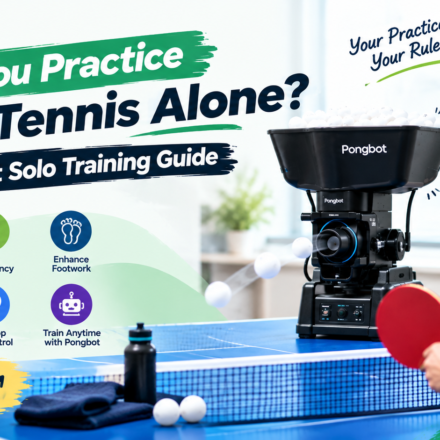
Can you practice table tennis alone? Absolutely. A partner can make rallies more realistic, but solo practice can still help you work on strokes, consistency, footwork, timing, and ball control. Individual drills can include shadow swings, target practice, return boards, footwork exercises, and table tennis robots that feed balls back to you. A robot is especially useful when you want repeatable feeds without coordinating another player’s schedule.
For players who want a more structured approach, Pongbot offers table tennis training robots for solo practice. Its current lineup includes the portable Nova S Pro, the Omni S Pro, and the floor-standing Halo S Pro. The right choice depends on your training goals, available space, and preferred level of control.
Save More on Every Order – Grab the Latest Coupons & Deals:
Why Practice Table Tennis Alone?
Solo training makes it easier to focus on one skill at a time. Instead of trying to win a rally, you can concentrate on clean forehand contact, backhand control, recovery to the ready position, or specific placement.
A simple session can include:
- A warm-up with shadow swings
- Forehand and backhand drills
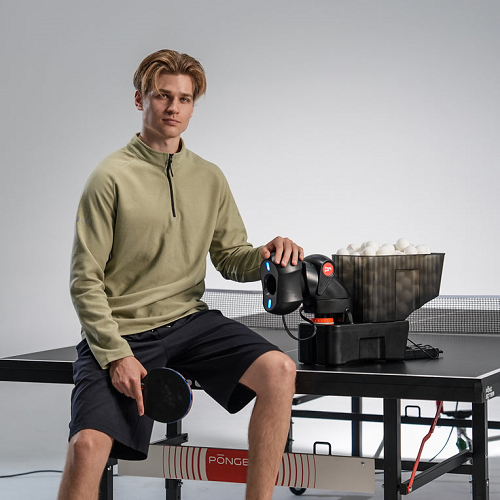
- Footwork and target practice
- Serve practice
- More varied drills at the end
The main advantage is repeatability. You can repeat a movement, then gradually increase speed, spin, placement, or movement as your control improves.
How Pongbot Fits Solo Training
A table tennis robot can act as a repeatable ball feeder, allowing you to practice without another player. Pongbot says its robots support preprogrammed and customizable drills, with settings that vary by model for speed, spin, placement, and trajectory.
You can progress from simple repetition to demanding patterns, moving from one forehand location to alternating placements and wider movement.
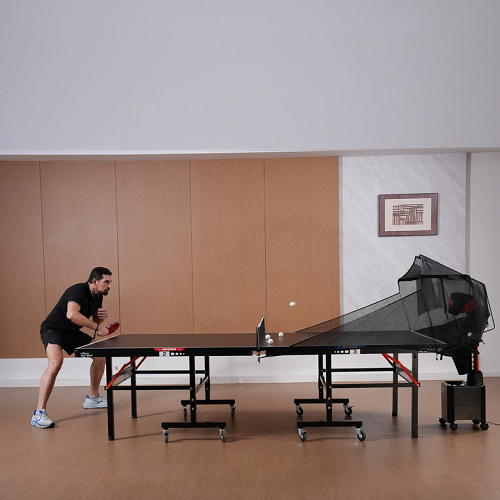
Robot training should complement, not completely replace, live play. A machine provides consistent feeds, while real matches involve serves, unpredictable returns, tactical decisions, and changing rally situations.
Pongbot Models for Solo Practice
Pongbot currently lists three main table tennis robot options.
Nova S Pro: The portable option for players who value easier setup and mobility. Pongbot lists nine spin variations, speeds of approximately 2–15 m/s, and more than 264 training drills through its mobile app. Selected packages can also include a ball collection net.
Omni S Pro: Designed for players seeking deeper training control. Pongbot lists 360-degree spin adjustment, speeds up to 15 m/s, and extensive preset and custom training options.
Halo S Pro: The floor-standing choice for players with more room who want broader full-table training. Pongbot describes wide oscillation, numerous routines, and a ball-catching system for longer practice sessions.
Compare current model details before purchasing.
A Simple Pongbot Solo Training Routine
You do not need complicated sessions. Start with one goal and build gradually.
1. Warm up: Use shadow swings, ball control, or gentle hitting.
2. Isolate one stroke: Use a consistent feed to focus on forehand or backhand technique. Watch your contact point, balance, and recovery.
3. Add movement: Change ball placement so you must move between shots. This turns repetition into a footwork exercise.
4. Add variation: Once the movement feels controlled, introduce different spin or speed settings where available.
5. Finish with a challenge: Use a varied drill to test whether you can maintain technique while reacting to changing placements.
Purposeful practice is generally more useful than simply running the robot at maximum speed.
Pricing and Practical Considerations
Pongbot’s current table tennis collection lists the Nova S Pro at $299.99 USD on the page checked for this guide, while the Omni S Series and Halo S Pro sit at higher price points. Package choices can change the final cost.
Before purchasing, consider space, storage, ball collection, controls, training intensity, and the drills you expect to use. Pongbot also provides support resources, manuals, warranty information, and separate sales and technical support contacts.
Pros and Cons of Solo Robot Training
Pros
- Practice without waiting for a partner
- Repeat strokes and placements
- Adjust drills and settings
- Build structured sessions
- Add movement to practice
Cons
- A robot cannot recreate every part of live match play
- Advanced models require more investment
- Setup and storage depend on your space
- Progress still depends on good technique
Save More on Every Order – Grab the Latest Coupons & Deals:
Frequently Asked Questions
Can you practice table tennis alone without a robot?
Yes. Shadow practice, return boards, target drills, ball-control exercises, and footwork training can all be performed alone. A robot simply adds repeatable ball feeding.
Is a table tennis robot good for beginners?
It can be useful because repeatable feeds let beginners focus on contact, timing, and consistency. Start with manageable speed and placement rather than maximum settings.
Can a robot improve footwork?
It can support footwork practice when changing ball placement requires you to move and recover between shots. Avoid simply standing still and reaching for every ball.
Does robot training replace playing with people?
No. It is best viewed as a supplement. Live practice adds unpredictable returns, tactical decisions, serve-and-receive situations, and competitive pressure.
Which Pongbot robot should I choose?
Nova S Pro may suit players prioritizing portability, while Omni S Pro and Halo S Pro offer more advanced setups. Compare current specifications, space requirements, and training goals before deciding.
Related Resources
For a broader look at the brand and its lineup, see this Pongbot review and 2026 table tennis robot guide.
Conclusion
So, can you practice table tennis alone? Yes. With a clear routine, solo sessions can help develop consistency, technique, movement, and confidence. A table tennis robot can make practice more structured by providing repeatable feeds and adjustable drills.
Pongbot’s Nova S Pro, Omni S Pro, and Halo S Pro offer different approaches, from portable practice to advanced full-table setups. The best option is the one that matches your space, budget, skill level, and training goals. Explore the current lineup at the official Pongbot store and compare available configurations before deciding.