Table Of Content
- Save More on Every Order – Grab the Latest Coupons & Deals
- Why the Training Method Matters
- Table Tennis Robot vs Training Partner: Key Differences
- How Pongbot Fits Solo Table Tennis Training
- Which Is Better for Different Goals?
- Pricing and Product Options
- Pros and Cons
- Save More on Every Order – Grab the Latest Coupons & Deals
- Frequently Asked Questions
- Can a table tennis robot replace a training partner?
- Is a table tennis robot good for beginners?
- What is better for improving consistency?
- Is Pongbot suitable for solo practice?
- Which Pongbot model should I consider?
- Related Resources
- Conclusion
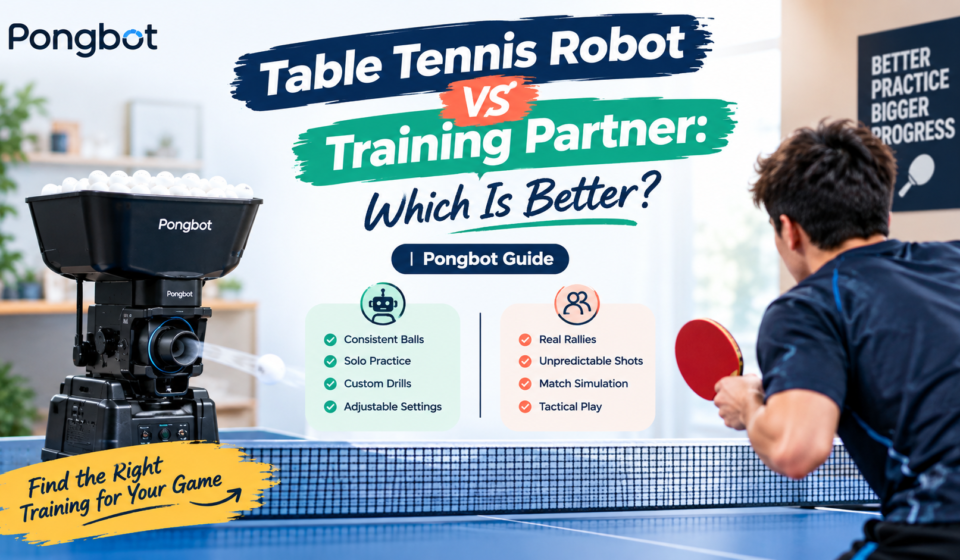
Choosing between a table tennis robot vs training partner depends on what you want from practice. A human partner can provide unpredictable rallies, tactical challenges, and the feel of a real opponent. A robot, on the other hand, can deliver repeatable balls, structured drills, and solo practice whenever your schedule allows. For players trying to improve consistency, footwork, stroke mechanics, or training frequency, that difference can matter.
Pongbot focuses on automated table tennis training with models designed for different levels and practice needs. Its current lineup includes the Nova S Pro, Omni S Pro, and Halo S Pro, giving players several ways to add robot-based practice to a home or club setup.
Save More on Every Order – Grab the Latest Coupons & Deals:
Why the Training Method Matters
Table tennis improvement requires more than simply hitting a large number of balls. Players need quality repetition, movement, timing, spin awareness, and eventually the ability to react to an opponent.
A training partner is particularly valuable for:
- Unpredictable rallies
- Reading human-generated shots
- Practicing point construction
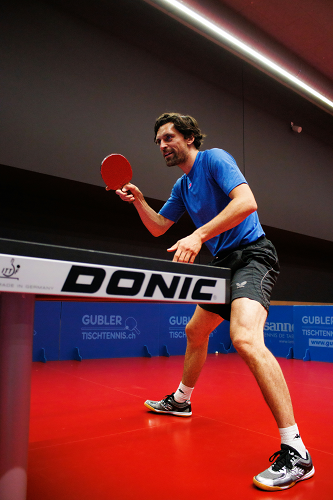
- Match-like exchanges
- Developing reactions against different playing styles
A robot is particularly useful when you want:
- Consistent ball feeding
- Repeated stroke practice
- Solo sessions
- Adjustable placement and speed
- Structured drills without coordinating schedules
Neither method covers every part of table tennis equally well. The strongest approach may be to use each for what it does best.
Table Tennis Robot vs Training Partner: Key Differences
The biggest difference is consistency versus unpredictability.
A partner can change the direction, rhythm, and quality of a rally naturally. That makes partner sessions valuable for match preparation. However, the quality of practice can depend on your partner’s availability and playing ability.
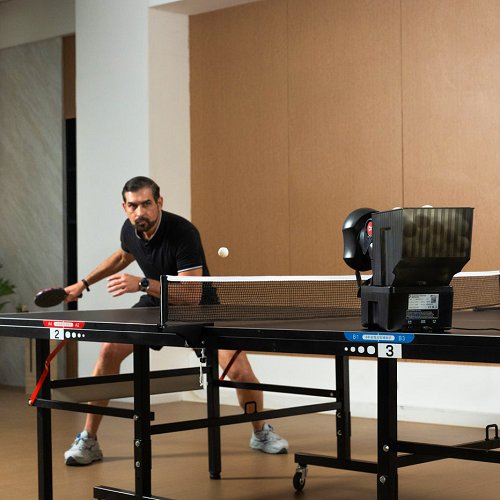
A robot provides a controlled environment. Pongbot’s table tennis range lists features such as multiple placement, ball recycling, adjustable spin, and pre-programmed drills. The Nova S Pro, for example, lists 264 pre-programmed drills, 150-ball capacity, nine spin types, and spin speeds up to 60r/s.
That makes a robot especially useful when you want to repeat one technique or movement pattern instead of constantly adapting to a rally.
How Pongbot Fits Solo Table Tennis Training
Pongbot’s current table tennis range includes the Nova S Pro, Omni S Pro, and Halo S Pro. The models differ in capacity, spin capabilities, weight, and programmed drills.
The Nova S Pro is the lighter option at 4 kg and lists 264 pre-programmed drills. The Omni S Pro weighs 9 kg and lists 522 pre-programmed drills, while the Halo S Pro is 11 kg and lists 702. The latter two also list 360-degree spin with customizable spin types and spin speeds up to 100r/s.
This range means shoppers can compare the level of training control they actually need rather than assuming every robot offers the same experience.
Which Is Better for Different Goals?
For stroke repetition: A robot usually has the advantage because it can repeatedly deliver a controlled feed.
For footwork drills: A programmable robot can be useful when placement changes force you to move between areas of the table.
For match preparation: A human partner remains important because real opponents do not deliver perfectly predictable patterns.
For flexible scheduling: A robot can be more convenient because Pongbot promotes training without requiring a partner.
For beginners: Either option can work. A partner may offer immediate interaction, while a robot can provide controlled repetition while learning basic strokes.
Pricing and Product Options
Pongbot’s current store pricing can change, so checking the official product page before purchasing is important. At the time of research, the table tennis collection listed the Nova S Pro from $299.99, the Omni S Series from $749.99, and the Halo S Pro at $1,499.99.
Pongbot also states that free shipping is currently available to certain regions, including the United States, while international delivery can vary by destination and customs.
Pros and Cons
Table Tennis Robot
Pros:
- Solo training
- Repeatable drills
- Flexible practice schedule
- Adjustable training variables
Cons:
- Requires an equipment investment
- Does not fully reproduce human rallies
- Requires setup and suitable practice space
Training Partner
Pros:
- More natural rallies
- Unpredictable shots
- Match-oriented practice
- Real-time interaction
Cons:
- Requires scheduling
- Practice quality depends on both players
- Repeating one exact feed can be difficult
Save More on Every Order – Grab the Latest Coupons & Deals:
Frequently Asked Questions
Can a table tennis robot replace a training partner?
Not completely. A robot is excellent for repetition and structured drills, but a partner is still valuable for unpredictable rallies, tactical play, and match simulation.
Is a table tennis robot good for beginners?
Yes, a robot can provide controlled repetition that helps beginners practice basic strokes and movement patterns. Training should still include varied play as skills develop.
What is better for improving consistency?
A robot can be particularly useful for consistency because the same type of feed can be repeated without depending on another player’s availability.
Is Pongbot suitable for solo practice?
Yes. Pongbot specifically markets its table tennis robots for training without requiring a partner, with customizable and pre-programmed drills across its lineup.
Which Pongbot model should I consider?
It depends on your training requirements, portability preferences, and desired level of drill and spin control. The official comparison is useful for evaluating the Nova S Pro, Omni S Pro, and Halo S Pro side by side.
Related Resources
For a broader look at features, setup, product differences, and buying considerations, see the Pongbot Review 2026: Is It the Best Table Tennis Robot?
Conclusion
The choice between a table tennis robot vs training partner does not have to be an either-or decision. A partner is difficult to replace when your goal is realistic rallies, tactical decision-making, and match preparation. A robot becomes valuable when you need consistent repetition, solo practice, and structured drills.
Pongbot offers several table tennis robot options, from the portable Nova S Pro to more advanced Omni S Pro and Halo S Pro models. If automated practice fits your routine, exploring the official Pongbot range can help you compare the available features and choose a setup that matches your training priorities.