Table Of Content
- 🎉 Save More on Every Order – Grab the Latest Coupons & Deals
- 1. Price and Overall Value
- 2. Power Accuracy and Maximum Output
- 3. Simulated Climbs and Riding Feel
- 4. Connectivity and Training App Compatibility
- 5. Which Trainer Should You Choose?
- Pros and Cons
- Wahoo KICKR CORE 2
- Wahoo KICKR
- 🎉 Save More on Every Order – Grab the Latest Coupons & Deals
- Frequently Asked Questions
- Is the Wahoo KICKR CORE 2 good for beginners?
- Is the standard KICKR more accurate than the CORE 2?
- Can both trainers work with Zwift?
- Do I need a special bicycle for either trainer?
- Is the KICKR worth the extra money?
- Related Resources
- Conclusion
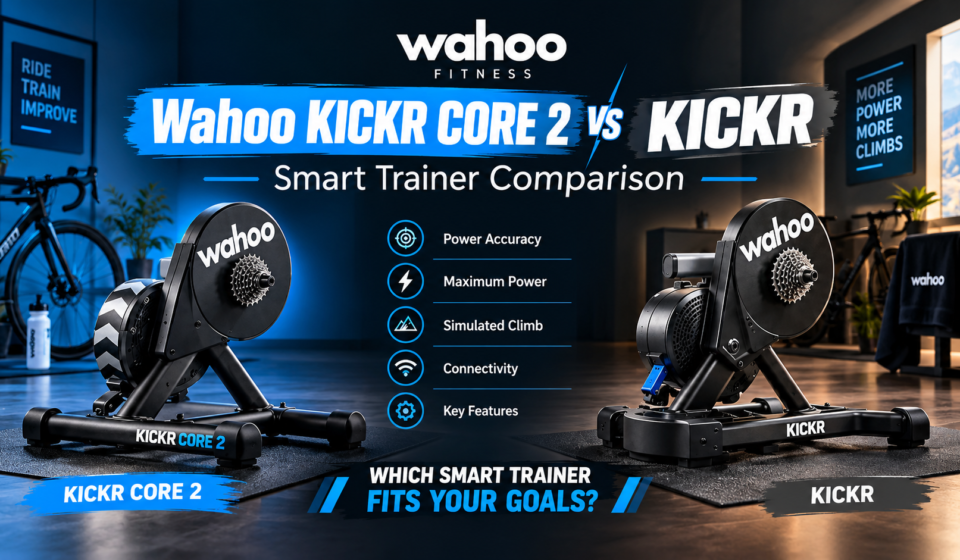
Choosing between the Wahoo KICKR CORE 2 vs KICKR can be difficult because both smart trainers are designed for structured indoor cycling and virtual riding. They connect with popular training apps, measure cycling power, and automatically adjust resistance to reflect workout targets or virtual terrain. However, they differ in price, power accuracy, maximum output, and the steepness of climbs they can simulate.
For many cyclists, the CORE 2 offers an appealing balance of features and cost. The standard KICKR adds higher performance specifications and additional features that may matter to competitive riders. Understanding these differences helps you avoid paying for capabilities you rarely use. This comparison examines the main specifications, practical advantages, limitations, and buying considerations to help you choose the right Wahoo Fitness trainer for your training goals.
🎉 Save More on Every Order – Grab the Latest Coupons & Deals
1. Price and Overall Value
One of the clearest differences is the initial investment. At the time of research, Wahoo’s US website listed the KICKR CORE 2 at $549.99 and the standard KICKR at $849.99. Prices, availability, and package contents may change, so confirm the current offer before purchasing.
The CORE 2 suits beginner cyclists with automatic resistance, power tracking, and training platform compatibility at a budget-friendly price.
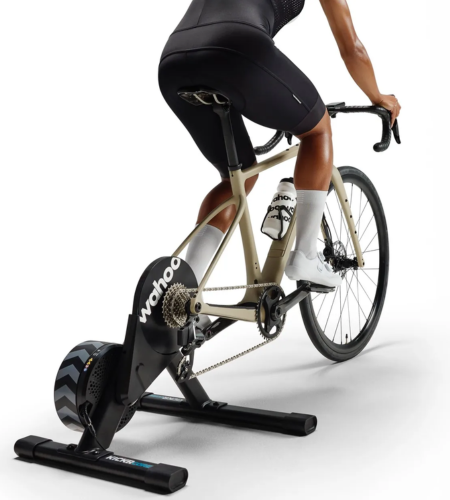
The standard KICKR costs more, but its higher power ceiling, tighter stated accuracy, and additional hardware features may appeal to riders who train intensely or want more advanced performance specifications.
Remember to budget for any required bike components, accessories, training subscriptions, and other equipment not included in your chosen package.
2. Power Accuracy and Maximum Output
Power accuracy helps track workouts and progress. The CORE 2 offers ±2% accuracy, while the standard KICKR provides ±1% for greater precision.
Their maximum power outputs also differ:
- KICKR CORE 2: Up to 1,800 watts.
- KICKR: Up to 2,200 watts.

Both specifications are substantial for many recreational cyclists. The CORE 2 may be sufficient for endurance rides, interval sessions, and many structured training plans. The standard KICKR provides additional headroom for riders whose efforts approach the CORE 2’s maximum output.
Accuracy ratings describe manufacturer specifications, not a guarantee that every reading will be identical across all equipment and conditions. Your training needs, setup, and consistency matter more than small specification differences for many riders.
3. Simulated Climbs and Riding Feel
Both trainers automatically change resistance to reproduce virtual gradients and structured workout targets. The main difference is their maximum simulated climbing grade.
| Feature | KICKR CORE 2 | KICKR |
|---|---|---|
| Power accuracy | ±2% | ±1% |
| Maximum power | 1,800 W | 2,200 W |
| Maximum simulated climb | 16% | 20% |
| Minimum simulated grade | -10% | -10% |
| Connectivity | Wi-Fi, Bluetooth, ANT+ | Wi-Fi, Bluetooth, ANT+ |
The standard KICKR also includes AXIS adjustable feet designed to provide some side-to-side movement. The CORE 2 has a fixed base. This distinction may matter to riders who value a more dynamic indoor riding feel.
If you regularly ride steep virtual climbs or perform demanding sessions, the standard KICKR’s additional capacity may be attractive. For general indoor fitness, endurance rides, and most recreational training, the CORE 2 offers a capable alternative.
4. Connectivity and Training App Compatibility
Both models work with supported indoor cycling platforms, including Zwift, ROUVY, TrainingPeaks, MyWhoosh, and Kinomap. Compatibility can depend on your device, software, and intended features.
The CORE 2 introduces integrated Wi-Fi, automatic firmware updates, an updated LED system, and KICKR Bridge, which helps connect compatible sensors to your training setup. It is available in configurations with a traditional cassette or Zwift Cog and Click.
The standard KICKR adds features such as Direct Connect, Race Mode, and ERG Easy Ramp. Race Mode supports faster power-data updates over Wi-Fi, which can be useful for competitive virtual racing.
Before buying, check which package you need and whether your bicycle’s drivetrain and rear axle fit the trainer. A cassette-equipped setup and a virtual-shifting setup offer different advantages, particularly if you use multiple bikes.
5. Which Trainer Should You Choose?
Choose the KICKR CORE 2 for affordable indoor cycling and everyday workouts. It supports endurance rides, intervals, and virtual routes. Wi-Fi and training app compatibility add convenience. It’s ideal if you don’t need the standard KICKR’s higher power and gradient limits.
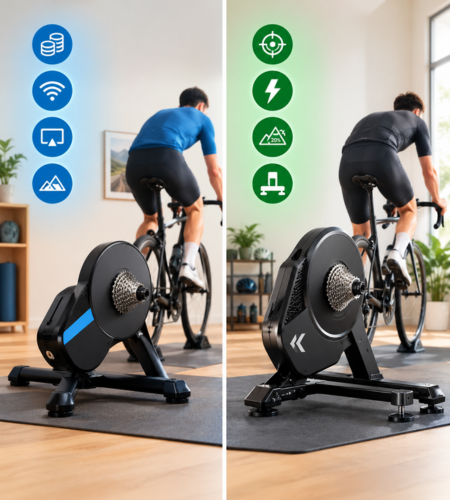
Consider the standard KICKR if:
- You value the stated ±1% power accuracy.
- Your training includes very high-power efforts.
- You want support for simulated gradients up to 20%.
- You value AXIS adjustable feet, Direct Connect, and additional training features.
Neither model is automatically the better purchase for every cyclist. The CORE 2 emphasizes value, while the standard KICKR offers a higher specification ceiling. Compare the features you will actually use rather than choosing solely by price or model name.
Pros and Cons
Wahoo KICKR CORE 2
Pros
- Lower listed US price.
- Wi-Fi, Bluetooth, and ANT+ connectivity.
- Up to 1,800 watts and 16% simulated climbs.
- Cassette and Zwift Cog purchase options.
Cons
- ±2% stated power accuracy.
- Lower maximum power and climbing grade than the standard KICKR.
- Fixed base rather than AXIS adjustable feet.
Wahoo KICKR
Pros
- ±1% stated power accuracy.
- Up to 2,200 watts and 20% simulated climbs.
- AXIS adjustable feet and additional connectivity features.
- Well suited to riders who value its higher performance specifications.
Cons
- Higher initial cost.
- Its additional capabilities may not provide meaningful value for every recreational cyclist.
🎉 Save More on Every Order – Grab the Latest Coupons & Deals
Frequently Asked Questions
Is the Wahoo KICKR CORE 2 good for beginners?
Yes. It offers automatic resistance, power measurement, and compatibility with popular training apps. Beginners can use these features for structured workouts without paying for every premium feature available on the standard KICKR.
Is the standard KICKR more accurate than the CORE 2?
According to Wahoo, the standard KICKR has ±1% power accuracy, compared with ±2% for the CORE 2. This difference may interest riders who prioritize precise power-based training.
Can both trainers work with Zwift?
Yes. Both models support Zwift, although the available virtual-shifting options and setup requirements depend on the trainer configuration and compatible accessories.
Do I need a special bicycle for either trainer?
You need a compatible bicycle frame, drivetrain, and rear axle arrangement. Both trainers support several common quick-release and thru-axle standards, but checking your specific bicycle’s compatibility before purchasing is essential.
Is the KICKR worth the extra money?
It may be worth the additional cost if you value its higher maximum power, steeper simulated climbs, tighter stated accuracy, and extra features. If those specifications are not important to your training, the CORE 2 may offer better value.
Related Resources
For more information about Wahoo’s indoor cycling products and connected fitness equipment, explore the related article titled Wahoo Fitness in 2026: Why the Wahoo KICKR V6, ELEMNT ROAM V2, TICKR Ecosystem Is Dominating Indoor Cycling. It provides broader context about Wahoo’s cycling trainers, bike computers, and heart-rate accessories.
Conclusion
The Wahoo KICKR CORE 2 vs KICKR comparison comes down to value versus higher performance specifications. The CORE 2 offers capable smart-training features at a lower price, while the standard KICKR provides greater power capacity, more demanding simulated climbs, and additional hardware features.
Before choosing, consider your training intensity, bicycle compatibility, preferred apps, and total budget. Visit Wahoo Fitness to review the latest specifications and package options so you can select a trainer that suits your indoor cycling goals.