Table Of Content
- 🎉 Save More on Every Order – Grab the Latest Coupons & Deals
- 1. Ignoring Your Available Space
- 2. Choosing a Treadmill by Price Alone
- 3. Forgetting About Deck Size
- 4. Overlooking the Incline Range
- 5. Ignoring Storage Requirements
- 6. Not Checking the Warranty and Return Terms
- 7. Paying for Features You Will Not Use
- How SOLE Fitness Fits the Buying Process
- 🎉 Save More on Every Order – Grab the Latest Coupons & Deals
- Frequently Asked Questions
- What is the biggest treadmill buying mistake?
- Is a folding treadmill better for a small home?
- What deck size should I look for?
- Is a more expensive treadmill always better?
- How important is treadmill warranty coverage?
- Related Resources
- Conclusion
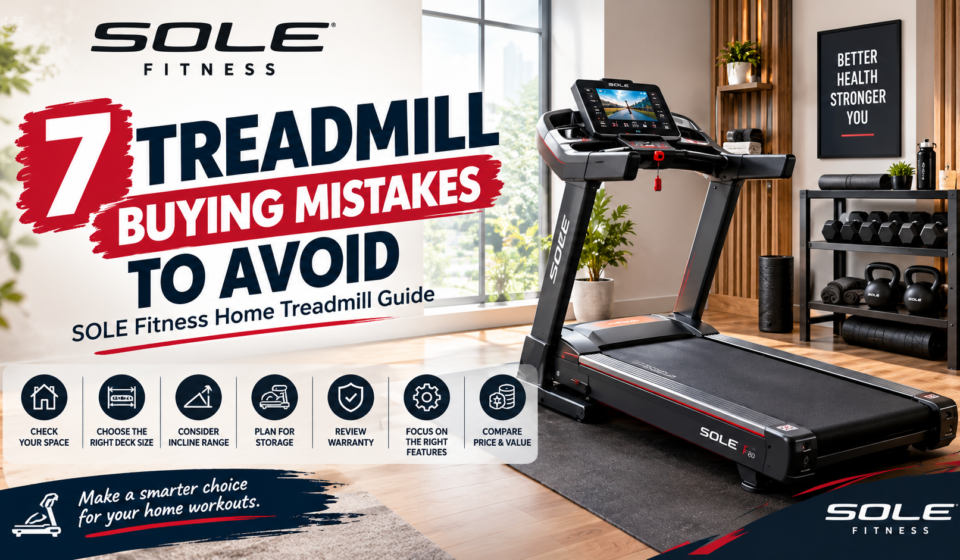
Buying a treadmill for home use can seem straightforward until you start comparing deck sizes, motors, incline ranges, folding designs, prices, warranties, and extra features. The wrong choice can leave you with a machine that does not fit your room, training style, or budget. Knowing the most common treadmill buying mistakes can make the research process much easier.
The seven mistakes are simple: ignoring available space, choosing only by price, overlooking deck size, forgetting incline needs, ignoring storage requirements, skipping warranty details, and paying for features you may never use. SOLE Fitness offers several home treadmill options with different specifications, so comparing those details against your actual needs is more useful than choosing a model based on appearance or price alone.
🎉 Save More on Every Order – Grab the Latest Coupons & Deals
1. Ignoring Your Available Space
One common treadmill buying mistake is measuring only the space where the machine will sit.
Consider the full space needed for safe use and storage. Measure:
- Operating and folded dimensions
- Ceiling height
- Doorways and hallways
- Space around the treadmill
- Storage area
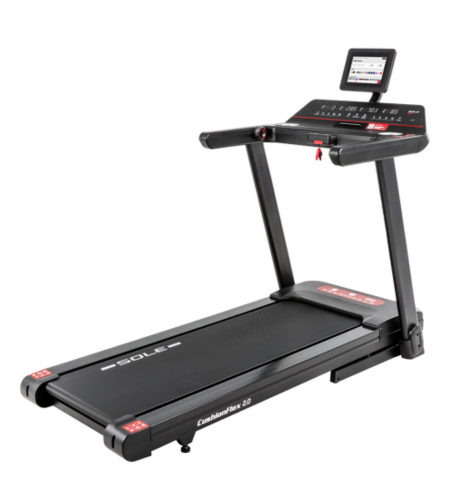
For example, SOLE’s F80 has a listed unfolded footprint of 82.5 by 38 inches and folds to approximately 44 by 38 inches.
2. Choosing a Treadmill by Price Alone
A lower price does not automatically make a treadmill the right choice. Likewise, spending more does not guarantee that every premium feature will matter to you.
Instead, compare price with the specifications you actually need. The current SOLE range includes models at different price points, from the F50 and F63 to larger, more feature-rich options such as the F80, F83, F85, and TT8.
Think about how often you will use the machine, whether you primarily walk or run, and which features are genuinely useful for your routine.
3. Forgetting About Deck Size
Running surface is another important consideration. A treadmill can fit your room but still feel restrictive if its deck does not suit your stride or workout style.
Current SOLE models vary in running-surface dimensions. The F63 and F80 both list a 20-by-60-inch deck, while the F83 and F85 move to a wider 22-by-60-inch running surface.
When comparing treadmills, consider both width and length rather than looking at motor specifications alone.
4. Overlooking the Incline Range
If incline walking or hill-style workouts are part of your routine, check the actual incline range before purchasing.
For example, the current SOLE F63 and F80 list a 0–15 incline range. Other models have different configurations, so comparing the available range can help you select equipment that matches your preferred workouts.
Do not pay extra for incline capabilities you will never use, but do not overlook them if they are important to your training either.
5. Ignoring Storage Requirements
A folding treadmill can make a home gym easier to manage, but folding does not mean the machine becomes tiny.
Check the folded dimensions and make sure you have somewhere practical to store it. SOLE currently lists several foldable treadmills, including the F63, F65, F80, F83, and F85.
Also consider whether you can safely move the treadmill into its storage position. A compact apartment setup may require more planning than simply pushing the machine against a wall.
6. Not Checking the Warranty and Return Terms
Warranty coverage is easy to overlook when you are focused on specifications and price.
SOLE’s current treadmill comparison shows lifetime frame and motor coverage across its listed models, while parts and other coverage vary by model. The F63 product page, for example, lists two years for the deck, electronics, and wear items/parts, plus one year of labor.
Return terms also matter. SOLE currently offers a 30-day satisfaction guarantee for qualifying direct purchases, but cardio equipment returns can involve a $300 shipping charge plus a 10% restocking fee.
Read these terms before ordering rather than assuming every return is free.
7. Paying for Features You Will Not Use
Touchscreens, streaming apps, connectivity, and other technology can make a treadmill more appealing, but they should not replace the fundamentals.
The F80, for example, includes a 10.1-inch touchscreen, while the F63 uses a white LED display. Both offer a 20-by-60-inch deck and 0–15 incline range.
If you mainly want straightforward walking or running, prioritize dimensions, running surface, incline, capacity, and storage before paying for technology.
How SOLE Fitness Fits the Buying Process
SOLE’s current treadmill range makes comparison relatively straightforward because models differ in motor specifications, deck dimensions, incline, displays, folding capability, capacity, and warranty coverage.
Shipping should also be considered. SOLE states that treadmill orders generally ship by freight, with standard delivery taking about 10–14 business days depending on location. Curbside, room-of-choice, and assembly options are available at additional costs.
That means your buying decision should include not only the treadmill itself but also how it will enter your home and where it will be positioned.
🎉 Save More on Every Order – Grab the Latest Coupons & Deals
Frequently Asked Questions
What is the biggest treadmill buying mistake?
Ignoring the space and clearance requirements can create problems even when the treadmill itself has suitable features.
Is a folding treadmill better for a small home?
A folding design can help with storage, but you still need to check the machine’s operating and folded dimensions.
What deck size should I look for?
Choose a running surface based on your body, stride, and intended workout. Compare both width and length rather than focusing only on motor power.
Is a more expensive treadmill always better?
Not necessarily. The appropriate model depends on the features, dimensions, capacity, and training functions you actually need.
How important is treadmill warranty coverage?
It is an important part of the purchase because warranty periods can differ between frame, motor, deck, electronics, parts, and labor.
Related Resources
For a broader comparison of the brand’s equipment, see SOLE Fitness Reviews: The Ultimate Guide to SOLE Treadmills, Ellipticals & Home Gym Equipment.
Conclusion
Avoiding common treadmill buying mistakes starts with looking beyond the price tag. Measure your space, compare deck sizes, check incline requirements, understand storage needs, review warranty and return terms, and pay for technology only when it supports the way you actually train.
SOLE Fitness offers several current treadmill configurations, including folding models and different combinations of deck sizes, motors, displays, and features. Before choosing a model, compare those specifications with your room, workout goals, and budget. Explore the official SOLE Fitness treadmill collection