Table Of Content
- Save More on Every Order – Grab the Latest Coupons & Deals
- Why Tracking Workout Results Matters
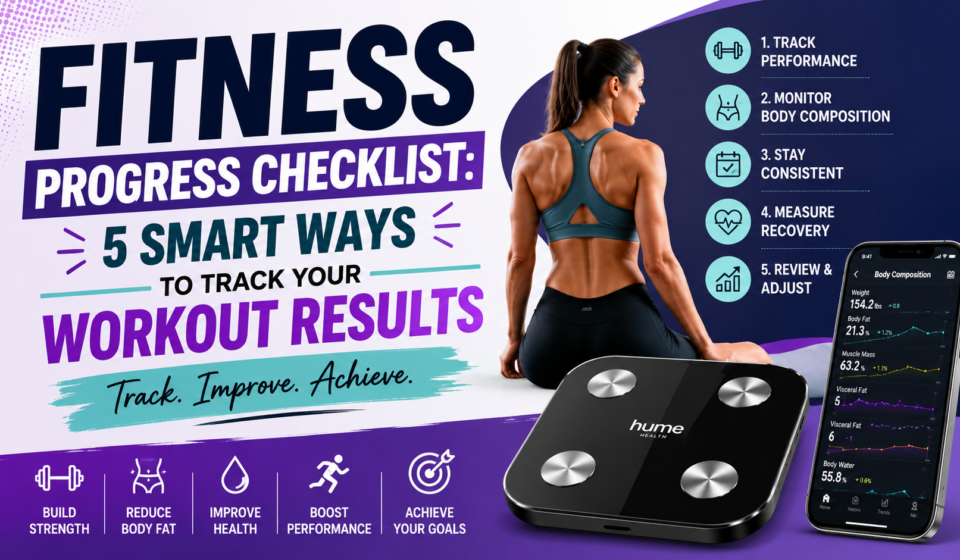
- Fitness Progress Checklist: 5 Smart Ways to Track Results
- 1. Track Your Workout Performance
- 2. Look at Long-Term Weight Trends
- 3. Track Body Composition Alongside Weight
- 4. Measure Consistency, Not Just Results
- 5. Review Recovery and Adjust When Needed
- How Hume Health Fits This Fitness Progress Checklist
- Key Features, Pricing, and Considerations
- Save More on Every Order – Grab the Latest Coupons & Deals
- Pros
- Cons
- Frequently Asked Questions
- How do I know if my workout is working?
- Is scale weight enough to track fitness progress?
- What should I track for workout progress?
- How often should I check my fitness progress?
- Is the Hume Pod useful for fitness tracking?
- Related Resources
- Conclusion
Working out consistently is important, but how do you know whether your routine is actually producing meaningful results? A practical fitness progress checklist can help you look beyond a single weigh-in and evaluate several signs of improvement. Depending on your goals, useful indicators may include workout performance, body composition, consistency, recovery, and longer-term trends.
The best tracking system is not necessarily the one with the most numbers. It is the one that gives you information you can understand and use. By focusing on measurements connected to your personal goals, you can get a clearer picture of your workout results over time. For people interested in tracking more than body weight, Hume Health offers connected tools designed to monitor body-composition and fitness-related trends.
Save More on Every Order – Grab the Latest Coupons & Deals
Why Tracking Workout Results Matters
Fitness progress is rarely perfectly linear. Some weeks may feel stronger than others, and daily measurements can change for reasons that do not necessarily reflect your long-term progress.
That is why judging an entire workout plan from one difficult session or one scale reading can be misleading. A more useful approach is to collect consistent information and review patterns over time.
Before choosing what to track, identify your main goal. For example:
- Strength-focused training may emphasize weight lifted and repetitions.
- Endurance training may focus on pace, distance, or training volume.
- Body-composition goals may include longer-term changes beyond total weight.
- General fitness goals may benefit from tracking activity, sleep, and workout consistency.
A focused tracking system can make it easier to understand whether your routine is moving in the direction you intended.
Fitness Progress Checklist: 5 Smart Ways to Track Results
1. Track Your Workout Performance
One of the most direct ways to monitor progress is to record what happens during training. Depending on your workout style, this may include:
- Weight lifted
- Repetitions completed
- Number of sets
- Distance covered
- Running or cycling pace
- Total training volume
You do not need to improve every session. Performance can naturally vary because of sleep, recovery, training history, and other factors. The goal is to compare similar workouts over a meaningful period.
Keeping a simple workout log can reveal changes that are easy to miss when relying only on memory.
2. Look at Long-Term Weight Trends
Body weight can be useful, but one measurement rarely tells the complete story. Food intake, hydration, and other normal changes can influence the number from day to day.
Instead of reacting strongly to a single reading, review your results as a trend. Measuring consistently under similar conditions can make comparisons easier.
Hume Health also recommends consistent timing and focusing on trends rather than day-to-day fluctuations when monitoring progress with the Hume Pod.
The important point is not to ignore your scale completely. Instead, place the number in context with your other fitness information.
3. Track Body Composition Alongside Weight
Total body weight does not show how different components of the body may be changing. For people with goals related to muscle and fat, body composition tracking can provide additional context.
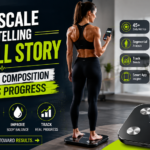
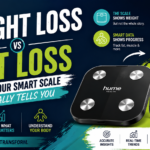
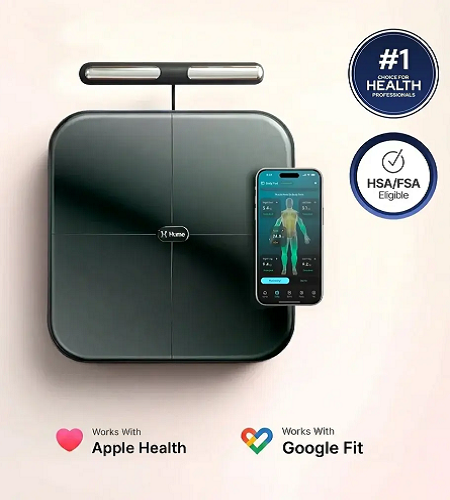
The Hume Pod is Hume Health‘s body-composition device and is designed to track 45 body-composition measurements through its connected app. The company lists metrics related to muscle, body fat, visceral fat, bone-related estimates, and other measurements.
This type of information may be useful when your scale weight remains relatively stable but your broader fitness routine is changing.
Consumer body-composition devices should be viewed as tools for monitoring estimates and trends rather than as medical diagnostic equipment. For many users, consistent longer-term patterns are more useful than treating one scan as a final answer.
4. Measure Consistency, Not Just Results
A good fitness plan depends on what you do repeatedly. That makes consistency an important part of your fitness progress checklist.
Consider tracking:
- Workouts completed each week
- Daily activity
- Training frequency
- Sleep routines
- Recovery patterns
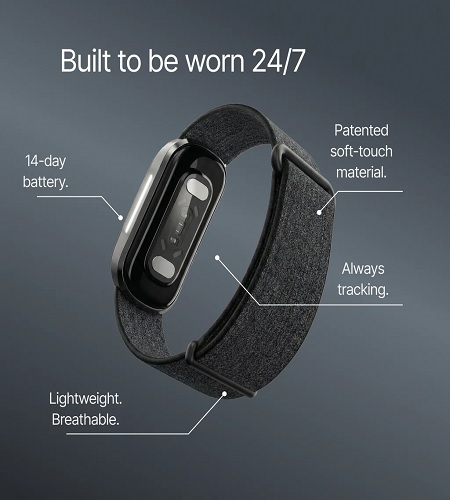
The Hume Band is another relevant product from Hume Health. According to the official product information, it tracks activity, steps, distance, sleep, strain, and recovery-related insights through the Hume Health app.
You do not need to track every possible metric. Choose information that helps you understand your habits without making your routine unnecessarily complicated.
5. Review Recovery and Adjust When Needed
Workout results are not created only during exercise. Recovery is also part of the process.
If your performance repeatedly declines or your routine feels increasingly difficult to maintain, review your overall training schedule. Look at your consistency, rest, and whether your current plan matches your lifestyle and goals.
Tracking recovery-related information may help some users understand patterns between training and daily readiness. However, no wearable or app can make every training decision for you.
Use your data as feedback rather than as an automatic instruction. The most valuable tracking system helps you ask better questions about your routine.
How Hume Health Fits This Fitness Progress Checklist
Hume Health is relevant to this topic because its products focus on collecting different types of health and fitness data.
The Hume Pod is designed for people who want information beyond traditional body weight, while the Hume Band focuses on activity, sleep, recovery, and other daily trends. The products connect with the Hume Health app, allowing users to view their information over time.
This combination may appeal to people who prefer a broader approach to tracking workout results rather than relying on a single measurement.
However, more detailed tracking is not necessary for everyone. A basic workout log and a regular scale may be enough for straightforward goals.
Key Features, Pricing, and Considerations
The official Hume Health product page currently lists the Hume Pod at $229, reduced from a listed regular price of $352. Pricing and promotions can change, so the current product page should always be checked before making a purchase.
The company also lists app-based tracking and a 45-day return policy on relevant product pages. Shipping availability and terms may vary by location.
Save More on Every Order – Grab the Latest Coupons & Deals
Pros
- Tracks more than traditional body weight
- Supports longer-term trend monitoring
- Offers app connectivity
- Covers both body composition and daily fitness data
Cons
- Advanced tracking may not be necessary for every goal
- Consumer measurements should be interpreted as trends
- Product pricing and availability can change
Frequently Asked Questions
How do I know if my workout is working?
Track measurements related to your goal, such as workout performance, consistency, body trends, or endurance, and review them over time.
Is scale weight enough to track fitness progress?
Not always. Weight can be useful, but performance and body-composition trends may provide additional context.
What should I track for workout progress?
Start with a small number of relevant measurements, such as performance, training consistency, weight trends, and recovery.
How often should I check my fitness progress?
Use a consistent schedule that matches what you are tracking. Longer-term trends are generally more useful than isolated daily results.
Is the Hume Pod useful for fitness tracking?
The Hume Pod is designed to track body-composition measurements and display trends through the Hume Health app.
Related Resources
For a closer look at the device and its features, explore this detailed Hume Health review covering a smart tracker that goes beyond weight.
Conclusion
A useful fitness progress checklist should help you understand more than whether the number on a scale changed. Track your workout performance, body-composition trends, consistency, recovery, and longer-term patterns that connect directly with your goals.
For people who want additional information beyond traditional weight tracking, Hume Health offers connected tools designed to support a broader view of fitness progress. Consider which measurements genuinely matter to your goals, then build a tracking routine that remains practical and consistent.