Table Of Content
- Save More on Every Order – Grab the Latest Coupons & Deals
- Weight Loss vs Fat Loss: What Is the Difference?
- What a Traditional Scale Can and Cannot Tell You
- What Your Smart Scale Really Tells You
- How Hume Health Fits the Topic
- Five Smart Ways to Track Fat Loss Progress
- 1. Follow Long-Term Weight Trends
- 2. Monitor Body Composition
- 3. Track Your Workout Performance
- 4. Measure Under Similar Conditions
- 5. Review the Complete Picture
- Key Features and Considerations
- Save More on Every Order – Grab the Latest Coupons & Deals
- Pros
- Cons
- Pricing and Shipping
- Frequently Asked Questions
- Does losing weight always mean losing fat?
- Can I lose fat without the scale changing much?
- Are smart scale body-fat readings accurate?
- Should I track weight every day?
- Is the Hume Pod useful for body-composition tracking?
- Related Resources
- Conclusion
Watching the number on a scale decrease can feel like clear evidence of progress, but weight loss vs fat loss is more complicated than one number. Your body weight includes more than fat, and short-term changes may also reflect water, muscle, food, and other normal fluctuations. That means losing weight does not automatically explain what type of tissue changed.
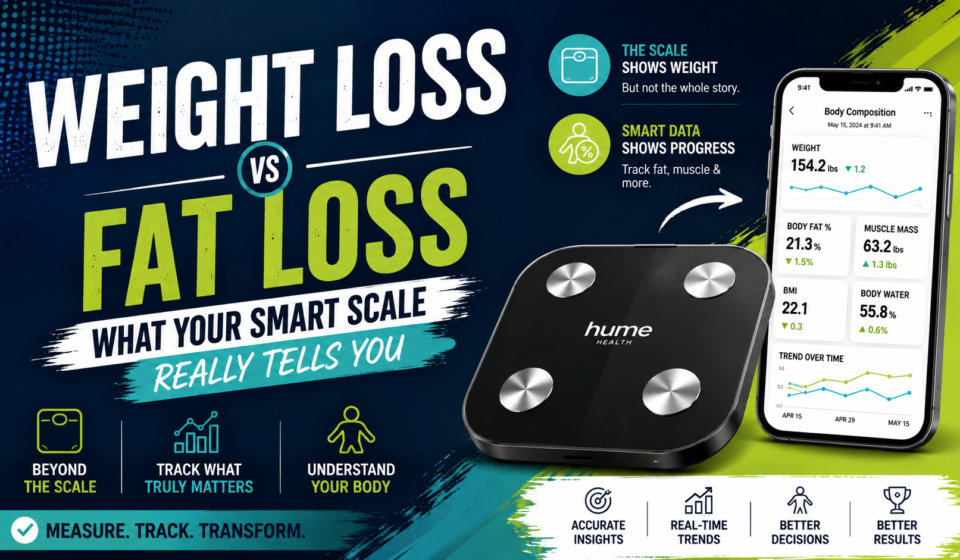
For people focused on improving body composition, looking beyond total weight can provide additional context. Smart scales and body-composition devices are designed to estimate measurements such as body fat and muscle mass alongside body weight. Hume Health offers the Hume Pod for people who want to monitor broader body-composition trends and understand changes that a traditional scale cannot explain on its own.
Save More on Every Order – Grab the Latest Coupons & Deals
Weight Loss vs Fat Loss: What Is the Difference?
Weight loss simply means that total body weight has decreased. The scale does not identify the specific source of that change.
Fat loss refers specifically to a reduction in body fat. Because total weight includes fat, muscle, water, bone, and other tissues, a change in body weight does not necessarily equal an identical change in body fat.
This distinction matters when evaluating fitness progress. Someone may see their scale weight fluctuate because of hydration or other normal factors while following a consistent training routine. Another person may maintain a similar body weight while experiencing changes in body composition.
That is why the question should not always be, “How much weight did I lose?” A more useful question can be, “What do my longer-term trends suggest?”
What a Traditional Scale Can and Cannot Tell You
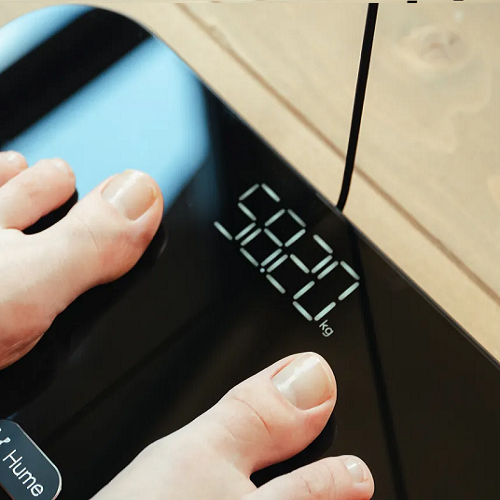
A traditional scale is useful for measuring total body weight. However, it cannot separate that number into different body components.
For example, two people can weigh the same while having different proportions of fat and lean tissue. Similarly, one person can maintain approximately the same weight while their body composition changes over time.
This does not make a standard scale useless. Body weight remains one useful measurement, especially when reviewed as a longer-term trend. The limitation is simply that it provides only one piece of information.
What Your Smart Scale Really Tells You
Smart scales and body-composition devices can provide estimates beyond total body weight. Depending on the product, these may include body fat percentage, muscle-related measurements, body water, and other metrics.
However, it is important to interpret these readings carefully. Research has found that consumer smart scales can measure body weight reasonably well while body-composition estimates may vary from more precise clinical methods. For this reason, individual readings should not be treated as medical diagnoses or exact clinical measurements.
Their practical value may be greater when measurements are collected consistently and reviewed as trends. If a device shows a pattern over weeks or months, that information can provide additional context alongside weight and workout performance.
How Hume Health Fits the Topic
Hume Health offers the Hume Pod, a body-composition device designed to provide information beyond standard scale weight.
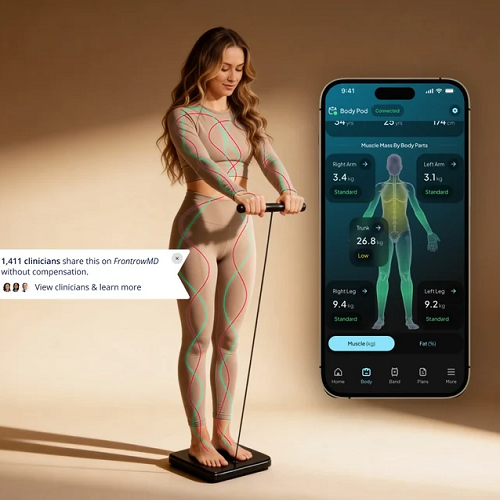
According to Hume Health’s official product information, the Hume Pod uses an eight-point scan across the hands and feet and tracks 45 or more body-composition markers, including measurements related to fat, muscle, body water, visceral fat, and metabolic age. The company also provides app-based trend tracking.
This makes the Hume Pod relevant to people who want more context when their total weight changes—or does not change.
For example, if your scale weight remains relatively stable, body-composition trends may provide additional information about what is happening over time. That does not mean every estimate is perfectly precise, but it can help users move beyond judging their entire fitness journey by one daily number.
Five Smart Ways to Track Fat Loss Progress
1. Follow Long-Term Weight Trends
Avoid judging progress from a single weigh-in. Body weight naturally changes from day to day, so a consistent measurement routine can make longer-term patterns easier to understand.
2. Monitor Body Composition
If fat loss is one of your goals, body-composition tracking may provide useful context alongside total weight. Look at longer-term changes rather than assuming one reading tells the complete story.
3. Track Your Workout Performance
Record relevant performance measures such as weights lifted, repetitions, pace, distance, or training volume. These numbers can help you understand how your exercise routine is progressing.
4. Measure Under Similar Conditions
Consistency is important when comparing trends. Try to follow a similar routine when collecting measurements so that results are easier to compare over time.
5. Review the Complete Picture
No single metric should control every fitness decision. Consider weight trends, body-composition estimates, exercise performance, and your overall routine together.
Key Features and Considerations
The Hume Pod is designed for people who want detailed at-home body-composition tracking. Official Hume Health pages currently list features including an eight-point measurement system, app connectivity, and tracking for more than 45 metrics.
Save More on Every Order – Grab the Latest Coupons & Deals
Pros
- Provides information beyond total body weight
- Supports longer-term body-composition tracking
- Includes app-based progress monitoring
- Relevant for people interested in fat and muscle trends
Cons
- More detailed tracking may not be necessary for everyone
- Consumer body-composition results should be interpreted carefully
- Consistent measurement habits are important for comparing trends
Pricing and Shipping
At the time of research, official Hume Health pages displayed the Hume Pod with pricing around $229, although promotions and product offers can change. The company also lists a 45-day refund policy, free app access, and shipping information on relevant product pages. Always confirm the latest price, availability, shipping terms, and return conditions directly on the official store before making a purchase.
Frequently Asked Questions
Does losing weight always mean losing fat?
No. Total body weight can change for different reasons, including changes involving water and other body components.
Can I lose fat without the scale changing much?
It is possible for body-composition changes and total weight trends to move differently. A scale alone cannot identify every change in body composition.
Are smart scale body-fat readings accurate?
Smart scales provide estimates, and accuracy can vary. They should not replace clinical assessment methods.
Should I track weight every day?
Some people prefer regular measurements, while others prefer less frequent tracking. The key is using a consistent approach and focusing on longer-term patterns.
Is the Hume Pod useful for body-composition tracking?
The Hume Pod is designed to provide body-composition measurements and trend tracking beyond traditional body weight.
Related Resources
For a more detailed look at the device, its features, and its approach to tracking health beyond total weight, explore this detailed Hume Health review of the smart health tracker that goes beyond weight.
Conclusion
Understanding weight loss vs fat loss can help you evaluate progress with more perspective. The number on your scale is useful, but it cannot always explain what is changing inside your body.
Looking at longer-term weight trends, workout performance, and body-composition estimates may provide a broader view of your fitness journey. For people who want more data than a traditional scale provides, Hume Health’s official store offers the Hume Pod as a tool designed to track body-composition trends. Choose the measurements that genuinely support your goals and focus on consistent, long-term progress rather than one number alone.